
Restricted License

Restricted License

This topic explains what a restricted license is under Indian drug law including who can apply eligibility conditions and its role in drug distribution. Definition of Restricted License: Restricted Licenses: Pertains to the sale of specific categories of drugs that require additional controls due to their potential for abuse or misuse. Categories Covered: Schedule H: … Read more


Retail Sale of Drugs

Retail Sale of Drugs

Learn the legal requirements and licensing process for retail sale of drugs under Indian drug law and ensure regulatory compliance. Definition of Retail Sale of Drugs: Retail: The business of selling drugs directly to consumers through pharmacies or drugstores. Licensing Requirements: Retail License: Mandatory for operating a pharmacy or drugstore. Types of Retail Licenses: General … Read more

Wholesale Sale of Drugs

Wholesale Sale of Drugs

Understand the legal rules and licensing requirements for wholesale sale of drugs under Indian drug law and regulatory frameworks. Definition to Wholesale Sale of Drugs: Wholesale: The business of selling drugs in large quantities, typically to pharmacies, hospitals, or other retailers, rather than directly to the end consumer. Licensing Requirements: Wholesale License: Necessary for engaging … Read more

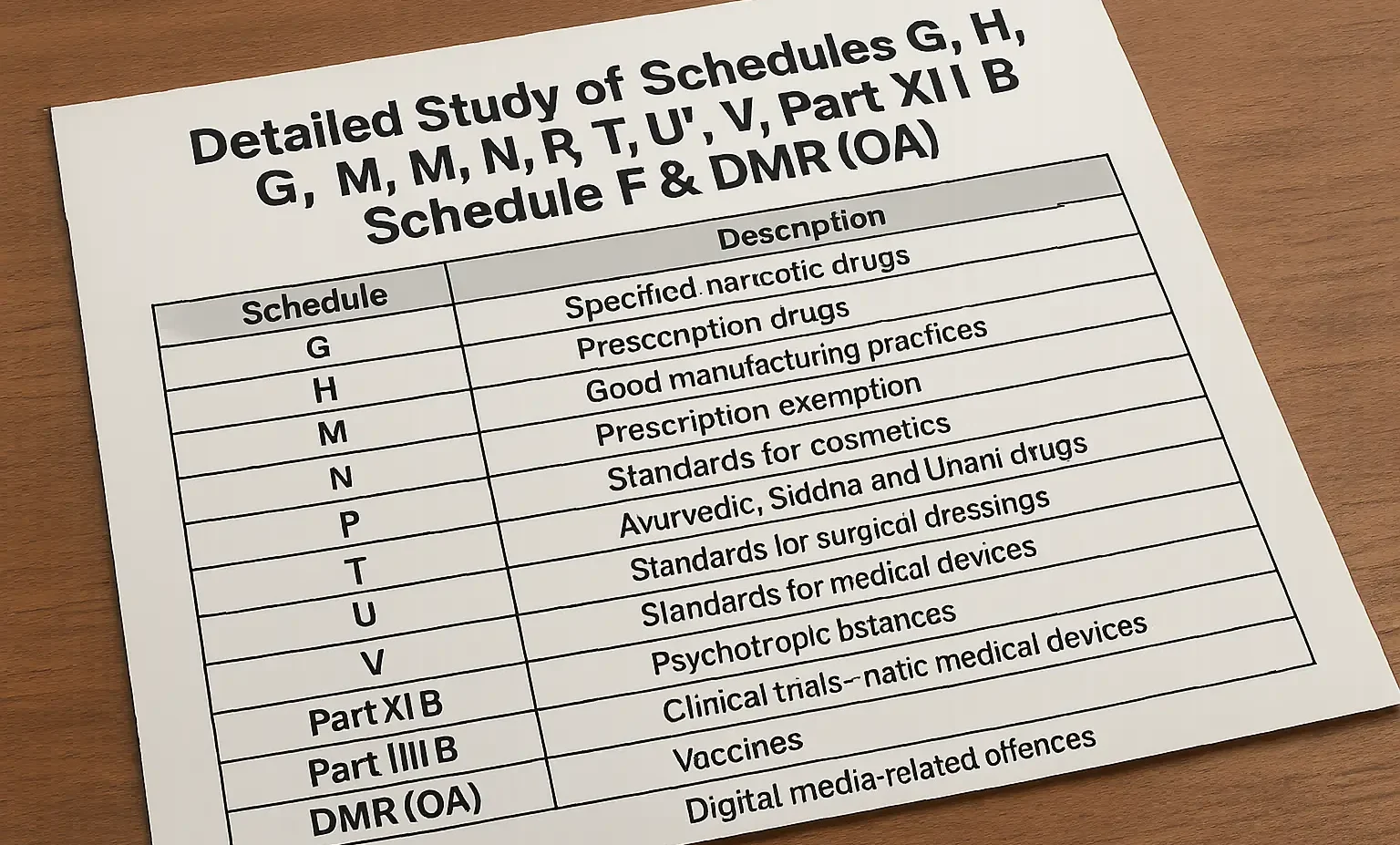
Detailed Study of Schedules G, H, M, N, P, T, U, V, X, Y, Part XII B, Schedule F & DMR (OA)

Detailed Study of Schedules G, H, M, N, P, T, U, V, X, Y, Part XII B, Schedule F & DMR (OA)

Explore the study of important drug schedules and DMR OA under Indian regulations with their legal relevance and compliance requirements. The Schedules in the Drugs and Cosmetics Act classify drugs based on various criteria, including their potential for abuse, control measures, and prescribing regulations. Detailed Study of Important Drug Schedules and DMR OA, Parts in … Read more

Cyclic Adenosine Monophosphate (cAMP)

Cyclic adenosine monophosphate (cAMP) is a crucial second messenger in cellular signaling, mediating extracellular signals to initiate specific intracellular responses. Cyclic Adenosine Monophosphate (cAMP) plays a key role in various physiological processes, including metabolism, gene regulation, and neuronal function. Structure of Cyclic Adenosine Monophosphate (cAMP) cAMP is synthesized from ATP and consists of: Adenine Base: A … Read more

Adenosine Triphosphate (ATP)

Adenosine triphosphate (ATP) is the primary energy currency of the cell, essential for powering various biological processes and ensuring efficient energy transfer within living organisms. Structure of Adenosine Triphosphate (ATP) Adenosine Triphosphate (ATP) consists of three fundamental components: Adenine Base A nitrogenous organic compound forming part of the nucleotide structure. Ribose Sugar A five-carbon sugar … Read more

Buffers in Pharmaceutical and Biological Systems

Buffers in Pharmaceutical and Biological Systems

Buffers are integral to maintaining proper function and stability in both pharmaceuticals and biological systems. Pharmaceutical Buffers Purpose: Stability: Many drugs are pH-sensitive; buffers maintain pH to prevent degradation. Solubility: The solubility of active ingredients can depend on pH. Efficacy and Safety: Proper pH ensures optimal drug action and minimizes irritation. Applications: Injectable Preparations: Must … Read more

Buffer Capacity

Buffer Capacity

Definition of Buffer Capacity Buffer Capacity (β): A quantitative measure of a buffer’s ability to resist pH changes. Mathematical Expression: $\beta = \frac{\Delta B}{\Delta{pH}}$ $\Delta \mathrm{pH}$ = amount (in moles per liter) of strong acid or base added. $\Delta B$ = change in pH resulting from the addition. Factors Affecting Buffer Capacities Concentration of Buffer … Read more

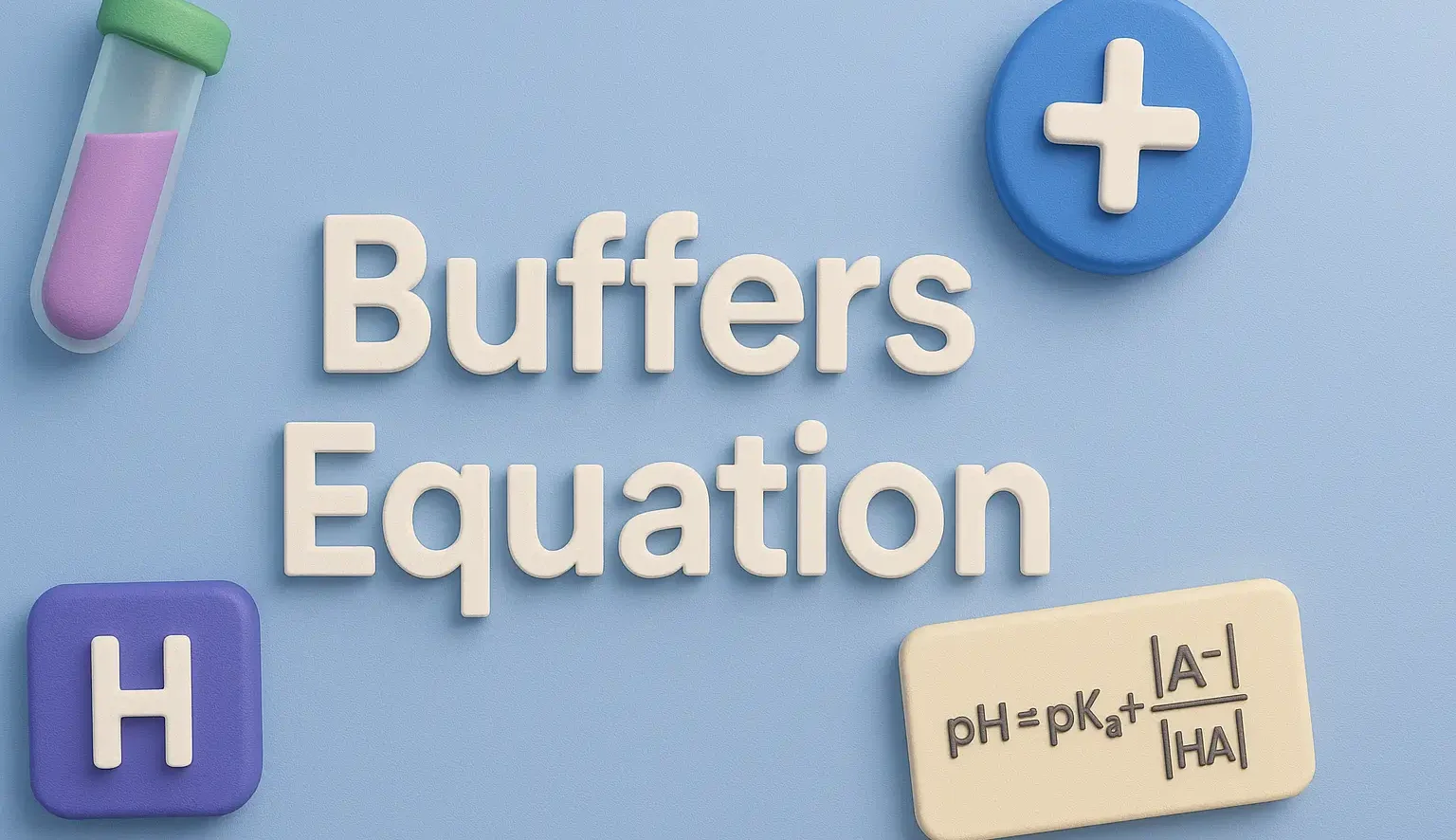
Buffer Equation

Buffer Equation

Buffer Equation, or Henderson-Hasselbalch equation, calculates the pH of a buffer solution based on the concentrations of its components. For Acidic Buffers Equation: $\mathrm{pH} = \mathrm{p}K_a + \log_{10} \left( \frac{[{A^-}]}{[{HA}]} \right)$ where: ​ is the negative logarithm of the acid dissociation constant.  is the concentration of the conjugate base.  is the concentration of the weak … Read more

Methods of Adjusting Isotonicity

Once the isotonicity of a solution is determined, adjustments may be necessary. Methods are categorized into Class I and Class II. 1.Class I Methods of Adjusting Isotonicity Definition Methods that involve adding solutes to adjust the isotonicity of a solution without changing its volume significantly. Techniques Sodium Chloride Equivalent Method Concept: Calculates the amount of … Read more