One-Compartment Open Model

One-Compartment Open Model
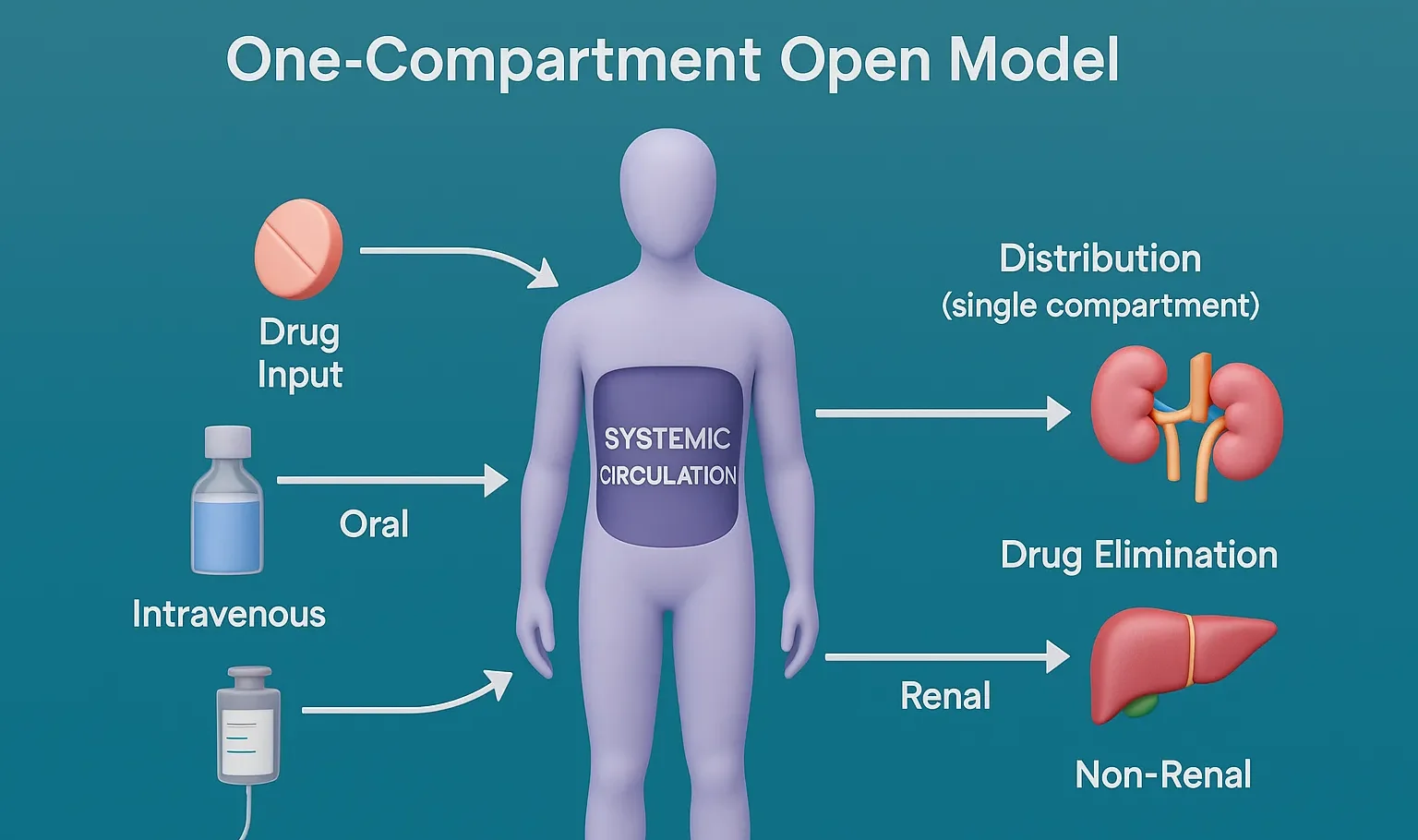
One Compartment Open Model explains drug absorption, distribution, and elimination using a single compartment in pharmacokinetics. One-Compartment Open Model The one-compartment open model is one of the simplest pharmacokinetic models used to describe drug disposition in the body. It assumes that the body acts as a single, uniform compartment where the drug is evenly distributed … Read more
Introduction to Powder

Introduction to Powder (2)

Introduction to Powder is a dosage form in which a medication is presented as a dry, solid, and finely divided substance. They can be administered internally (e.g., orally, rectally) or externally (e.g., topically). Powders are prepared by grinding or triturating the solid drug particles until they reach the desired degree of fineness. Classification of powders … Read more

Physiological Models (PBPK – Physiologically Based Pharmacokinetic Models)

Physiological Models (PBPK Physiologically Based Pharmacokinetic Models)

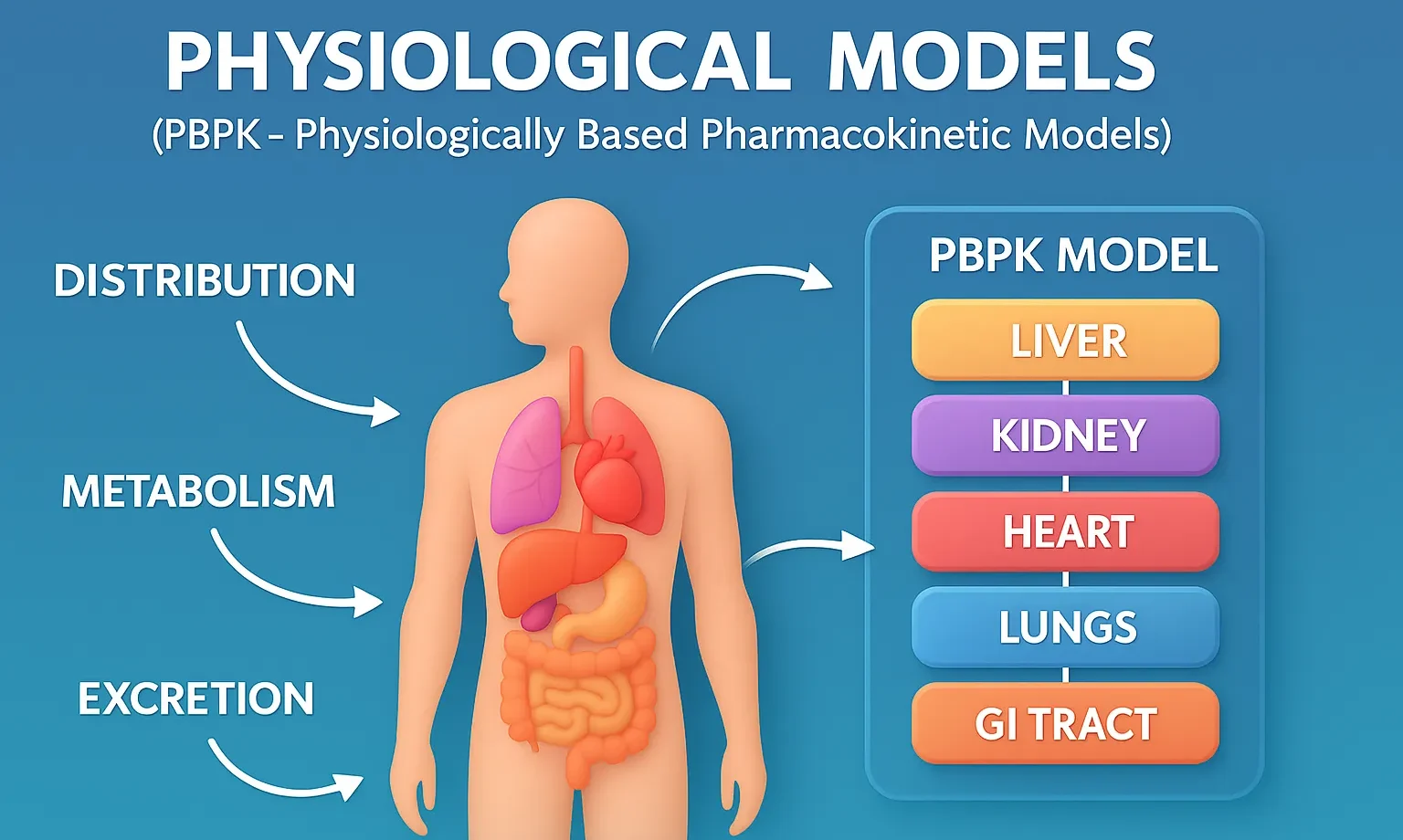
Physiological Models (PBPK Physiologically Based Pharmacokinetic Models) predict drug ADME using organ physiology and blood flow data. Physiological Models (PBPK – Physiologically Based Pharmacokinetic Models) Physiological models, or PBPK models, are the most detailed pharmacokinetic models as they incorporate actual physiological and anatomical data. Key Features of PBPK Models: Based on real organ and tissue … Read more

Proof spirit

Proof spirit

Proof spirit refers to the strength of alcohol in a solution, commonly used in beverages and pharmacy. Definition of Proof spirit Proof spirit contains 28 percent alcohol by weight or 57.1 percent alcohol by volume. In the U.S., the formula for proof is: Proof = 2 × Alcohol by Volume (ABV) So, 50 percent ABV = 100 proof. … Read more

Alligation in Pharmaceutical Calculations

Alligation in Pharmaceutical Calculations

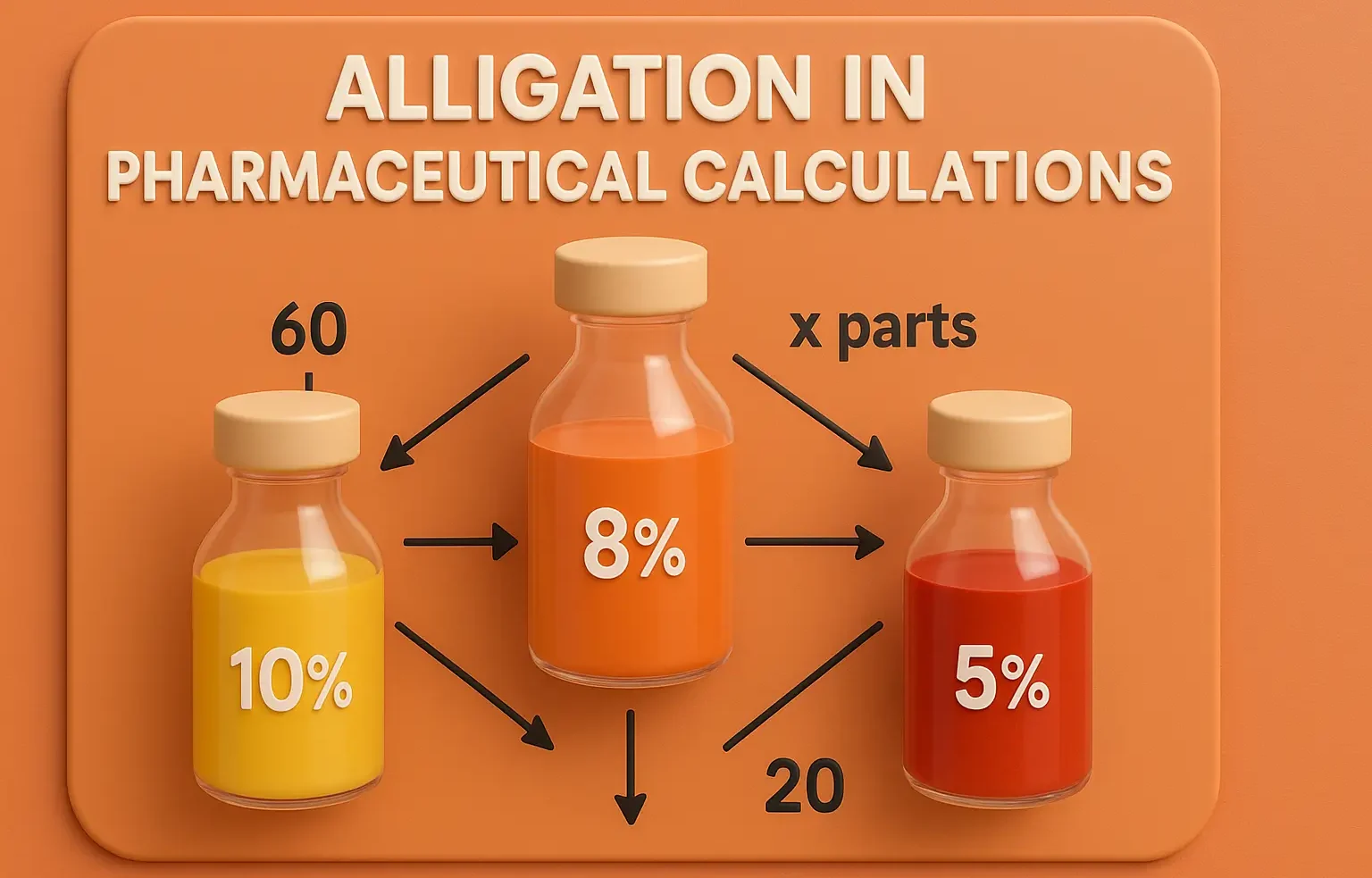
Alligation in Pharmaceutical Calculations is a method used in pharmacy to calculate the proportions of solutions of different strengths needed to achieve a desired concentration. It’s useful in compounding and preparing pharmaceutical mixtures. Alligation Medial This method calculates the average strength of a mixture based on the quantities and concentrations of the individual solutions. Formula: … Read more

Weights and measures

Weights and measures

Weights and Measures are systems used to express the quantity, size, or weight of substances and objects. There are two main systems of weights and measures: the Imperial system and the Metric system. 1. Imperial system: The Imperial system, also known as the British Imperial system, originated in the United Kingdom and was widely used … Read more

Non-Compartment Models (Model-Independent Approach)

Non-Compartment Models (Model-Independent Approach)

Non-Compartment Models Model-Independent Approach analyze drug pharmacokinetics without assuming compartments using statistical moment theory. Non-Compartment Models (Model-Independent Approach) The non-compartmental model (NCA) is an alternative approach to pharmacokinetics that does not assume any specific compartments. Instead, it relies on statistical and mathematical methods to estimate drug parameters directly from experimental data. Key Features of Non-Compartment … Read more

Compartmental Models in Pharmacokinetics

Compartmental Models in Pharmacokinetics

Compartmental models in pharmacokinetics simplify drug distribution and elimination using one-compartment and multi-compartment approaches. Introduction Compartmental models are pharmacokinetic models that represent the body as interconnected compartments, each grouping tissues or organs with similar drug distribution and elimination properties. Drug movement is modeled using first-order rate constants, helping predict drug concentrations, optimize dosing, and support … Read more

Reaction Kinetics: Rate, Rate Constants, and Order

Reaction Kinetics: Rate, Rate Constants, and Order

Reaction kinetics rate rate constants and order describe how drug concentration changes over time in pharmaceutical chemistry. Basic Concepts of Reaction kinetics rate rate constants and order Rate of Reaction: Measures how fast reactants are converted into products. Influenced by temperature, concentration, catalysts, and surface area. Rate Constant (k): A constant specific to a given … Read more

Plasma Drug Concentration Time Profile

Plasma Drug Concentration Time Profile

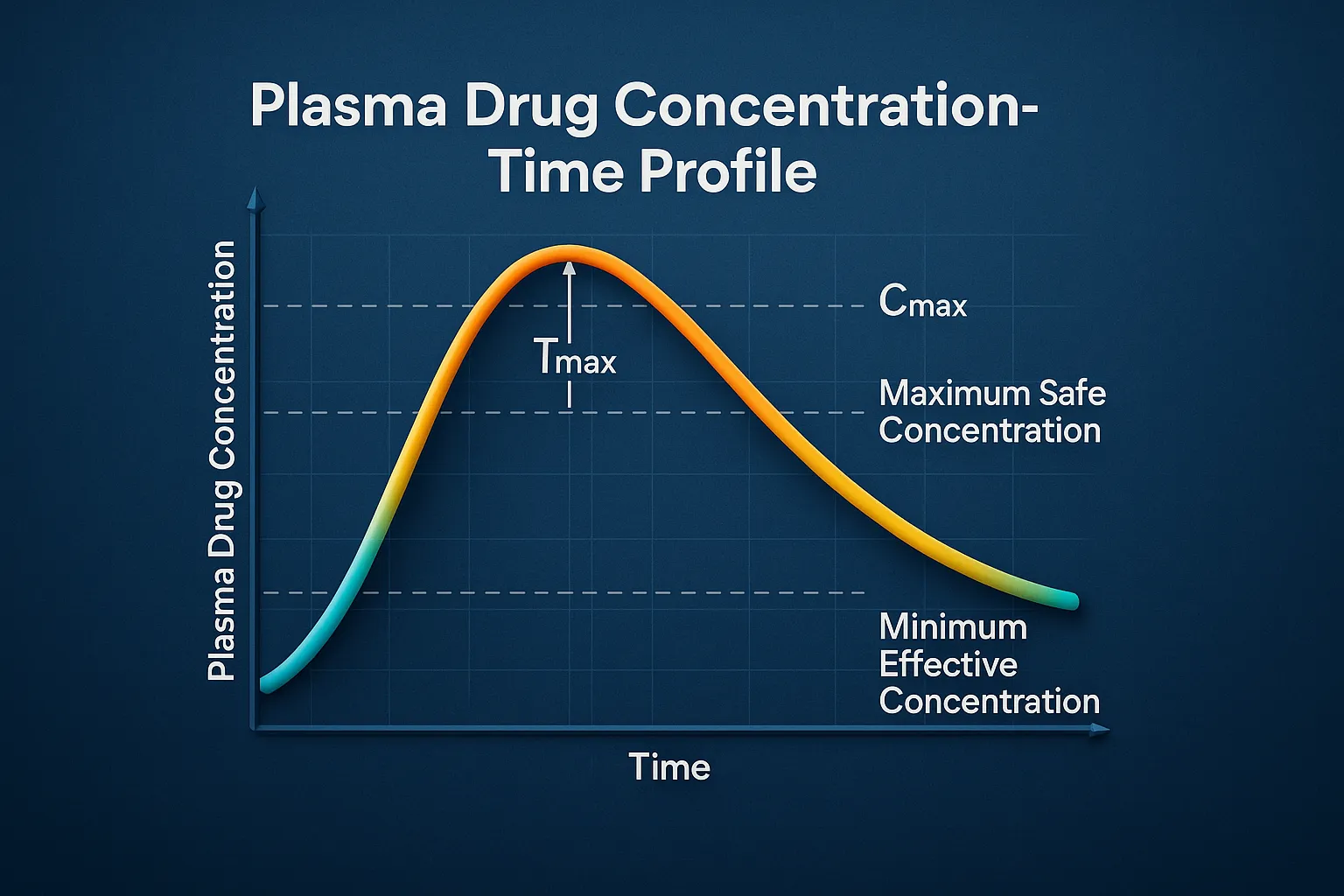
Plasma drug concentration time profile shows drug absorption, distribution, metabolism, and elimination phases in pharmacokinetics. Plasma Drug Concentration-Time Profile A graph that represents the concentration of a drug in plasma over time, used to assess and analyze each ADME phase. Phases of the Profile: Absorption Phase Drug enters the bloodstream, increasing plasma concentration until it … Read more