Synthesis of Acridine

Synthesis of Acridine covers Bernthsen condensation, Ullmann coupling, and intramolecular cyclization for dyes and drug discovery. Bernthsen Synthesis (Classical Method) Reactants: Diphenylamine + Carboxylic acid (or acid anhydride) Catalyst: Zinc chloride (ZnCl₂) Conditions: High temperature (~250–270 °C) Reaction: Diphenylamine + Formic acid → Acridine + Water Mechanism: Involves Friedel–Crafts acylation, cyclization, and dehydration. From Anthranilic … Read more
Methods of Emulsion Formulation

Methods of Emulsion Formulation

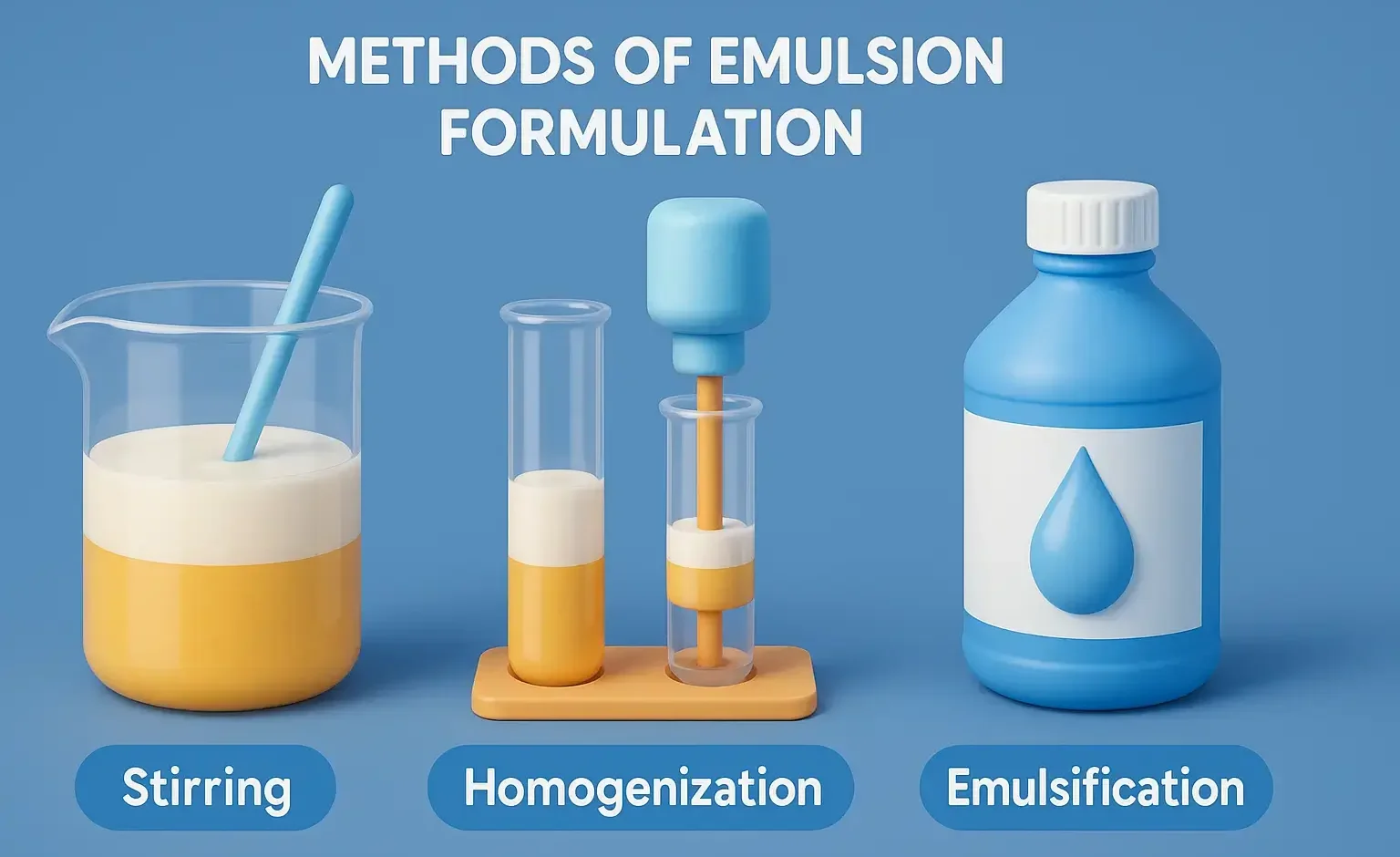
Methods of Emulsion Formulation include dry gum, wet gum, bottle, and in-situ soap methods. It ensures stable emulsions for pharmaceuticals, foods, and cosmetics. Emulsion formulation involves the dispersion of one immiscible liquid into another with the help of an emulsifying agent. The goal is to create a stable and uniform system. Common Methods Used in … Read more

Rheological Properties of Emulsions

Rheological Properties of Emulsions

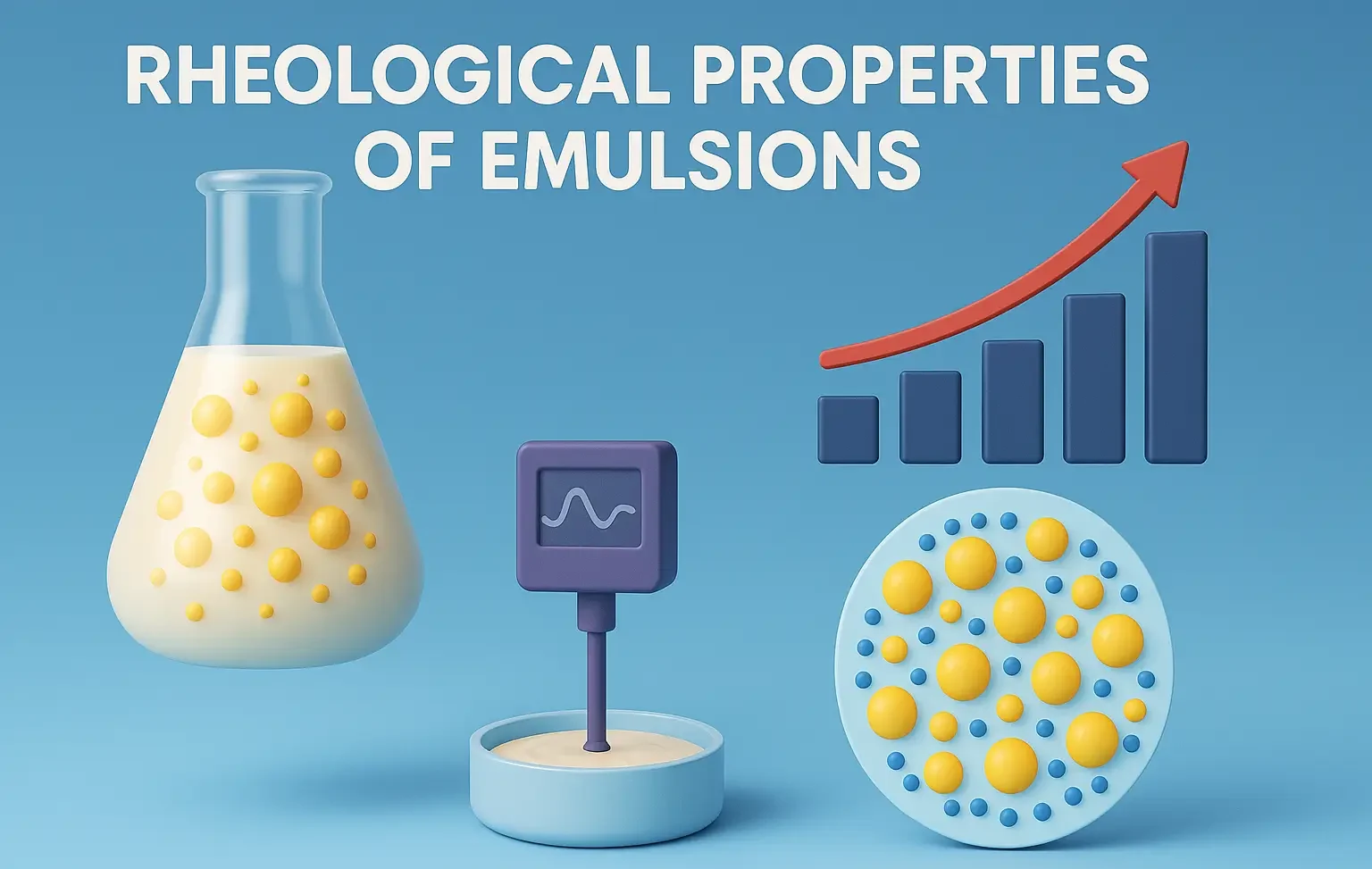
Rheological Properties of Emulsions reveal interactions between dispersed droplets and continuous phase. Rheological Properties of Emulsions is the study of flow and deformation of matter. In emulsions, rheology influences pourability, spreadability, stability, and user acceptability. Flow Behavior Types: Newtonian: Viscosity remains constant (e.g., water, some dilute emulsions) Non-Newtonian: Pseudoplastic (shear-thinning): Viscosity decreases with shear (common … Read more

Preservation of Emulsions

Preservation of Emulsions

Preservation of Emulsions ensures product safety, stability, and therapeutic effectiveness. It is essential to prevent microbial contamination, chemical degradation, and to extend shelf life during storage. Methods of Preservation Use of Preservatives Common preservatives: Parabens (methylparaben, propylparaben) Phenoxyethanol Sorbic acid Benzyl alcohol Must be effective in both aqueous and oily phases. Antioxidants (for oil phase) … Read more

Stability of Emulsions

Stability of Emulsions

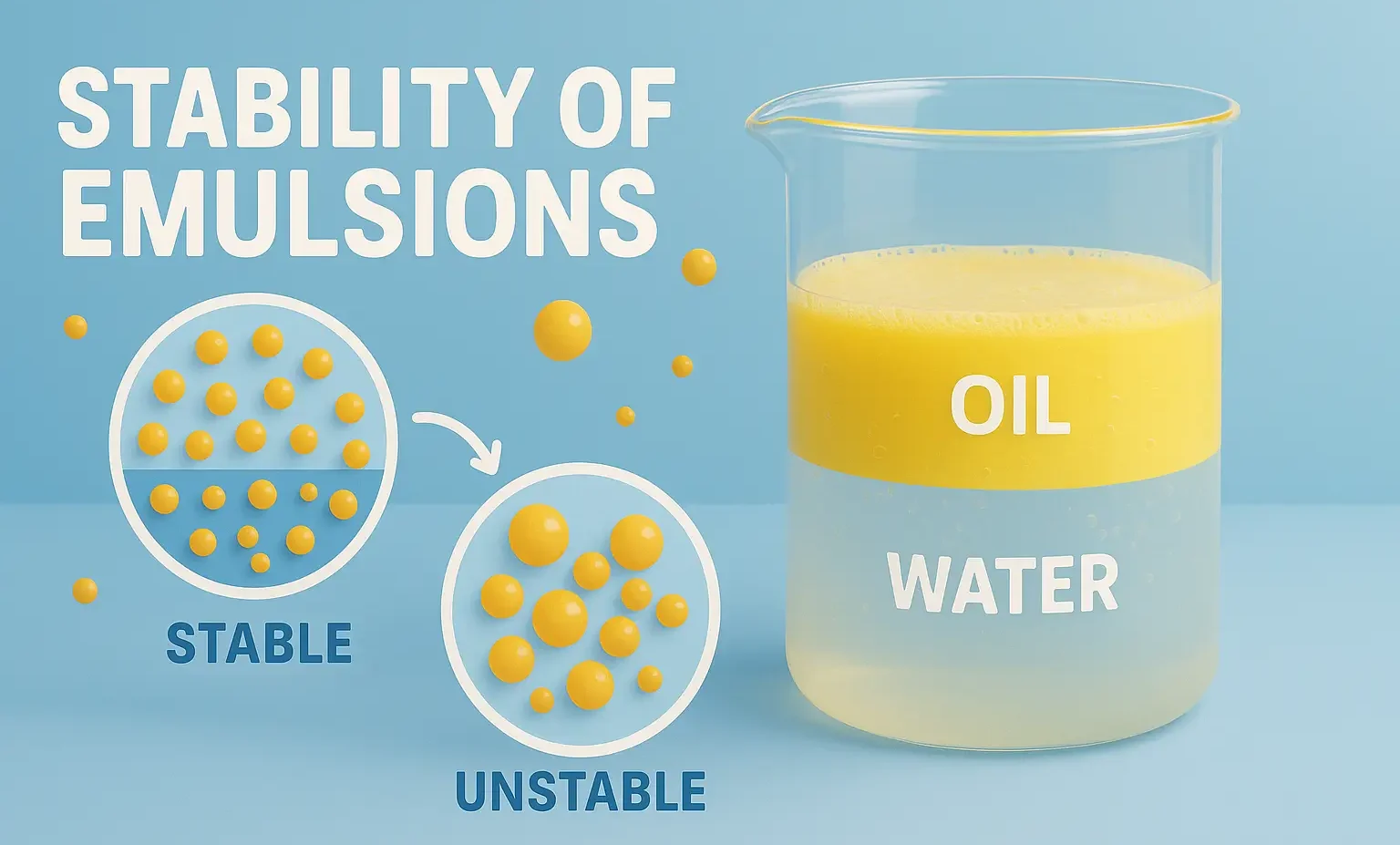
Stability of Emulsions refers to the ability of dispersed droplets to resist coalescence and phase separation. It is vital in pharmaceuticals, foods, and cosmetics for product effectiveness. Stability refers to the ability of an emulsion to resist changes such as separation, creaming, cracking, or phase inversion over time. Types of Instability in Emulsions Instability may … Read more

Multiple Emulsions

Multiple Emulsions

Definition of Multiple Emulsions: Multiple emulsions are complex systems where emulsions exist within emulsions. Common types include: W/O/W: Water-in-oil-in-water O/W/O: Oil-in-water-in-oil Example (W/O/W): Internal water droplets are dispersed in oil droplets, which are further dispersed in an external water phase. Applications: Controlled and sustained drug release Masking taste or odor Targeted drug delivery Cosmetics and … Read more

Theories of Emulsification

Theories of Emulsification

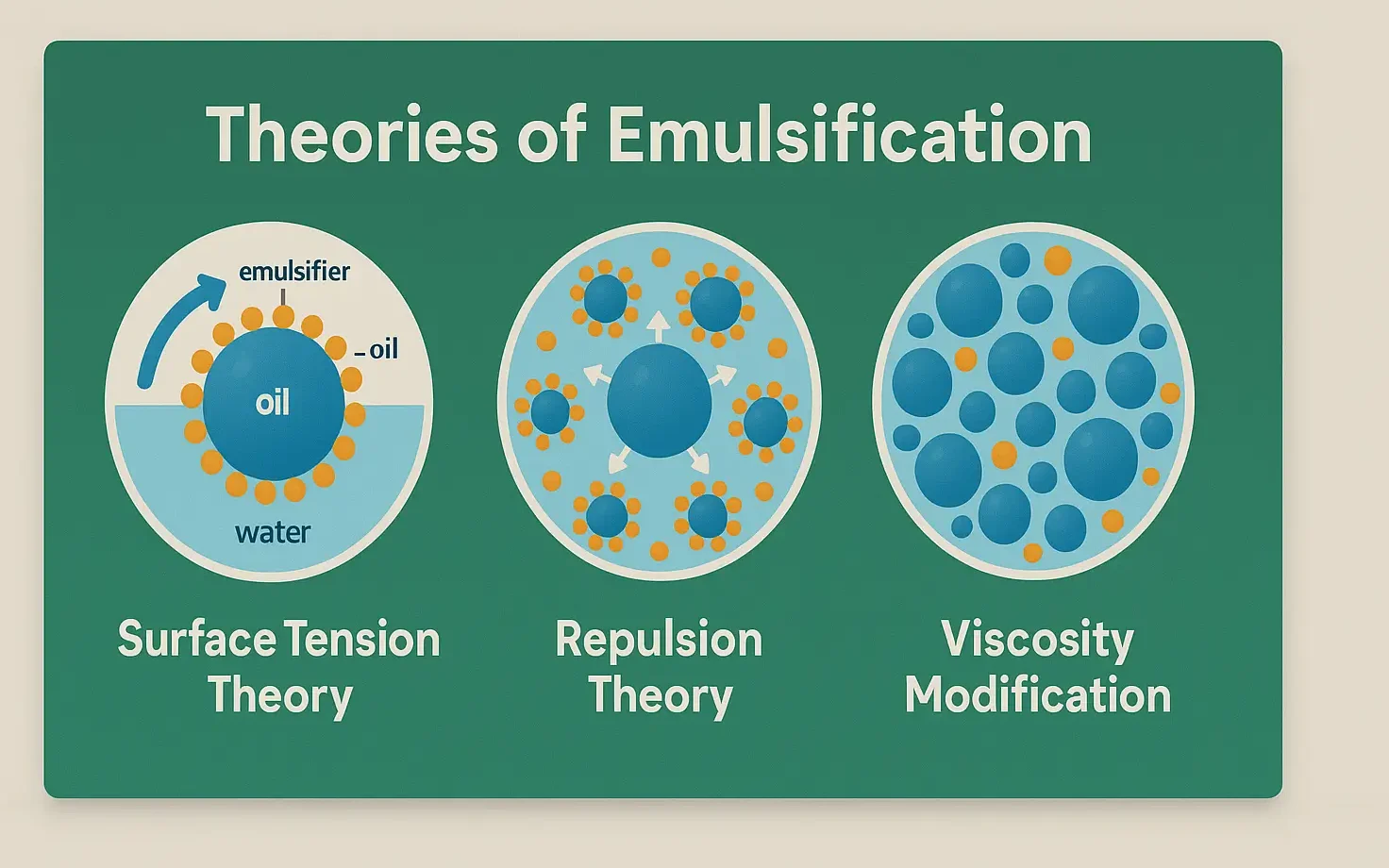
Theories of Emulsification aid in formulating stable pharmaceutical and food emulsions. Theories of Emulsification explain how emulsifying agents stabilize oil-water mixtures. These are theories that explain the formation and stabilization of emulsions: Monomolecular Theory Emulsifying agents like surfactants form a monomolecular film at the oil-water interface. These molecules have hydrophilic (water-loving) and lipophilic (oil-loving) ends, … Read more

Microemulsions

Microemulsions

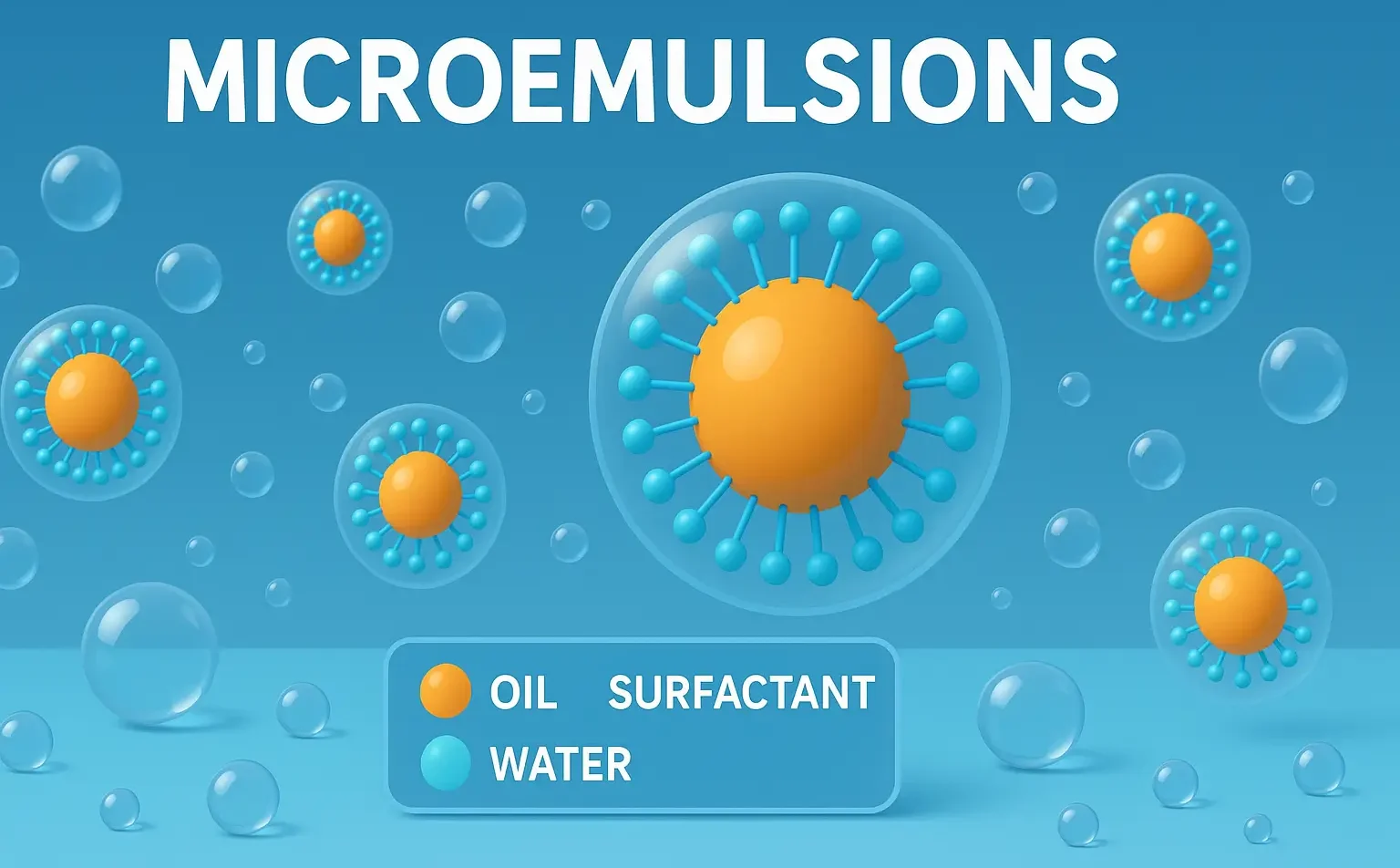
Definition of Microemulsions: Microemulsions are thermodynamically stable, transparent or translucent emulsions composed of oil, water, surfactant, and co-surfactant. Key Features: Droplet size: 10–100 nm High clarity (may appear clear or slightly bluish) Spontaneous formation (with gentle mixing) High stability compared to conventional emulsions Types: O/W microemulsion W/O microemulsion Bicontinuous microemulsions Components Oil phase: Medium-chain triglycerides, … Read more

Emulsions

Emulsions

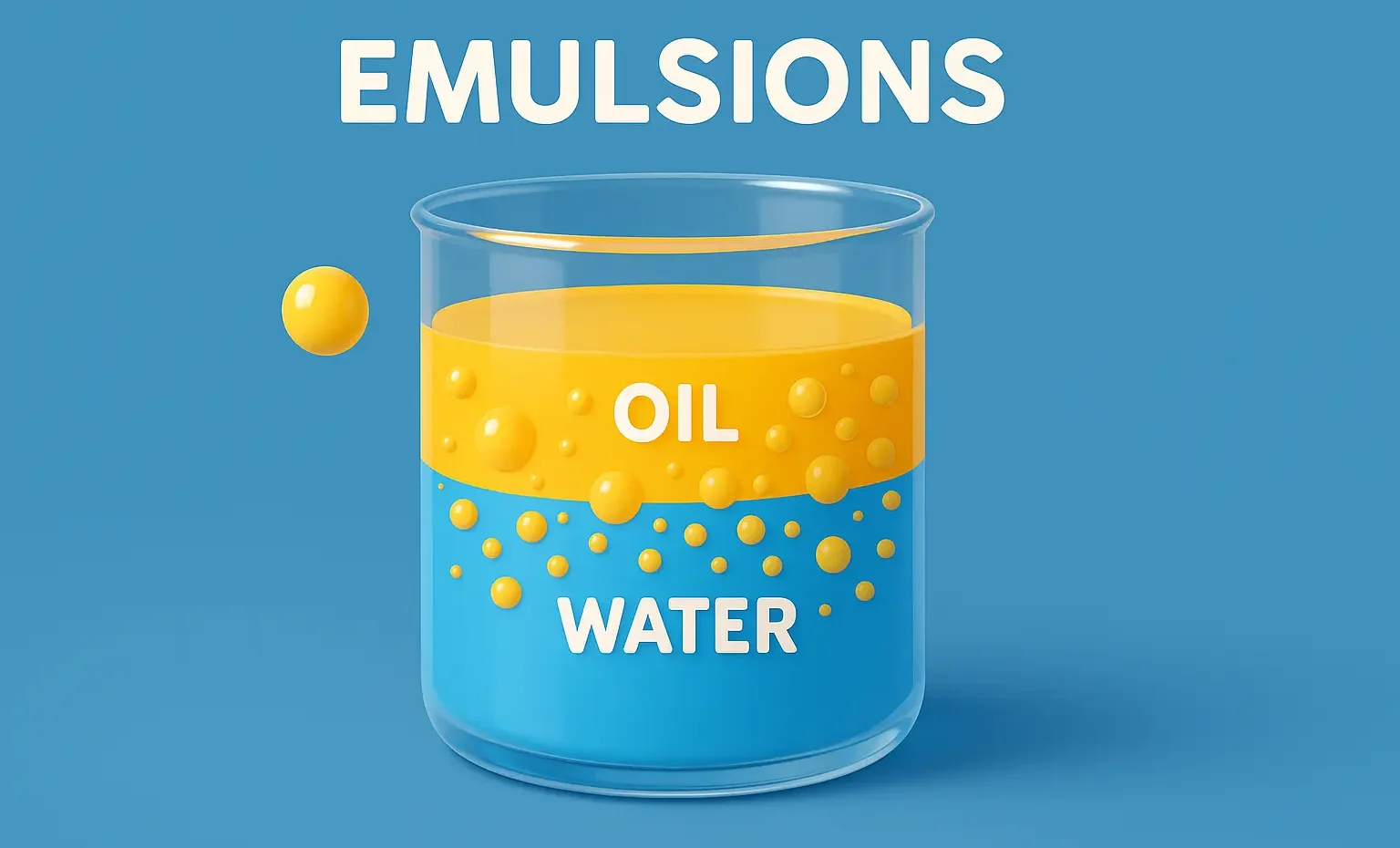
Definition of Emulsions: An emulsion is a biphasic (two-phase) system consisting of two immiscible liquids, where one liquid (the dispersed phase) is finely dispersed in the form of droplets throughout the other (the continuous phase), stabilized by an emulsifying agent. Classification of Emulsions Emulsions can be classified into four types: Oil-in-Water (O/W) Emulsion: Oil droplets … Read more

Deflocculated Suspensions

Deflocculated Suspensions

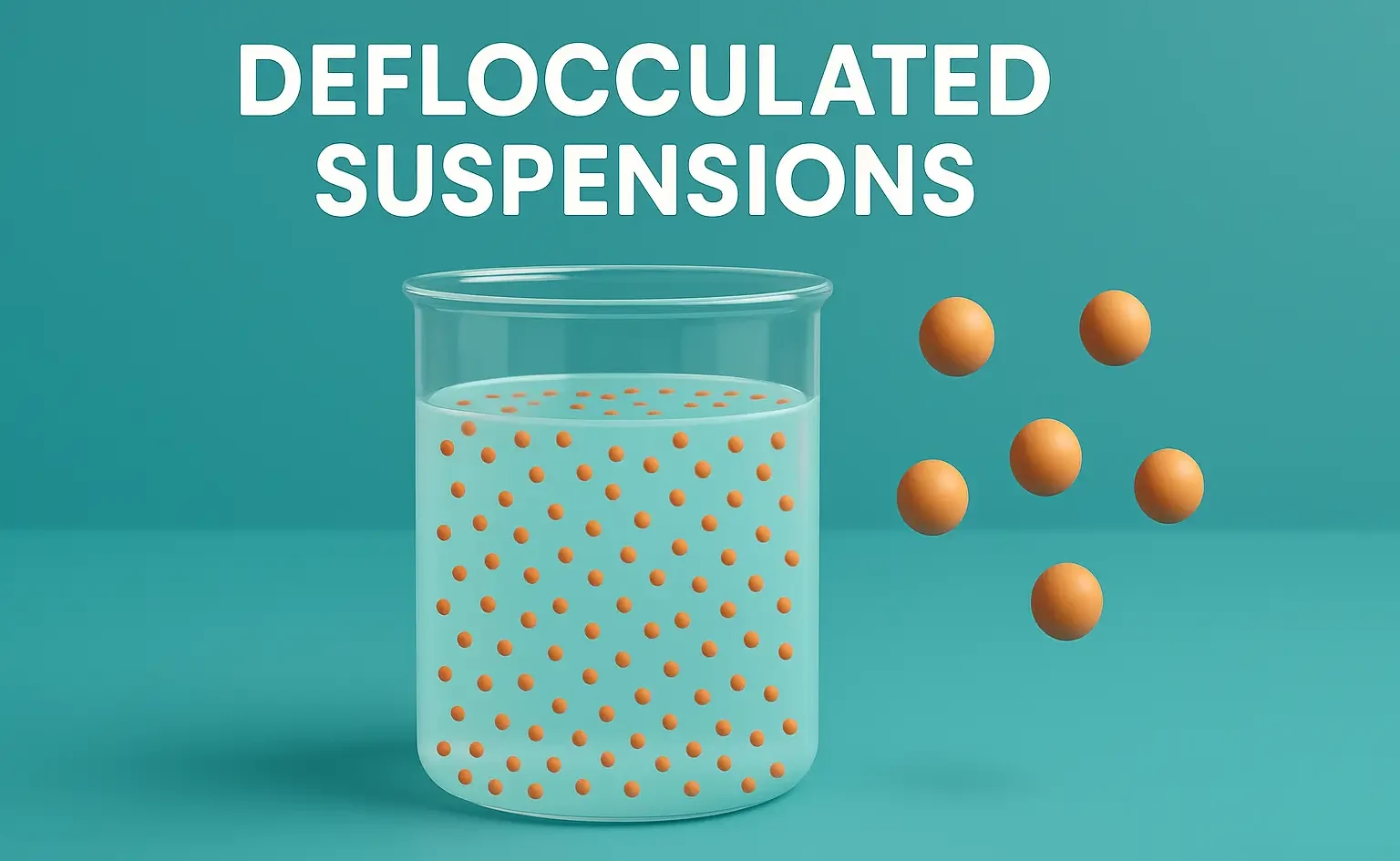
Deflocculated Suspensions show slow sedimentation but form a hard cake, making redispersion difficult. Deflocculated Suspensions Particles remain separate and discrete. Settle slowly due to small size and mutual repulsion. Can lead to caking—a dense sediment forms that’s hard to redisperse. Advantages of Deflocculated Suspensions: Appears more uniform Slower settling Disadvantages of Deflocculated Suspensions: Risk of … Read more