Anileridine Hydrochloride

Anileridine Hydrochloride
Anileridine Hydrochloride acts on opioid receptors, altering pain perception and producing sedation. It is an opioid analgesic for moderate to severe pain management. Chemical Formula: C₂₂H₂₈N₂O₂·HCl Mechanism of Action: μ-opioid receptor agonist Therapeutic Uses of Anileridine Hydrochloride: Moderate to severe pain (post-op or cancer pain) Faster onset than morphine Side Effects of Anileridine Hydrochloride: Respiratory … Read more
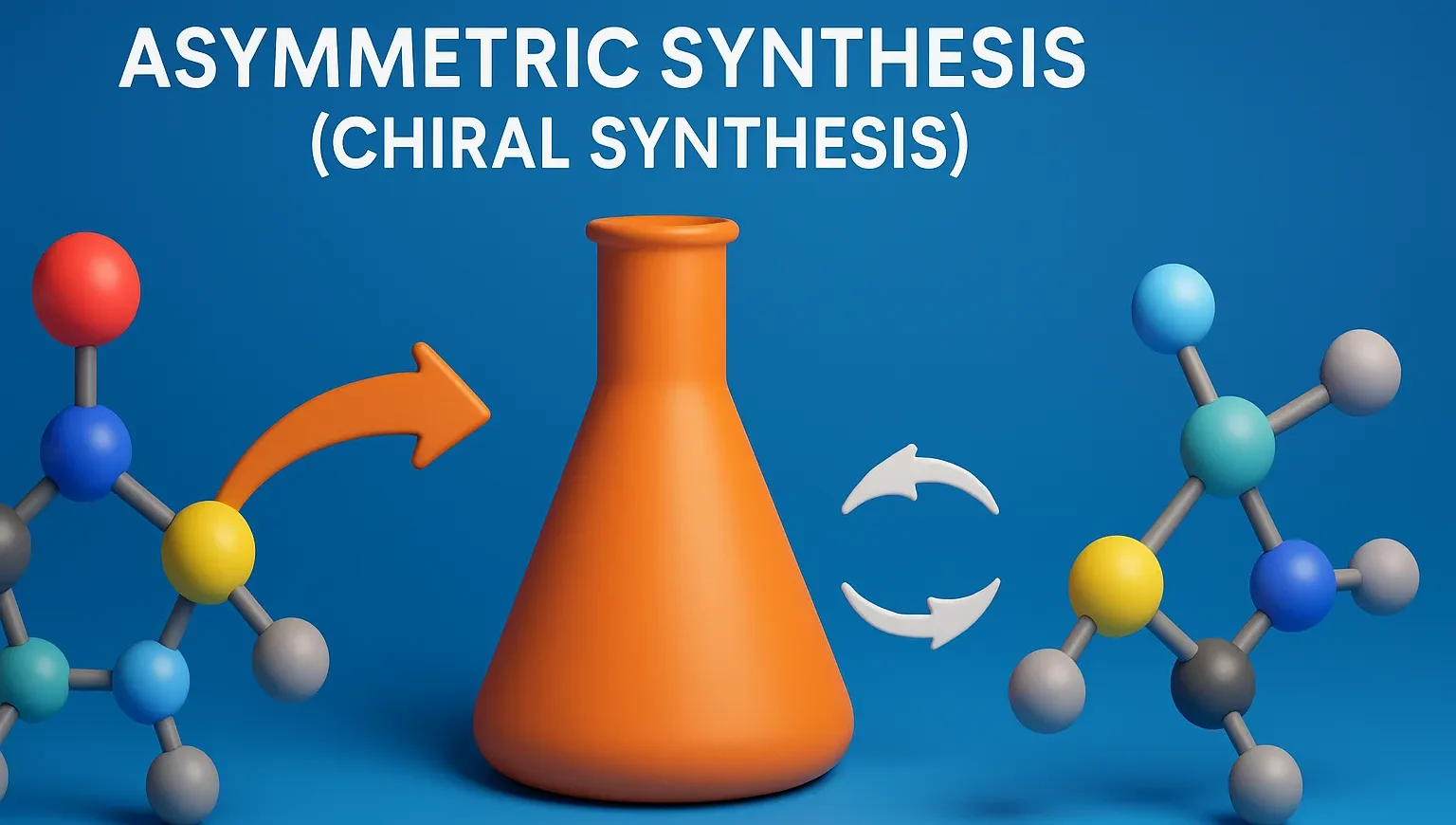
Asymmetric Synthesis (Chiral Synthesis)

Asymmetric Synthesis (Chiral Synthesis)

Asymmetric Synthesis (Chiral Synthesis) is a method of creating compounds with a preferred chirality to produce optically active molecules. Definition: Asymmetric synthesis is a chemical reaction that forms chiral products in a way that favors one stereoisomer (enantiomer or diastereomer) over the other. Essential in drug synthesis, since enantiomers can have different biological effects. Types … Read more

Racemic Modification (Racemization)

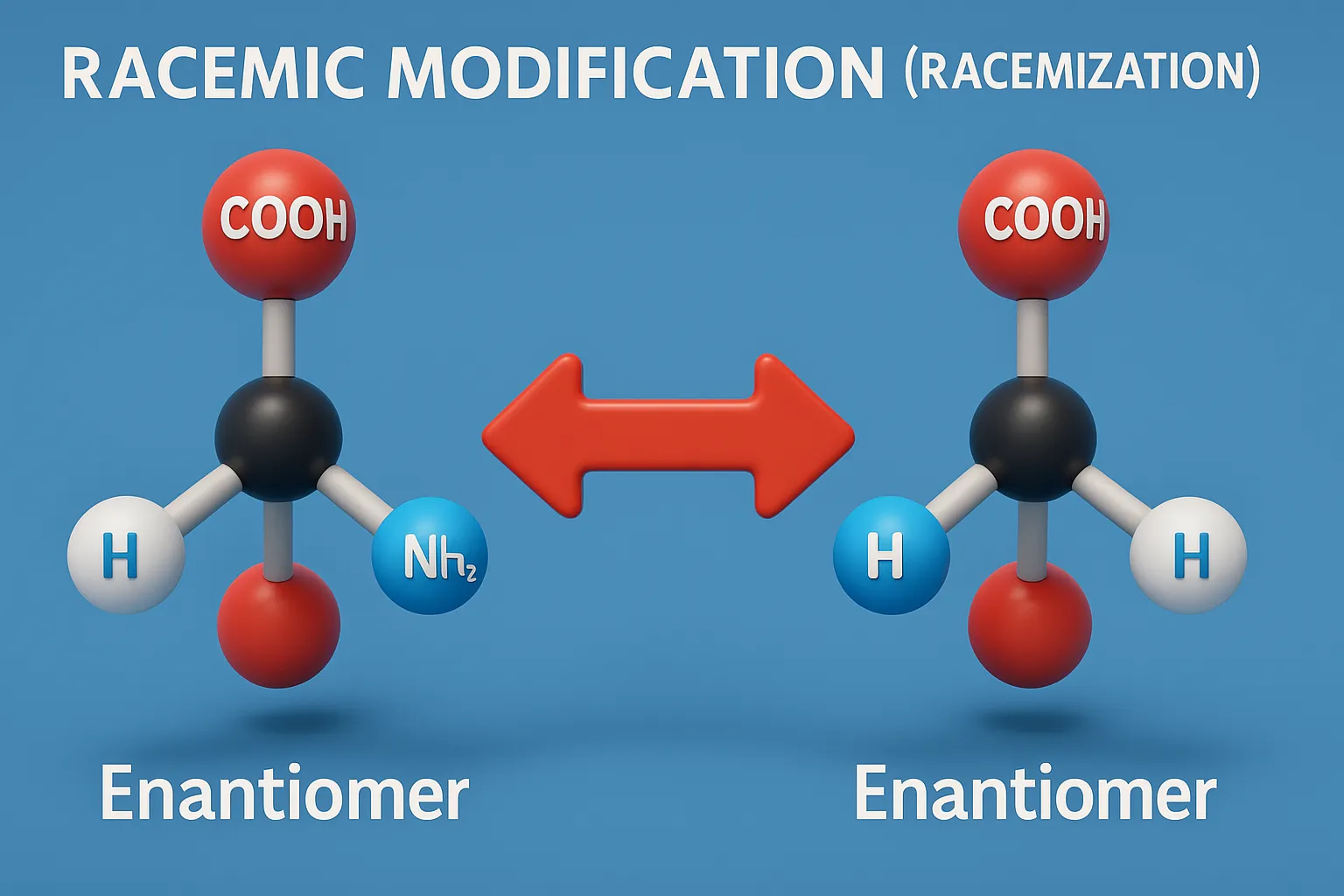
Racemic Modification (Racemization)

Racemic Modification (Racemization) is the formation of an equimolar mixture of two enantiomers, making the mixture optically inactive. What is a Racemic Mixture? A racemic mixture (also called a racemate) is a 1:1 mixture of two enantiomers of a chiral compound: One is dextrorotatory (+) One is levorotatory (−) Their optical rotations cancel, so the … Read more

R-S System of Nomenclature (Absolute Configuration)

R-S System of Nomenclature (Absolute Configuration)

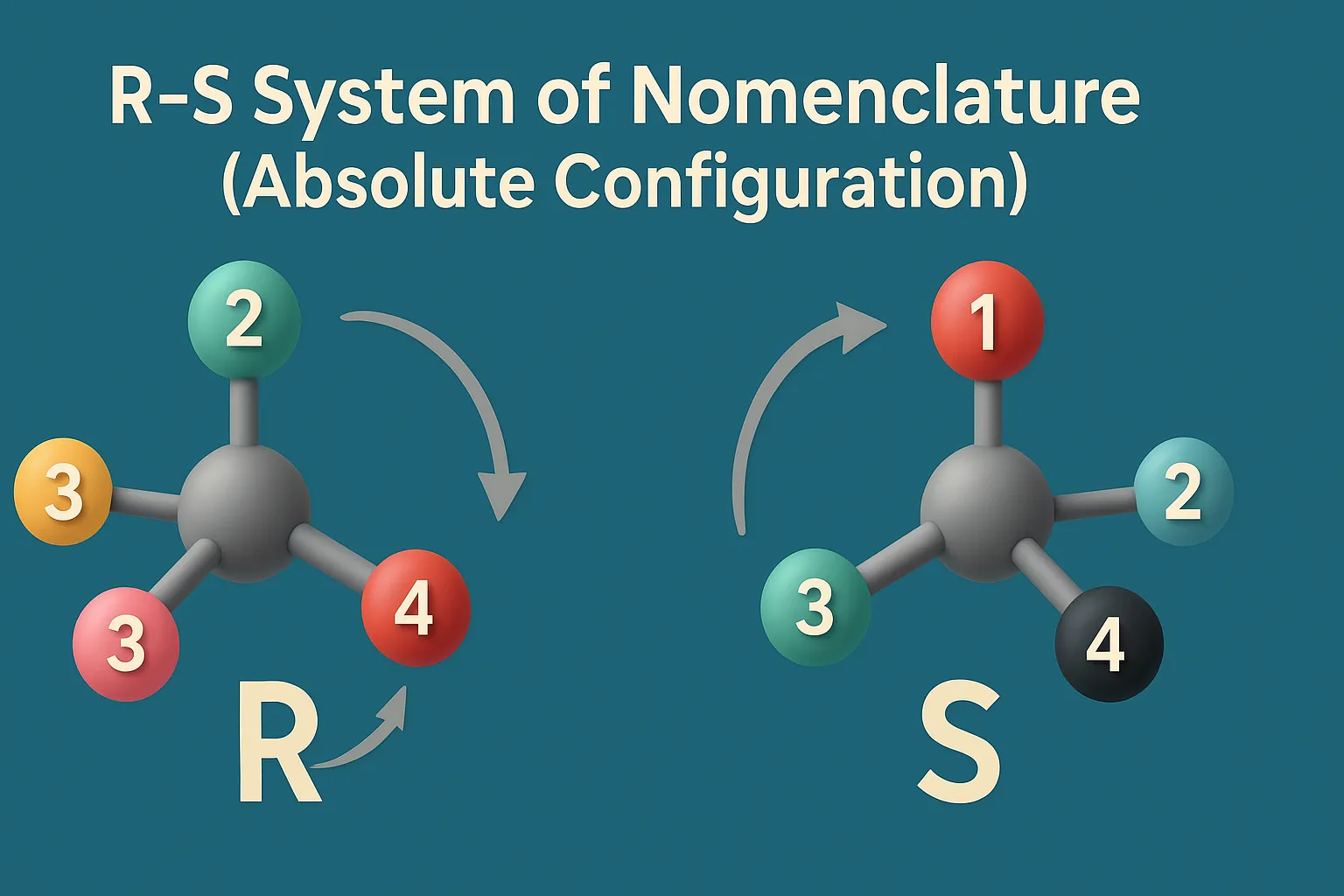
R-S System of Nomenclature (Absolute Configuration) designates chiral centers as R or S based on substituent priority and spatial arrangement. R-S System of Nomenclature (Absolute Configuration) The R/S system gives the absolute configuration of a chiral center using the sequence rules. Steps to assign R or S: Identify the chiral center. Assign priority (1–4) to … Read more

Resolution of Racemic Mixture

Resolution of Racemic Mixture

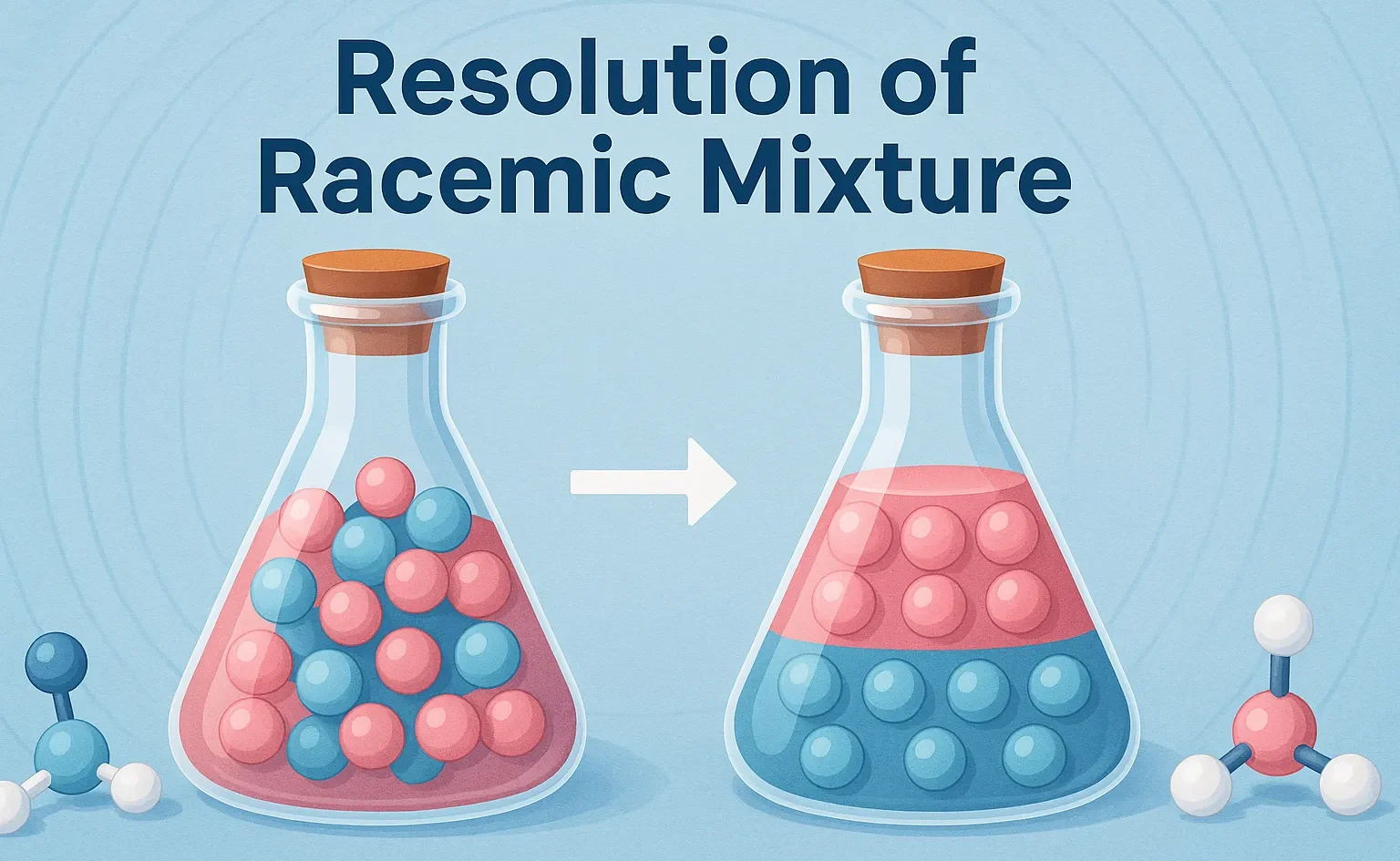
Resolution of Racemic Mixture is the process of separating two enantiomers from a racemic mixture to obtain optically active forms. Since enantiomers have identical physical properties (melting point, solubility, etc.), they cannot be separated by normal methods. So, we need special techniques to separate them — this process is called resolution. Definition: Resolution is the … Read more

Reactions of Chiral Molecules

Reactions of Chiral Molecules

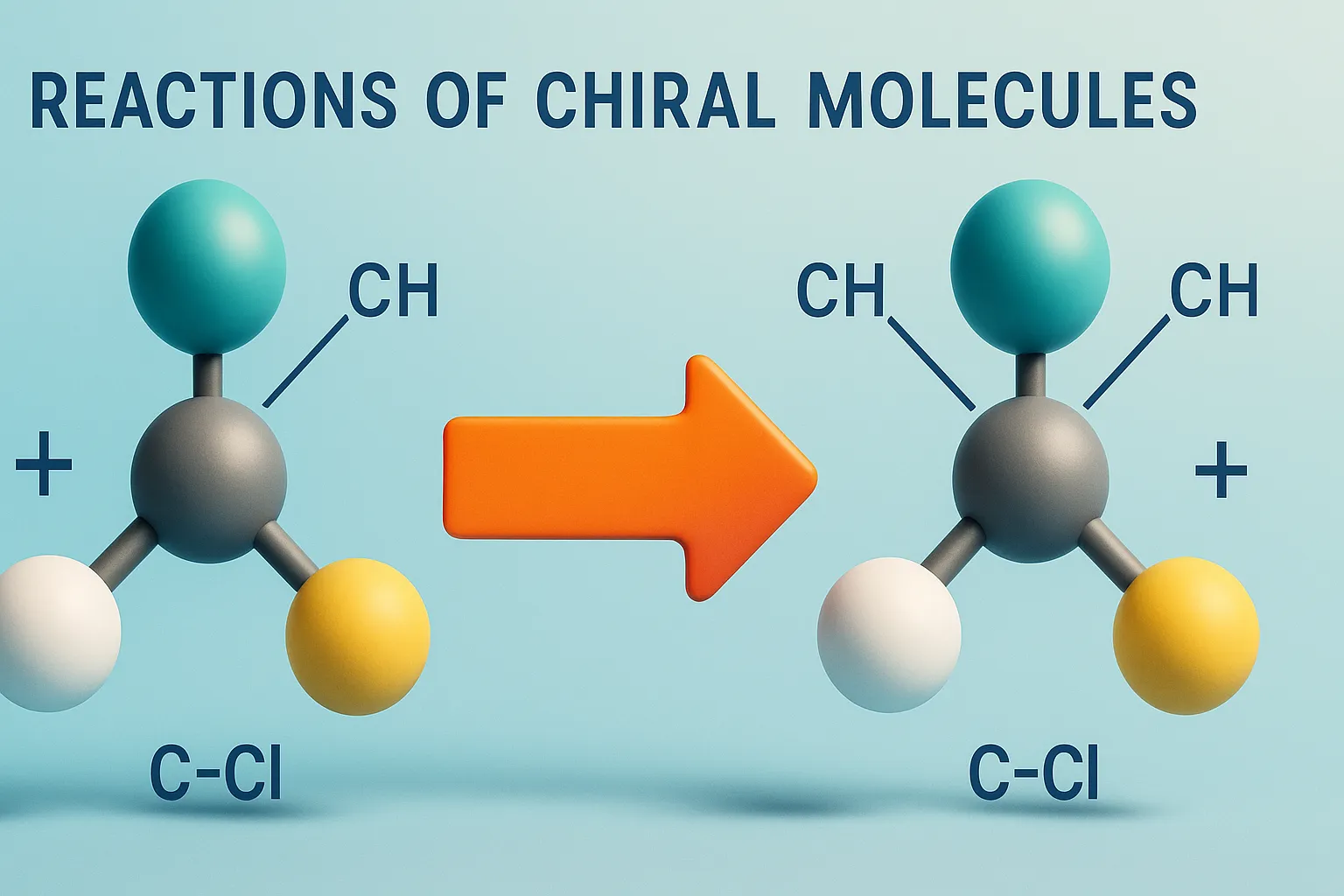
Reactions of Chiral Molecules involve changes where chirality may be retained, inverted, or lost, influencing drug activity and biological effects. Reactions involving chiral molecules are influenced by stereochemistry, leading to different outcomes based on the chirality. Racemization A reaction where a single enantiomer is converted into an equal mixture of both enantiomers (racemic mixture). Racemic … Read more

Thioridazine Hydrochloride

Thioridazine Hydrochloride is a typical antipsychotic, blocking dopamine receptors to reduce psychotic activity in the brain. It treats schizophrenia and psychotic disorders by managing symptoms like agitation and hallucinations. Chemical Formula: C₂₁H₂₇ClN₂S₂·HCl Mechanism of Action: D2 receptor antagonist Also blocks muscarinic, alpha, and H1 receptors Uses of Thioridazine Hydrochloride: Schizophrenia (especially in treatment-resistant or sensitive … Read more

Sequence Rules (Cahn–Ingold–Prelog Rules)

Sequence Rules (Cahn–Ingold–Prelog Rules)

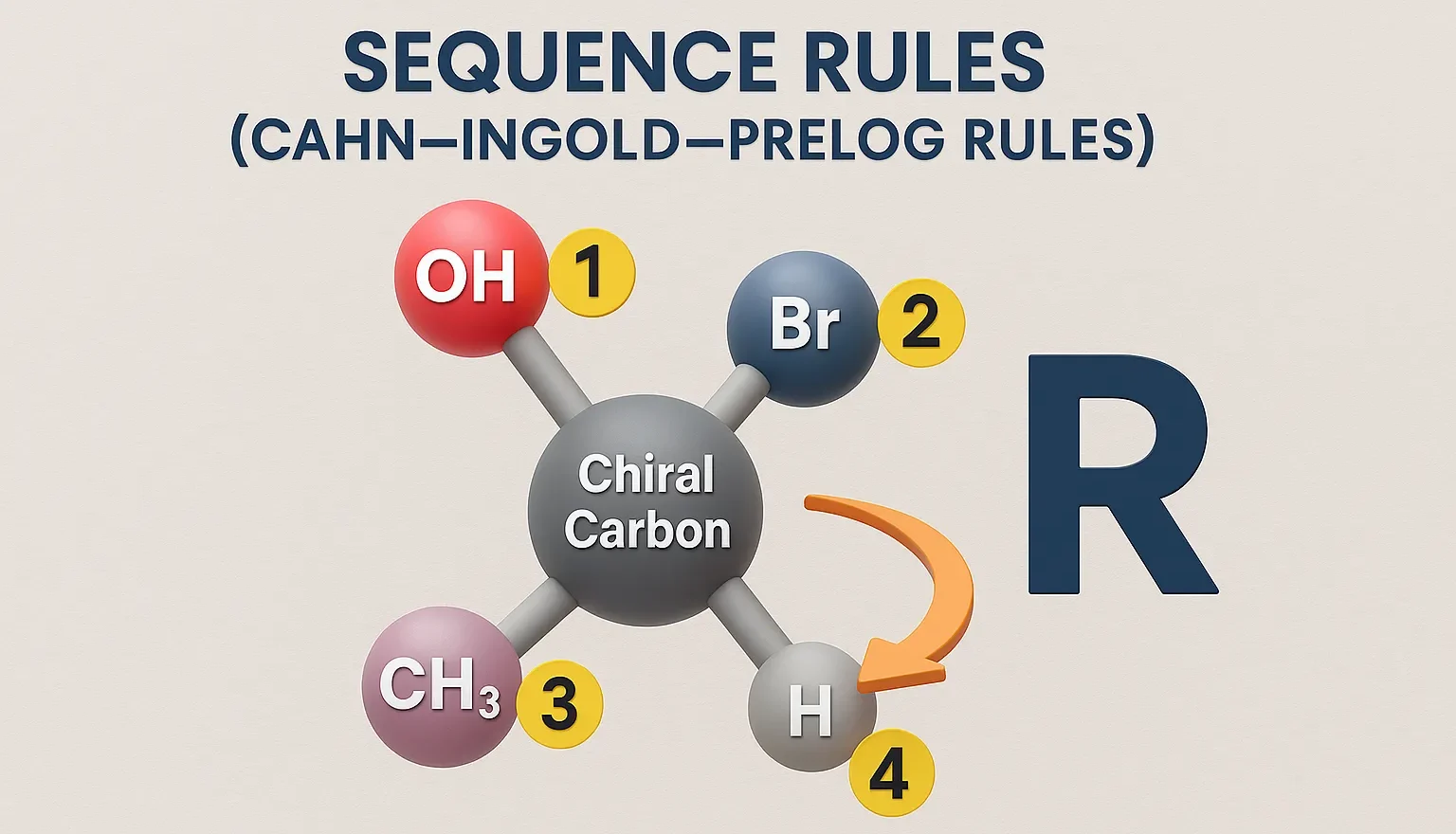
Sequence Rules (Cahn–Ingold–Prelog Rules) assign R or S configuration to chiral centers based on priority of substituent groups. These rules are used to assign priorities to groups around a chiral center when determining R/S configurations. Sequence Rules: Priority by atomic number: Higher atomic number = higher priority. I > Br > Cl > S > … Read more

D-L System of Nomenclature (Fischer Nomenclature)

D-L System of Nomenclature (Fischer Nomenclature)

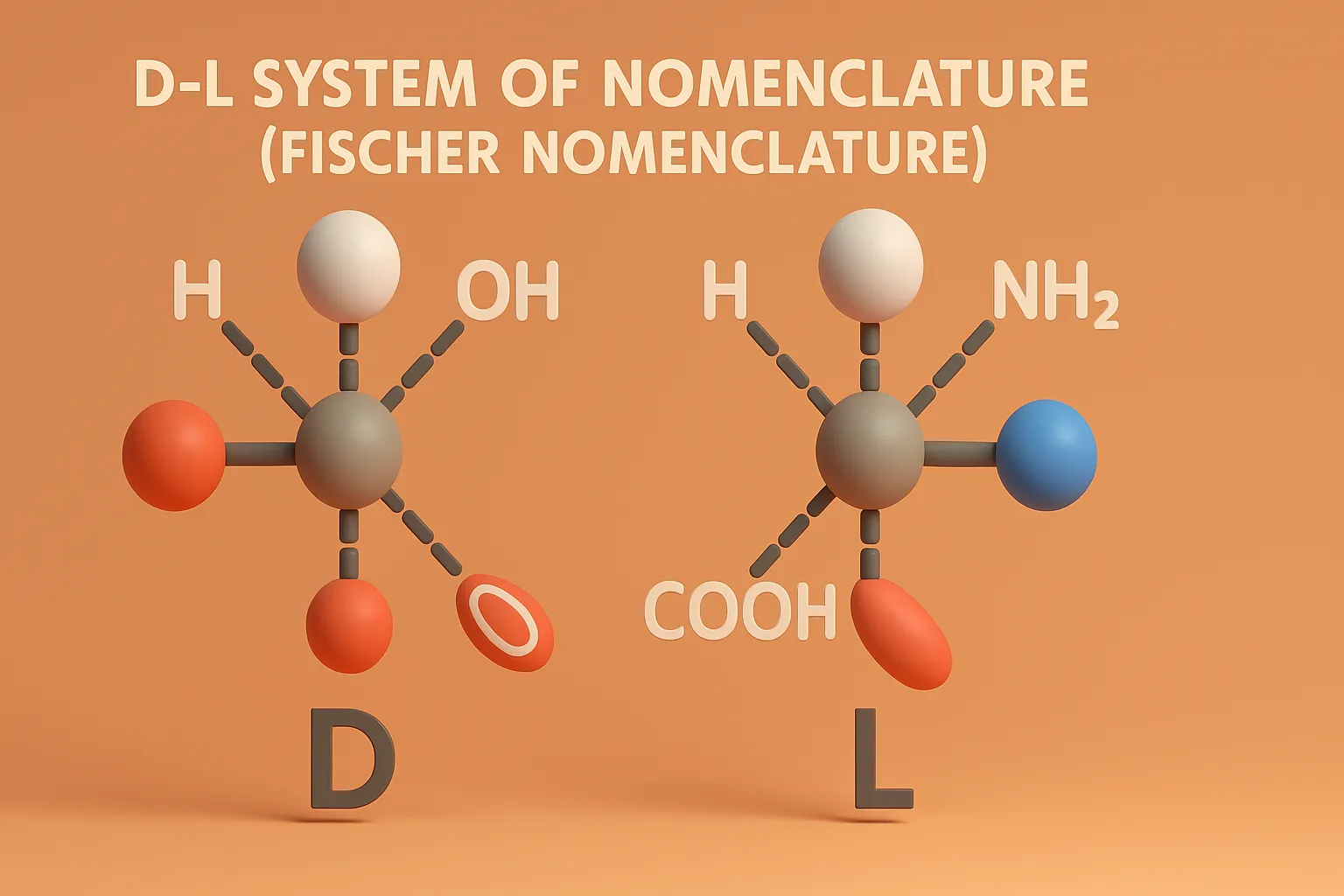
D-L System of Nomenclature (Fischer Nomenclature) classifies chiral molecules based on the spatial arrangement of groups around the asymmetric carbon. What is it? The D-L system is a historical method used to designate the configuration of chiral molecules, particularly sugars and amino acids. It is based on the molecule’s similarity to glyceraldehyde, the simplest chiral … Read more

Presentation of Molecules

Presentation of Molecules

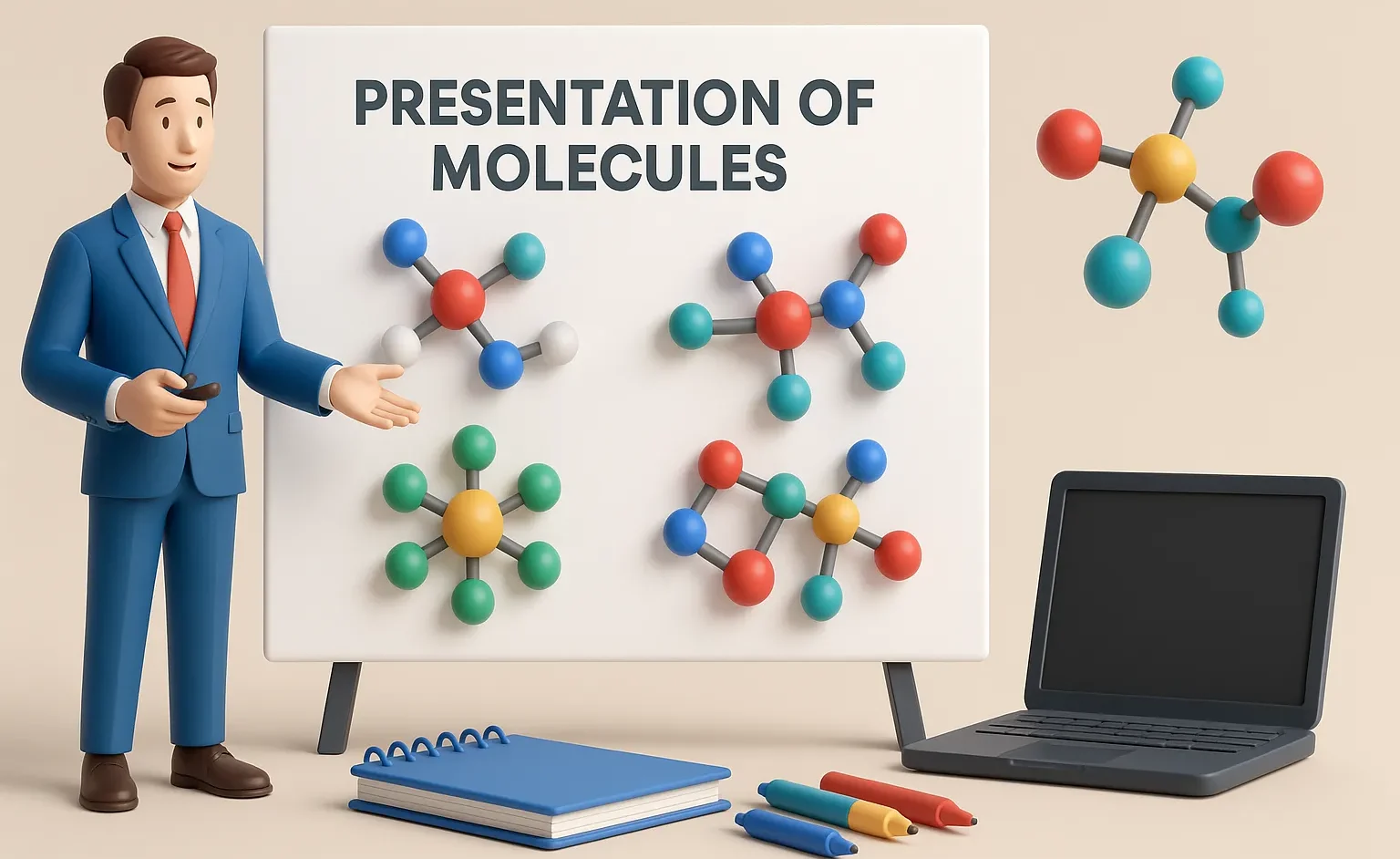
Presentation of Molecules refers to different ways of representing molecular structures, such as Fischer, Newman, Sawhorse, and wedge-dash projections. Presentation of Molecules Wedge-Dash (3D) Projection Purpose: Shows the actual 3D spatial orientation of atoms or groups. Features: Solid wedge (▲): Bond coming out of the plane (towards you) Dashed wedge (▿ or dashed line): Bond … Read more