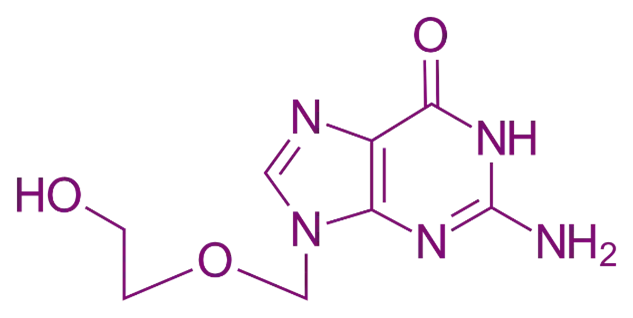
Chemical Structure / Formula of Acyclovir
- Formula: C₈H₁₁N₅O₃
- Structure: A purine nucleoside analog (acyclic guanosine derivative).
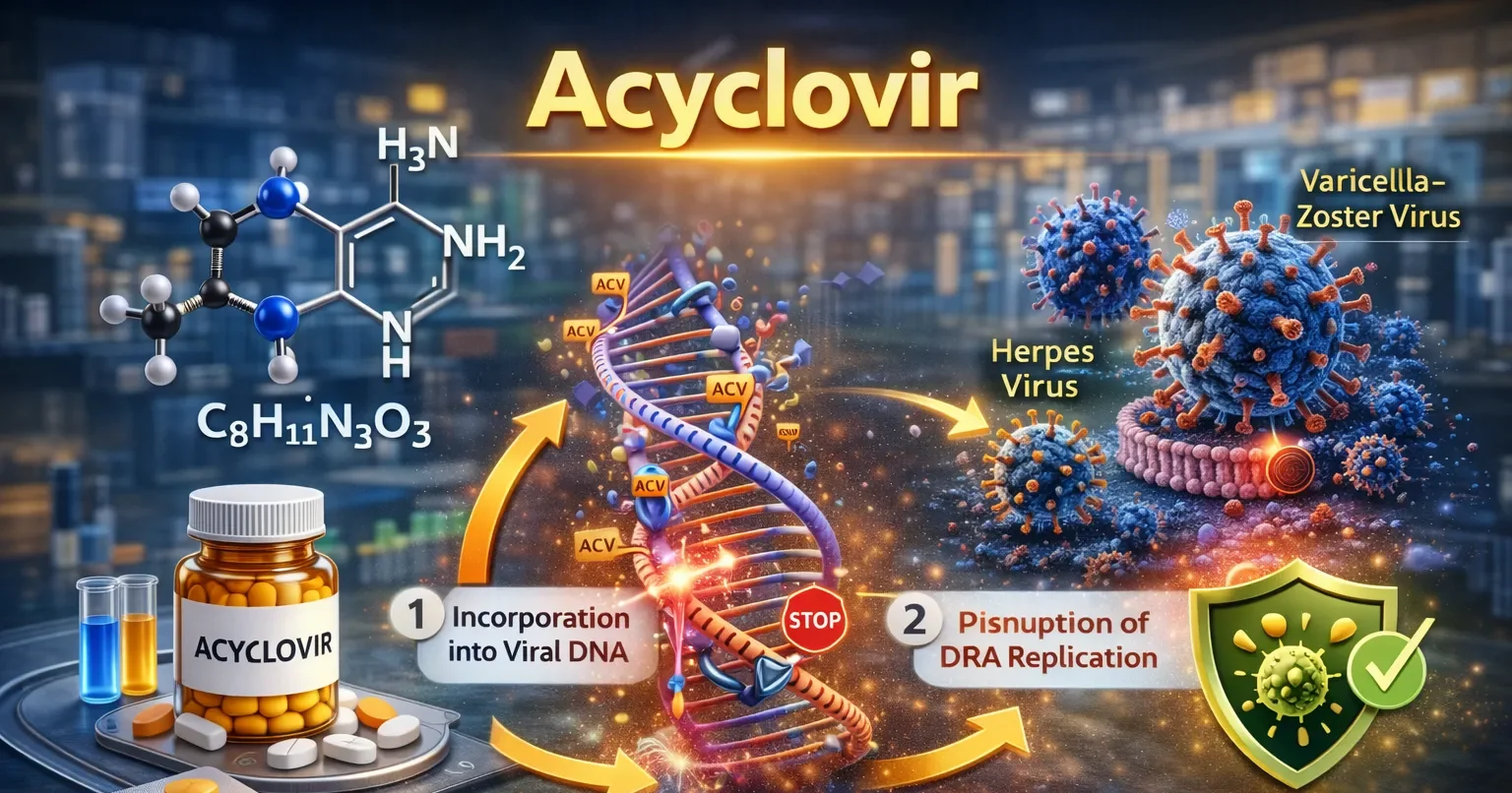
Mechanism of Action
- Prodrug activated by viral thymidine kinase (TK) to acyclovir monophosphate.
- Further phosphorylated to acyclovir triphosphate, which inhibits viral DNA polymerase and causes chain termination.
Uses
- HSV-1, HSV-2 (herpes labialis, genital herpes, encephalitis).
- Varicella-zoster virus (chickenpox, shingles).
- CMV prophylaxis in immunocompromised patients.
Advertisements
Side Effects
- Nephrotoxicity (crystal nephropathy, reversible).
- Neurotoxicity (seizures, hallucinations in high doses).
- GI distress, headache, rash.
Structure-Activity Relationship (SAR) of Acyclovir
| Structural Feature | SAR Insight |
| Acyclic guanine analog | Mimics guanosine but lacks proper sugar, causing chain termination upon incorporation into viral DNA. |
| Free hydroxyl group on side chain | Allows phosphorylation by viral thymidine kinase (TK) – critical for selective activation in infected cells. |
| Guanine base | Essential for recognition by viral enzymes. |
| Absence of full sugar ring | Causes premature DNA chain termination – key mechanism of action. |
| Modifications to side chain | Often reduce selective phosphorylation and potency. |
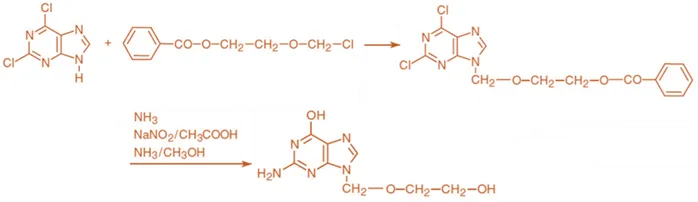
Synthesis of Acyclovir