
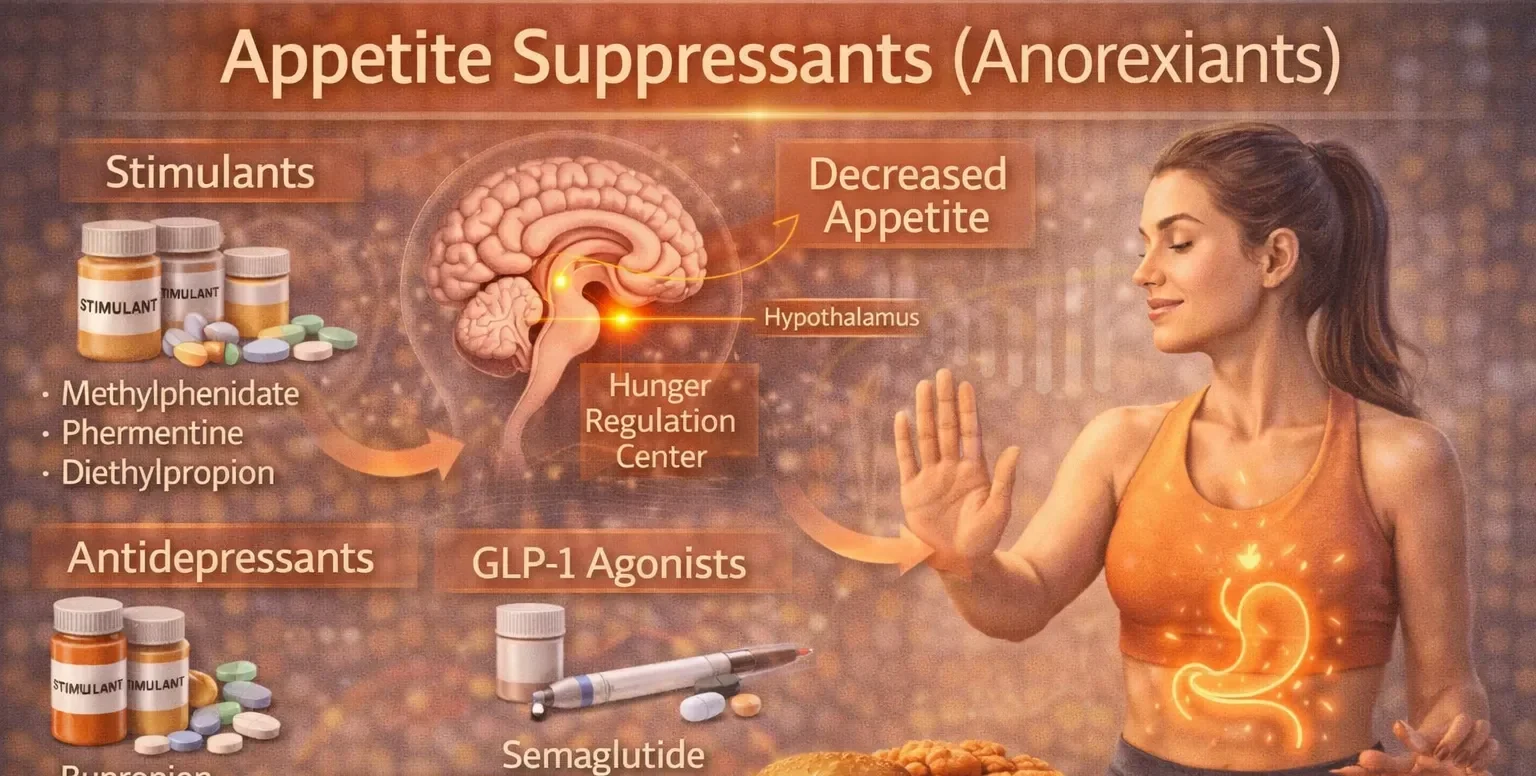
Appetite Suppressants (Anorexiants)
Appetite Suppressants (Anorexiants) are drugs that reduce hunger by acting on central appetite control centers.
Indications
- Obesity
- Overeating disorders
- Metabolic syndrome (adjunct to diet & exercise)
Classes of Appetite Suppressants

-
Sympathomimetic Agents (Stimulants)
- Examples: Phentermine, Diethylpropion
- Mechanism: Increase norepinephrine and dopamine → CNS stimulation → reduced hunger
- Use: Short-term obesity treatment
- Side Effects: Insomnia, hypertension, dependence potential
-
Serotonin-Norepinephrine Reuptake Inhibitors (SNRIs)
- Examples: Sibutramine (withdrawn in many countries due to CV risk)
- Mechanism: Increase satiety by elevating serotonin and NE
- Note: Use with caution; better alternatives now available
-
GLP-1 Receptor Agonists
- Examples: Liraglutide, Semaglutide
- Mechanism: Mimic GLP-1 → delay gastric emptying, increase satiety
- Use: Obesity, Type 2 diabetes
- Note: Weekly injectable options with weight loss benefits
-
Combination Drugs
- Examples:
- Phentermine + Topiramate: CNS stimulant + antiepileptic combo
- Naltrexone + Bupropion: Opioid antagonist + dopamine/NE reuptake inhibitor
- Use: Chronic obesity
- Mechanism: Multiple pathways affecting hunger and reward
- Examples:
Advertisements