Zero-Order Reactions

Zero-Order Reactions
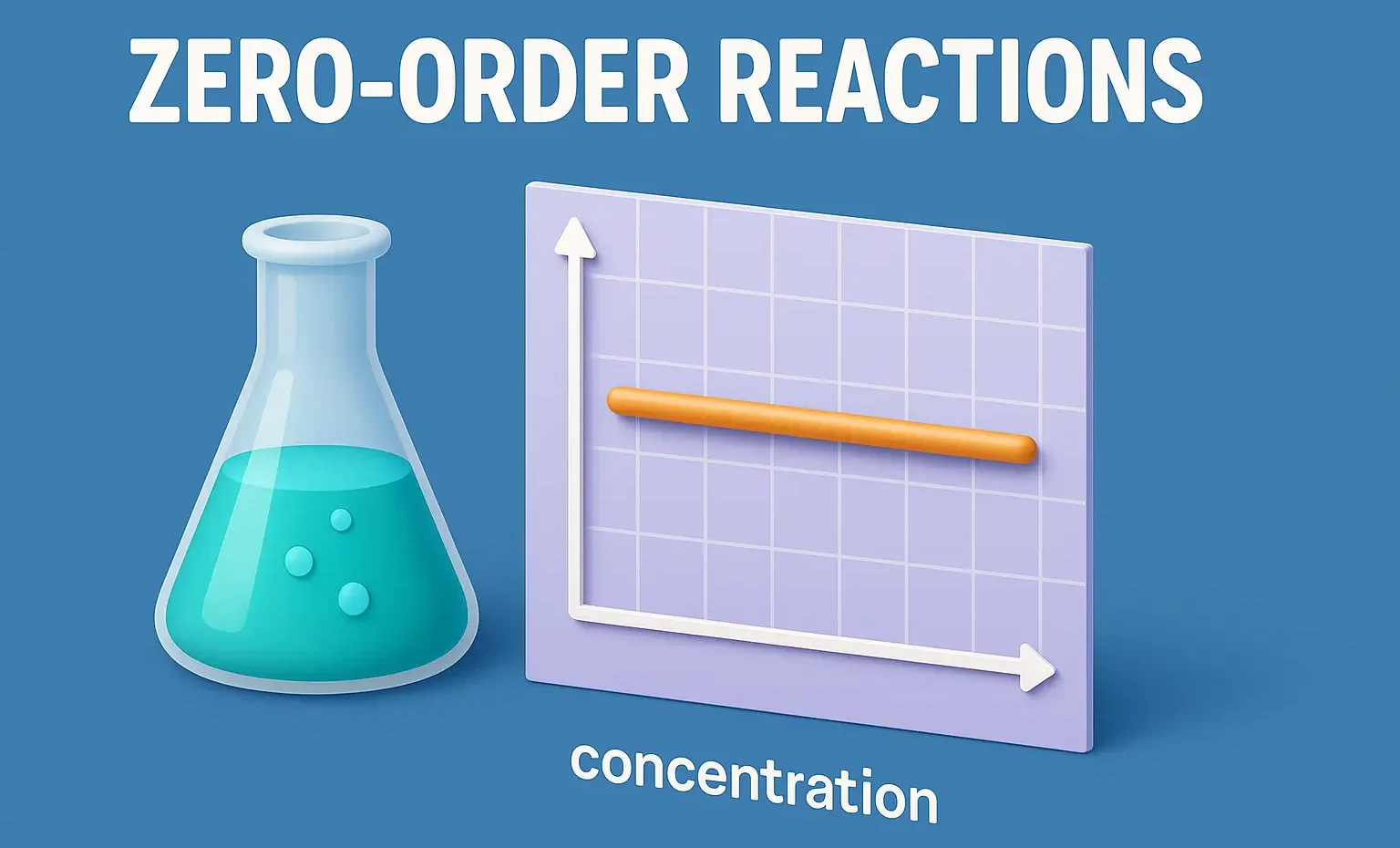
Zero-Order Reactions explain drug elimination like alcohol and phenytoin at saturating doses. Definition: Rate of degradation is independent of concentration. Rate law: \(\text{Rate} = -\frac{d[A]}{dt} = k\) Separate variables: \( d[A] = -k \, dt \) Integrate both sides: $\int_{[A]_0}^{[A]} d[A] = -k \int_{0}^{t} dt$ Graph: Plot of [A] vs. time = straight line with … Read more


Reaction Kinetics and Its Relevance to Drug Stability

Reaction Kinetics and Its Relevance to Drug Stability

Reaction kinetics sand Its Relevance to Drug Stability is the study of rates at which chemical reactions occur. In pharmaceuticals, it helps: Predict how long a drug remains stable Design appropriate storage conditions Optimize formulations Set expiration dates A general rate law expresses how the rate of reaction depends on the concentration of reactants. General … Read more

Drug Stability

Drug Stability

Definition of Drug Stability Drug stability refers to the ability of a pharmaceutical product to maintain its physical, chemical, microbiological, therapeutic, and toxicological specifications throughout its shelf life. A drug degrades over time due to: Chemical reactions (e.g., hydrolysis, oxidation, photodegradation) Environmental factors (light, temperature, humidity) Interaction with excipients or container Types of Stability: Chemical … Read more

Particle Number

Particle Number

Particle Number helps assess size distribution, stability, and quality in pharmaceutical formulations. Particle Number refers to the total count of discrete particles present in a given dispersion or sample. You can estimate the numbers of particles in a sample if the total mass, average particles diameter, and density are known. Formula $N = \frac{6M}{\pi D^{3} … Read more

Mean Particle Size

Mean Particle Size

Mean Particle Size affects dissolution, stability, flow, and bioavailability of pharmaceutical products. Mean Particle Size indicates the average dimension of particles in a sample for uniform analysis. Because particle populations contain a range of sizes, different types of mean particle sizes are used: 1. Arithmetic Mean Diameter(D₁) $D_1 = \frac{\sum_i n_i D_i}{\sum_i n_i}$ Where: $D_i … Read more

Flow Properties Of Powders

Flow Properties Of Powders

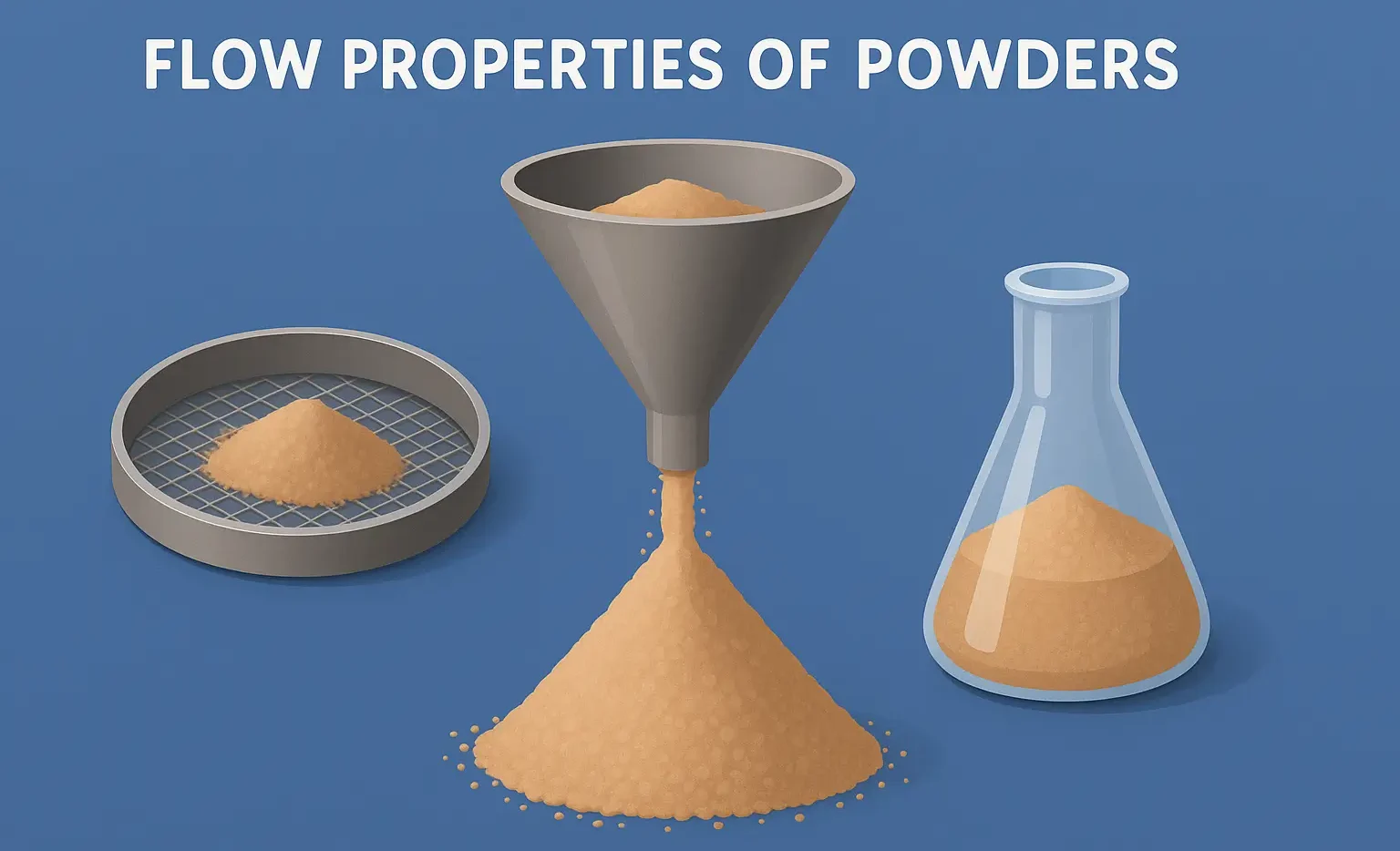
Flow Properties Of Powders describe how particles move, pack, and discharge in pharmaceutical processing. Flow Properties Of Powders affect mixing, granulation, tableting, and overall product quality. Powder flow is critical for operations like tablet compression, capsule filling, and granulation. Methods to Evaluate Flow: 1 Angle of Repose Angle formed when a powder is allowed to … Read more

Bulkiness

Bulkiness

Definition of Bulkiness: Bulkiness affects flow, compressibility, and formulation quality in pharmaceuticals. The reciprocal of bulk density. Indicates how much volume a given mass of powder occupies.   $B = \tfrac{1}{\rho_{b}} \; \text{(Bulkiness)}$ Units: cm³/g A bulky powder has low bulk density and occupies more volume. Importance: High bulkiness = light, fluffy powder Important for … Read more

Densities of Powders

Densities of Powders

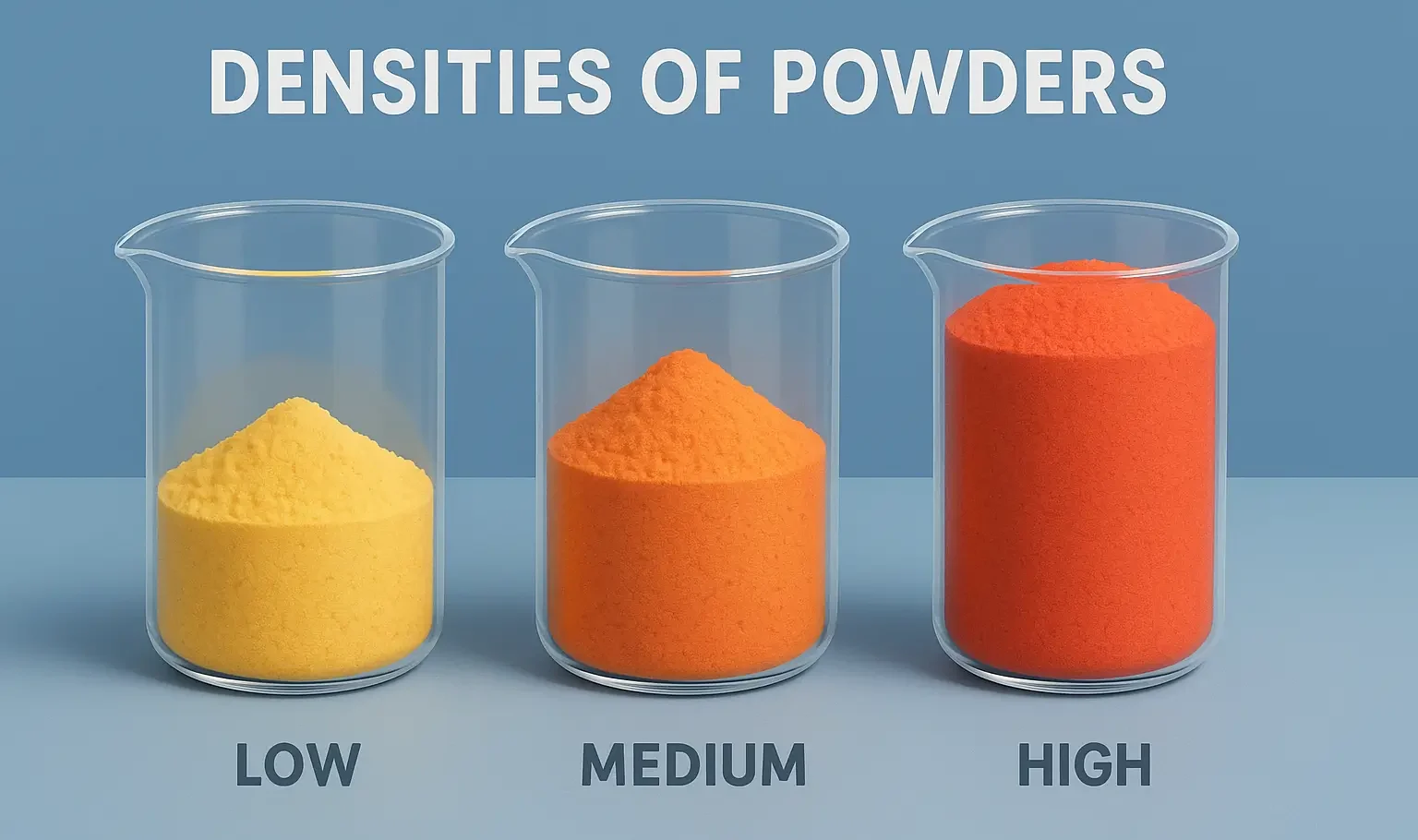
Densities of Powders explain bulk, tapped, and true densities influencing flow and packing. Densities of Powders determine formulation, compaction, and quality control in pharmaceuticals. True Density (ρt) The density of the actual solid material, excluding pores or voids. Measured using a helium pycnometer or liquid displacement. Units: g/cm³ $\rho_{t} = \frac{\text{Mass of particles}}{\text{True volume } … Read more

Packing Arrangement

Packing Arrangement

Definition of Packing Arrangement: Packing Arrangement refers to how particles are arranged in a powder bed. Influences bulk density, porosity, and flow. Types of Packing: Refers to how particles are arranged in a powder bed. Cubic Packing (loosest): Porosity ≈ 47.6% Packing fraction ≈ 52.4% Rhombic (or Hexagonal Close Packing, densest): Porosity ≈ 25.9% Packing … Read more

Porosity

Porosity

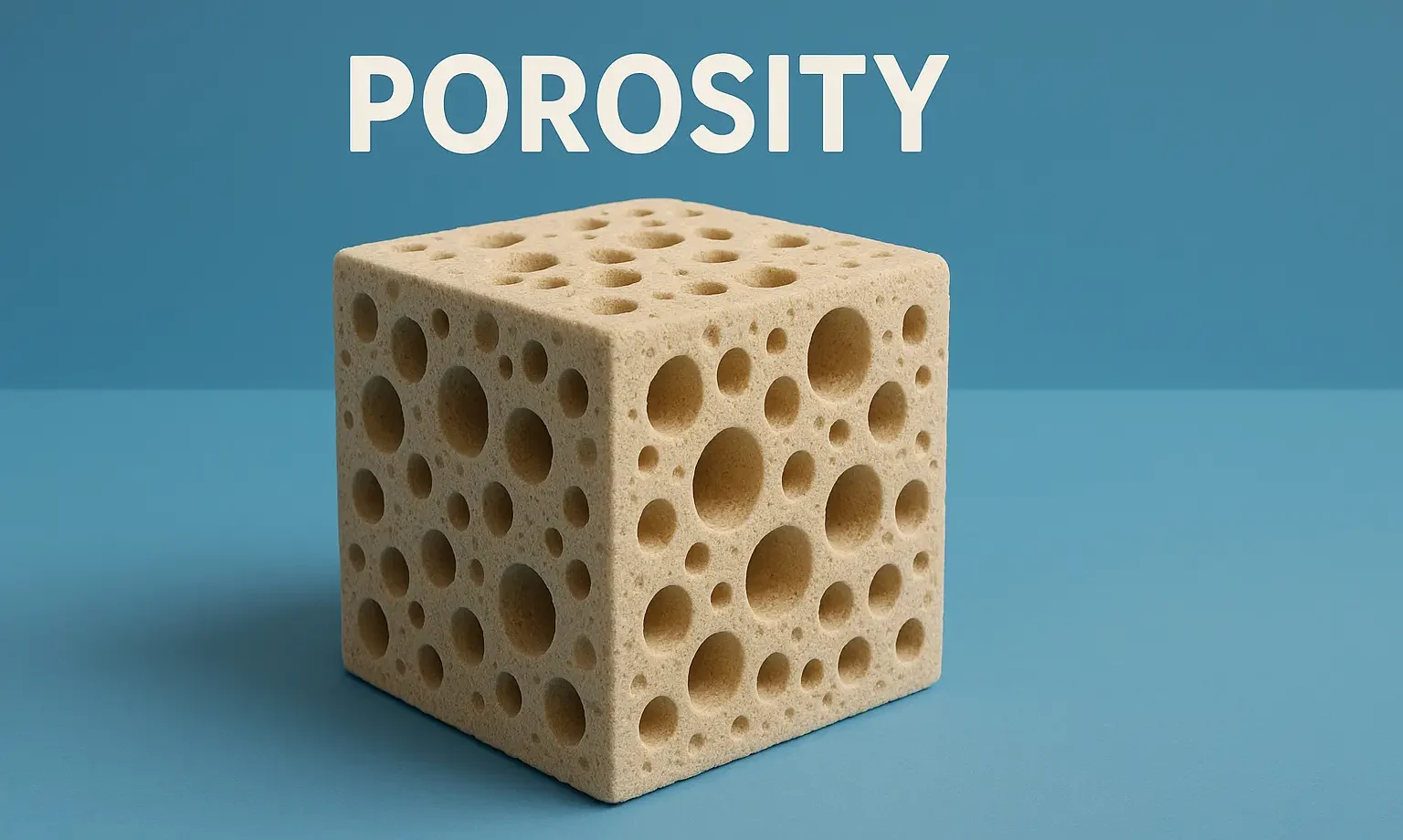
Definition of Porosity: Porosity is the fraction of void space (air) in a powder bed relative to its total volume. $\varepsilon = \frac{V_{b} – V_{s}}{V_{b}} \times 100 \; \text{(Porosity)}$ Where: Vb​ = Bulk volume (total volume occupied by powder, including voids) Vs​ = True volume (volume of the solid material itself) Alternatively, $\varepsilon = 1 … Read more