Wolff-Kishner Reduction

Wolff-Kishner Reduction

This article explains about Wolff-Kishner Reduction converts aldehydes and ketones to hydrocarbons under strong base and heat. Type: Strong base reduction Purpose of Wolff-Kishner Reduction: Converts aldehydes and ketones to alkanes, like the Clemmensen reduction. Basic conditions, so suitable for acid-sensitive compounds. Reagents: Hydrazine (NH₂NH₂) Strong base (e.g., KOH) Heat Often done in high-boiling solvents … Read more
Birch Reduction

Birch Reduction

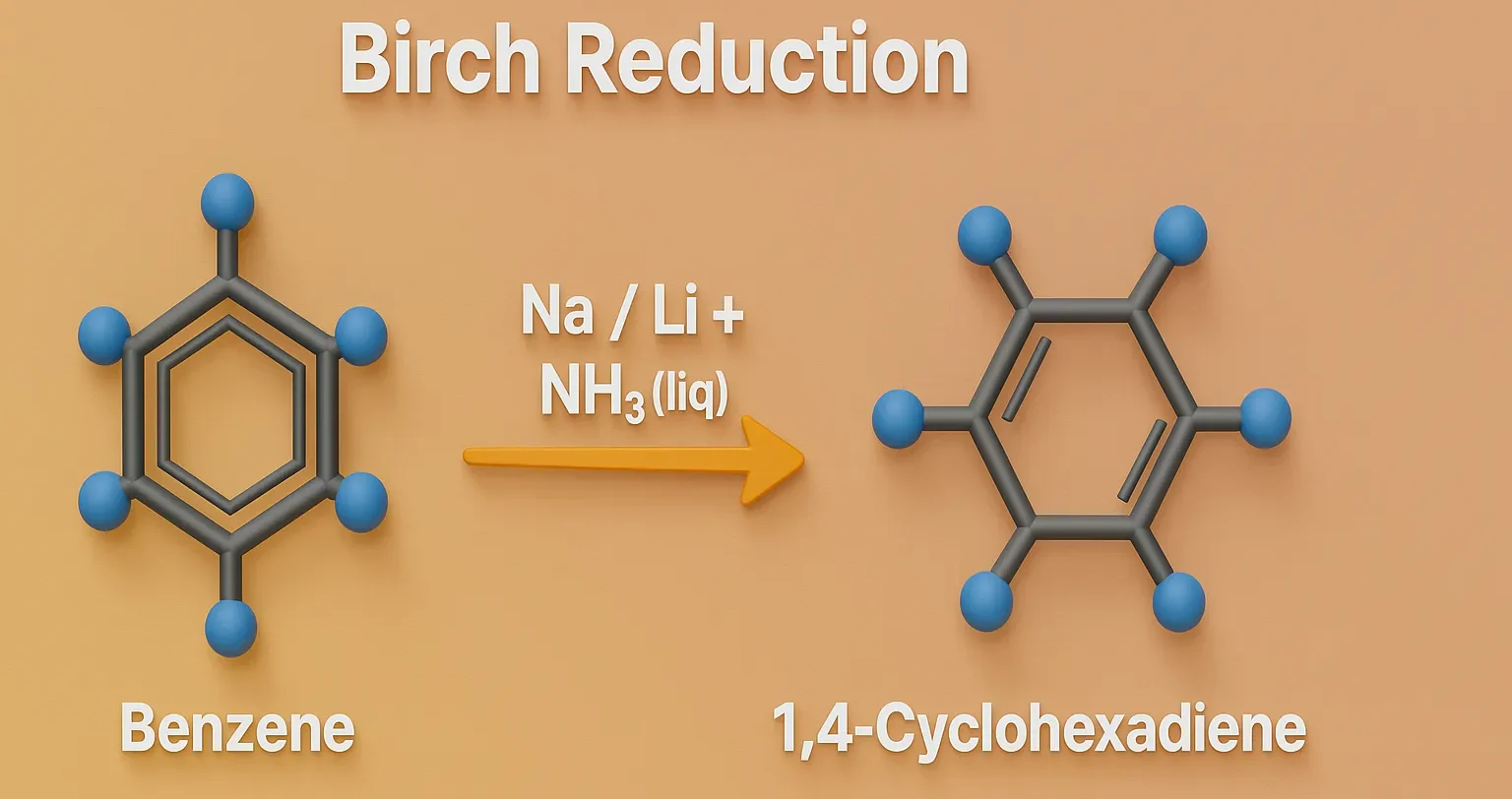
Birch Reduction reduces aromatic rings to 1,4-dihydro derivatives using sodium and liquid ammonia in synthesis. Purpose of Birch Reduction: Reduces aromatic rings (like benzene) to non-conjugated cyclohexadienes. Partial reduction – breaks aromaticity but doesn’t fully saturate the ring. Reagents: Alkali metal (Na, Li, or K) in liquid ammonia (NH₃) Proton source (like ethanol or tert-butanol) … Read more

Clemmensen Reduction

Clemmensen Reduction

Clemmensen Reduction transforms carbonyl compounds into hydrocarbons using Zn–Hg and HCl in organic synthesis. Type: Metal-acid reduction Purpose of Clemmensen Reduction: Reduces aldehydes and ketones to alkanes. Used especially for carbonyl groups adjacent to aromatic rings (aryl ketones). Reagents of Clemmensen Reduction: Zinc amalgam (Zn(Hg)) Concentrated hydrochloric acid (HCl) Reaction is acidic Mechanism (Simplified Concept): … Read more

Kinetic Properties of Colloids

Kinetic Properties of Colloids

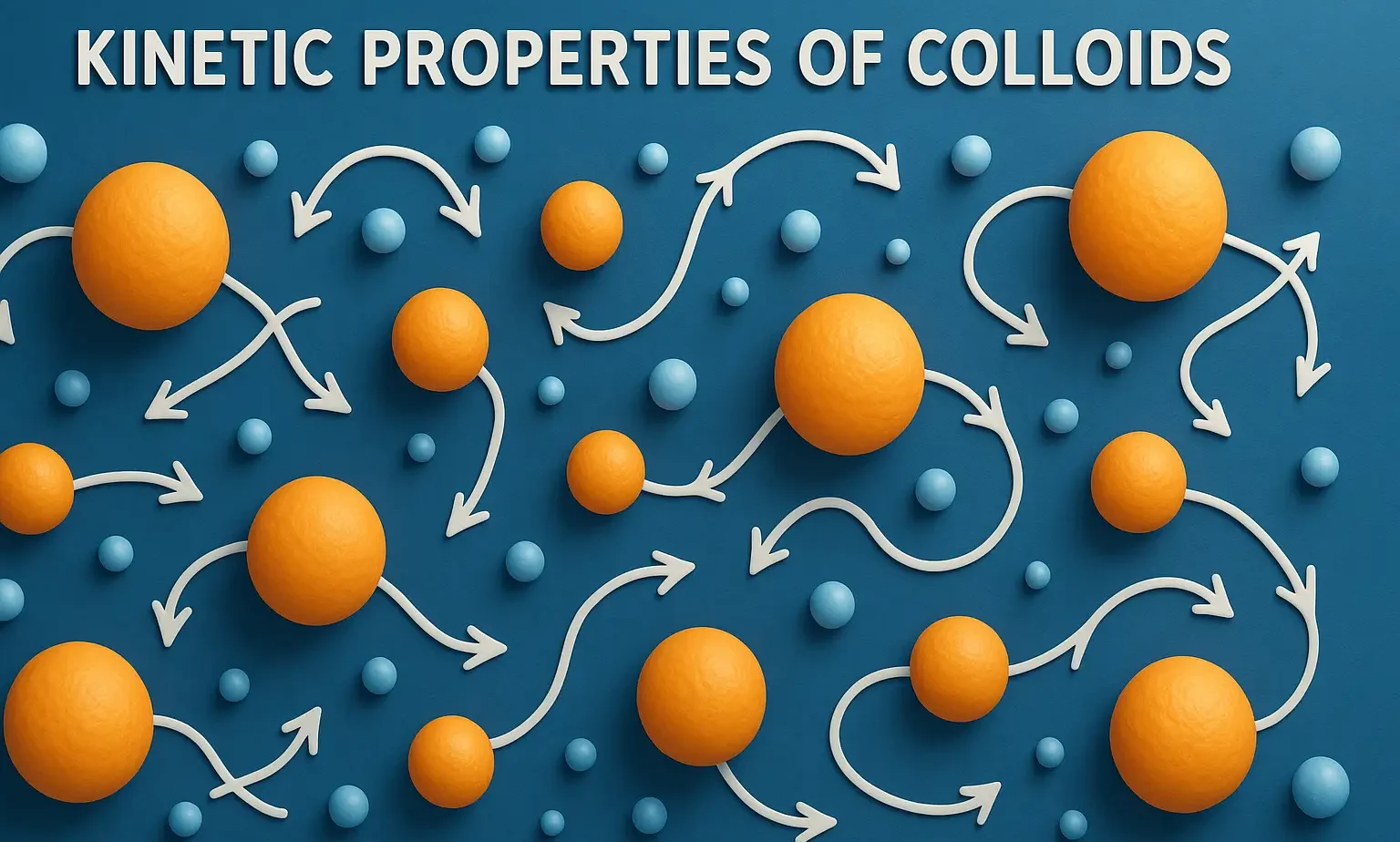
Kinetic properties of Colloids are related to the movement of colloidal particles due to thermal or external forces. Kinetic Properties of Colloids explain particle stability, transport, and dynamic interactions. These motions contribute to the stability and behavior of colloidal systems. 1. Brownian Motion Definition: The random, zig-zag motion of colloidal particles due to continuous collision … Read more

Interfacial Properties Of Suspended Particles

Interfacial Properties Of Suspended Particles

Interfacial Properties of Suspended Particles are key in drug formulation, emulsions, and colloidal systems. It influences, aggregation, and dispersion in suspensions. At the interface between suspended particles and the surrounding liquid, several key properties affect the behavior and stability of the suspension: Interfacial Tension Exists between the solid particle surface and the liquid. Higher tension … Read more

Coarse Dispersion

Coarse Dispersion

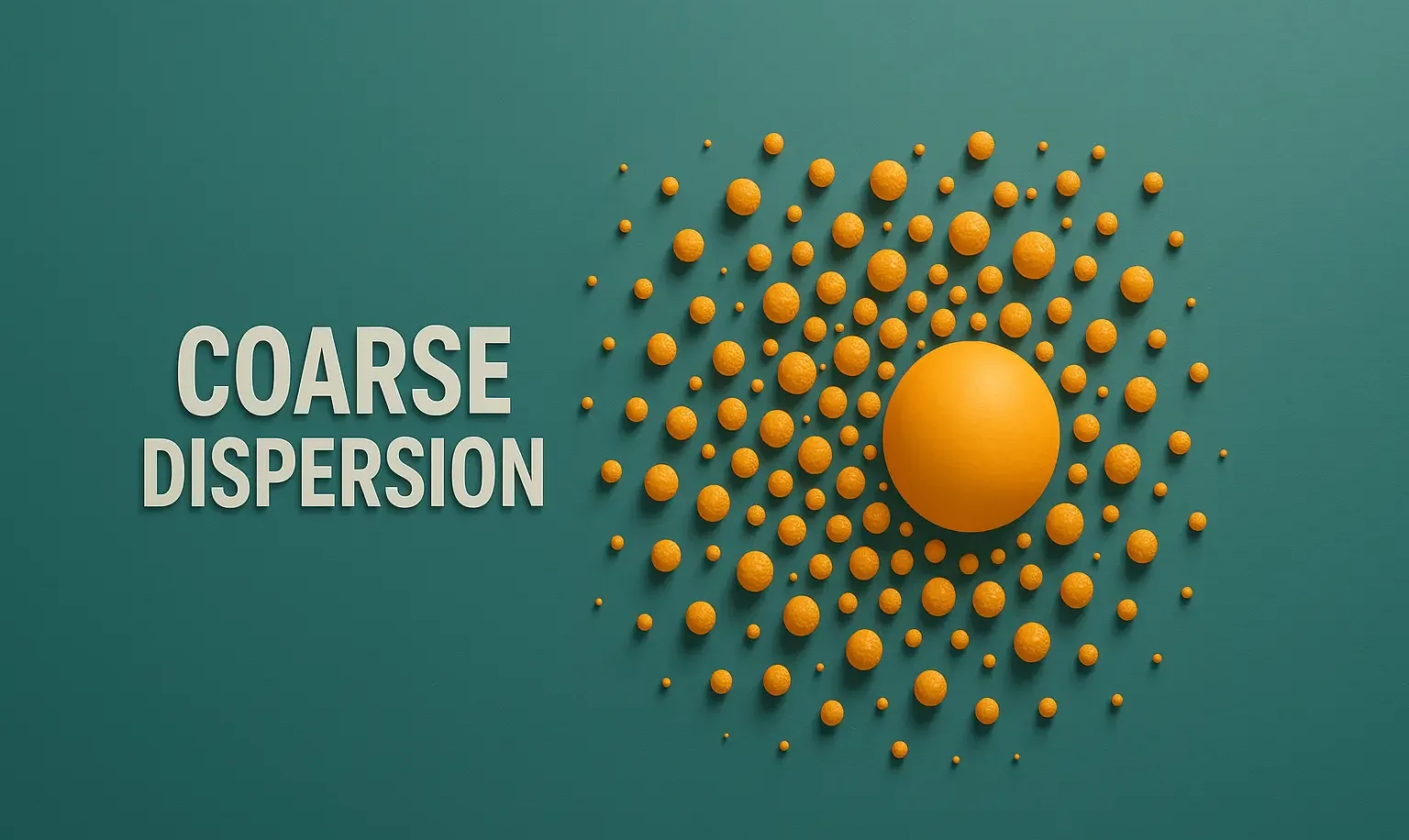
Definition of Coarse Dispersion: A coarse dispersion is a type of dispersed system where the dispersed phase (particles) is relatively large in size (usually greater than 1 µm) and is distributed throughout a continuous phase (usually a liquid). Examples: Suspensions and emulsions. Contrast with: Colloidal dispersions (1 nm – 1 µm) True solutions (molecular size) … Read more

Suspensions

Suspensions

Definition of Suspensions: A suspension is a heterogeneous system in which insoluble solid particles (dispersed phase) are suspended in a liquid medium (dispersion medium). Applications in Pharmaceutics: Used to administer insoluble drugs orally, topically, or parenterally Examples: Antacids (e.g., aluminum hydroxide), antibiotics (e.g., amoxicillin suspension) Desirable Properties of Suspensions: Uniform particle size Stability (no rapid … Read more

Elastic Modulus (Young’s Modulus)

Elastic Modulus (Young’s Modulus)

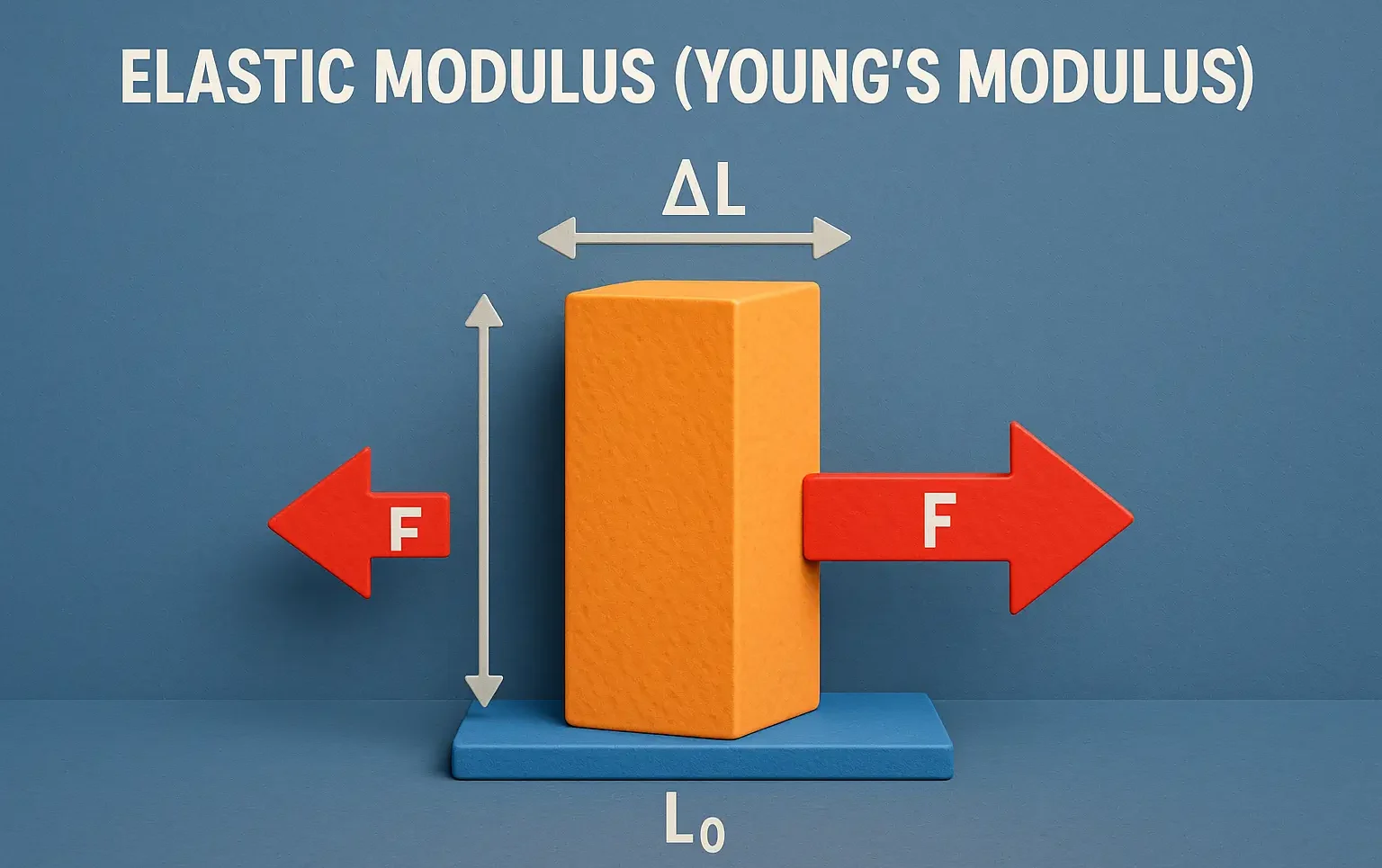
Elastic Modulus (Young’s Modulus) helps assess strength in engineering and material science. Elastic Modulus (Young’s Modulus) measures material stiffness, showing stress–strain relationship. Definition: The ratio of stress to strain in the elastic region of the stress-strain curve. Measured in Pascals (Pa or N/m²). High E = stiff material (resists elastic deformation). Low E = more … Read more

Stress And Strain

Stress And Strain

Stress and Strain help study elasticity, plasticity, and strength of engineering materials. Stress and Strain explain material response—stress is force per area; strains is deformation ratio. Stress (σ) Definition: Stress is the internal force per unit area exerted by a material when an external force is applied. Formula: $\sigma = \frac{F}{A}$ Where: σ = stress … Read more

Heckel Equation

Heckel Equation

Purpose of Heckel Equation: The Heckel equation is used to study the compressibility and deformation behavior of powders during tableting. It relates porosity reduction to applied pressure and helps identify whether a material deforms plastically or elastically under compression. Equation: $\ln\!\left(\tfrac{1}{1-D}\right) = KP + A$ Where: D = relative density of the powder (i.e., density … Read more