
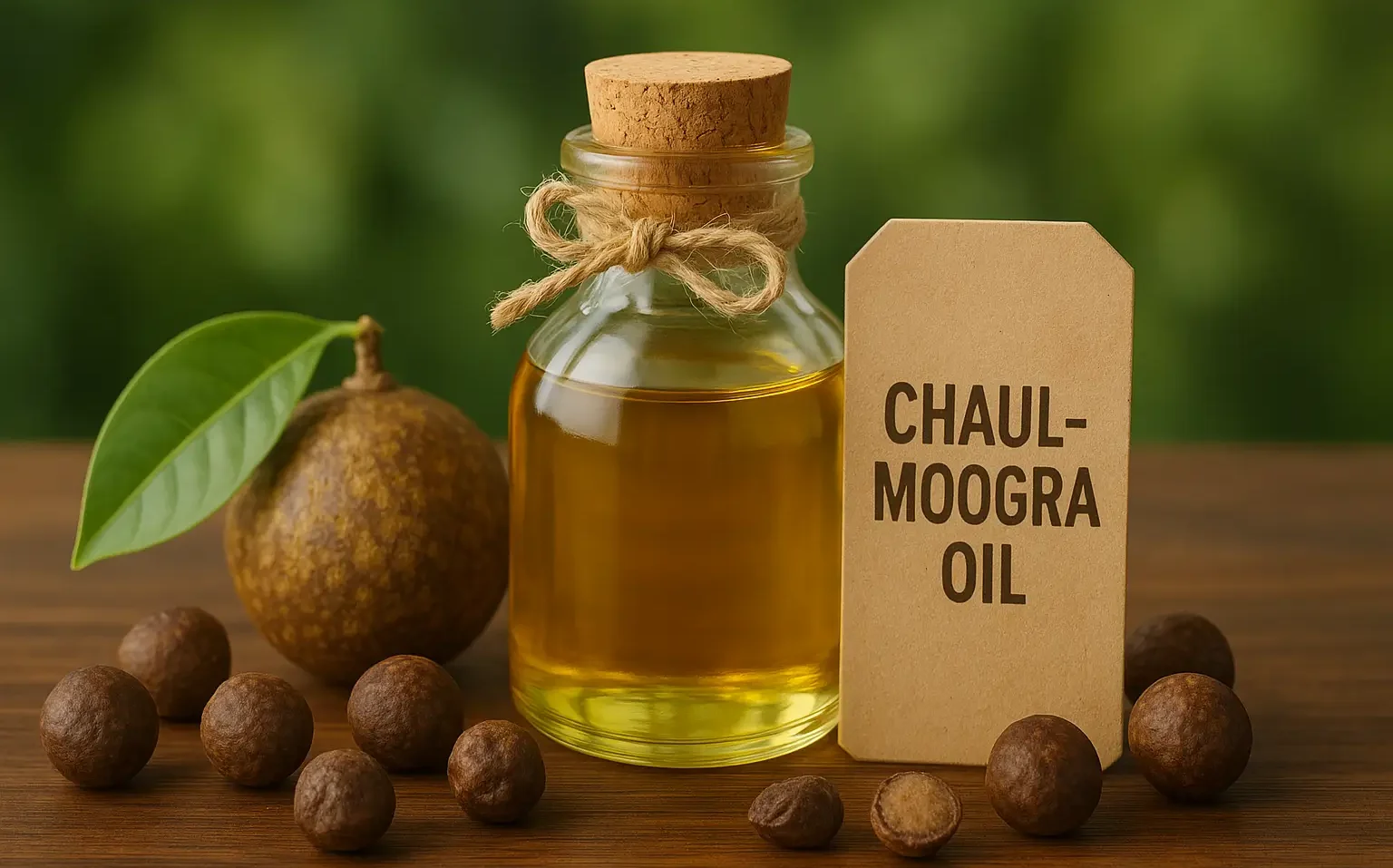
- Chaulmoogra Oil aids in treating skin ailments like leprosy, eczema, and psoriasis naturally.
- Chaulmoogra Oil is valued for antimicrobial, anti-inflammatory, and wound-healing properties.
General Information
- Synonyms: Hydnocarpus Oil.
- Biological Source:
- Derived from seeds of Hydnocarpus wightiana and Hydnocarpus Karzai.
- Family: Flacourtiaceae.
- Geographical Source:
- Native to India, Myanmar, Sri Lanka, Thailand.
Macroscopical Characters of Chaulmoogra Oil
- Color: Pale yellow to brown.
- Odor: Mild, characteristic.
- Taste: Bitter, unpleasant.
- Consistency: Thick, oily liquid.
Advertisements
Chemical Constituents of Chaulmoogra Oil
- Fixed Oils:
- Hydnocarpic Acid – Major active component.
- Chaulmugric Acid, Gorlic Acid – Unique cyclic fatty acids.
- Other Compounds: Tocopherols (antioxidants).
Mechanism of Action
- Antibacterial & Antifungal: Inhibits growth of Mycobacterium leprae (leprosy bacteria).
- Anti-inflammatory: Reduces skin inflammation and irritation.
Preparation
- Seed Collection & Drying: Seeds are collected from ripe fruits.
- Oil Extraction: Cold pressing or solvent extraction.
- Purification: Filtration and degumming.
Advertisements
Evaluation
- Solubility: Insoluble in water, soluble in ether.
- Identification Tests:
- Sulfuric Acid Test – Turns brown due to unsaturated fatty acids.
Preservation & Storage
- Stored in airtight amber-colored bottles to prevent oxidation.
Therapeutic Uses
- Used in the treatment of leprosy and tuberculosis.
- Topical application for skin infections (eczema, psoriasis).
Advertisements
Commercial Utility
- Used in medicated soaps and ointments