Chemical Structure / Formula
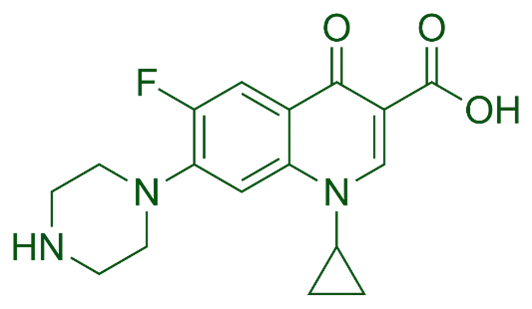
- Formula: C₁₇H₁₈FN₃O₃
- Structure: Fluorinated quinolone with piperazine ring, increasing bioavailability and potency.
Mechanism of Action
- Inhibits DNA gyrase (topoisomerase II) and topoisomerase IV, preventing bacterial DNA replication.
- Bactericidal – effective against both Gram-positive and Gram-negative bacteria.
Uses
- UTIs, pyelonephritis, bacterial prostatitis.
- Respiratory infections (pseudomonas coverage in CF patients).
- Gastrointestinal infections (traveler’s diarrhea, typhoid fever, cholera).
Advertisements
Side Effects
- GI upset (nausea, diarrhea, abdominal pain).
- CNS effects (dizziness, headache, confusion in elderly patients).
- Tendon rupture and tendinitis (higher risk in elderly and corticosteroid users).
- QT prolongation, arrhythmias.
Structure-Activity Relationship (SAR) of Ciprofloxacin
| Structural Feature | SAR Insight |
| Fluorine at position 6 | Enhances lipophilicity and cell wall penetration; crucial for activity. |
| Carboxylic acid at position 3 & ketone at 4 | Essential for binding to DNA-gyrase-DNA complex. |
| Piperazinyl ring at position 7 | Enhances Gram-negative activity and broadens antibacterial spectrum. |
| Substituent at position 1 (cyclopropyl in ciprofloxacin) | Enhances potency and broadens activity. |
| Substitution at position 8 (e.g., methoxy, halogens) | Affects phototoxicity and resistance profile. |
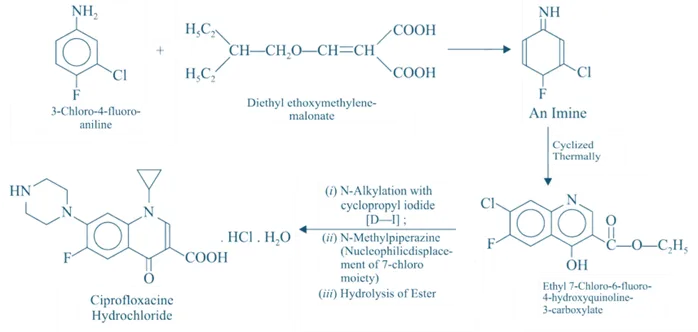
Synthesis of Ciprofloxacin