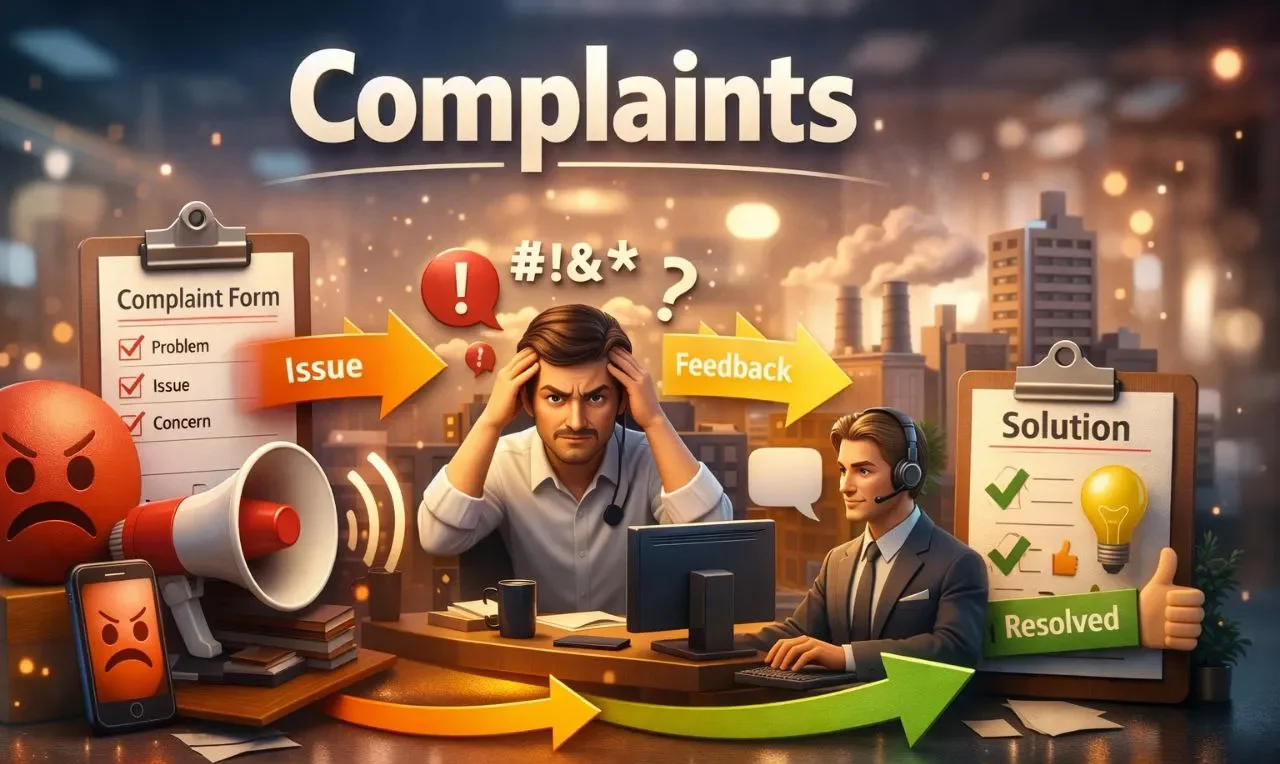
Complaints explain reporting investigation and resolution of issues related to pharmaceutical products and services.
Definition and Importance
- A complaint in the pharmaceutical industry refers to any written, oral, or electronic expression of dissatisfaction related to the quality, safety, efficacy, or performance of a pharmaceutical product.
- It can come from multiple sources:
- Patients
- Healthcare professionals
- Wholesalers/distributors
- Regulatory bodies
- These are critical signals that may reveal latent or systemic issues in manufacturing, packaging, labeling, storage, or distribution.
- Proper handling ensures:
- Patient safety
- Product integrity
- Maintenance of public trust
- Compliance with regulatory obligations
Types of Complaints
- Quality Complaints: Issues related to product appearance, labeling/packaging, contamination, stability, etc.
- Adverse Drug Reactions (ADRs): Complaints indicating unexpected or harmful effects of the drug, often further managed through pharmacovigilance procedures.
- Technical Complaints: Involving device components (for combination products), delivery system malfunctions, or any technical failure.
- Regulatory Complaints: Complaints that could entail data integrity or GMP compliance issues that might trigger regulatory inspections.
Advertisements
Complaint Handling Process (High-Level Overview)
-
Receipt of Complaint
- Document all relevant details (product name, batch/lot number, nature of complaint, contact information, etc.).
- Assign a unique identification or tracking number.
-
Classification and Triage
- Determine the nature and potential severity (quality, safety, labeling, etc.).
- Assess whether it is critical (e.g., potential health risk) or non-critical.
-
Investigation and Root Cause Analysis
- Investigate the batch record, production records, test data, and any relevant manufacturing parameters.
- Examine returned samples (if available) and gather additional details from the complainant.
-
Corrective and Preventive Actions (CAPA)
- Identify root cause and implement corrective actions (short-term fixes) and preventive actions (long-term preventive measures).
-
Documentation and Reporting
- Maintain a Complaint Log that records the progress and outcome of the investigation.
- If required, inform regulatory authorities (e.g., in cases of serious safety issues or suspected counterfeiting).
-
Closure and Trending
- Conclude the investigation and document all findings.
- Trend analysis to identify recurring complaints and initiate broader improvement programs if needed.