
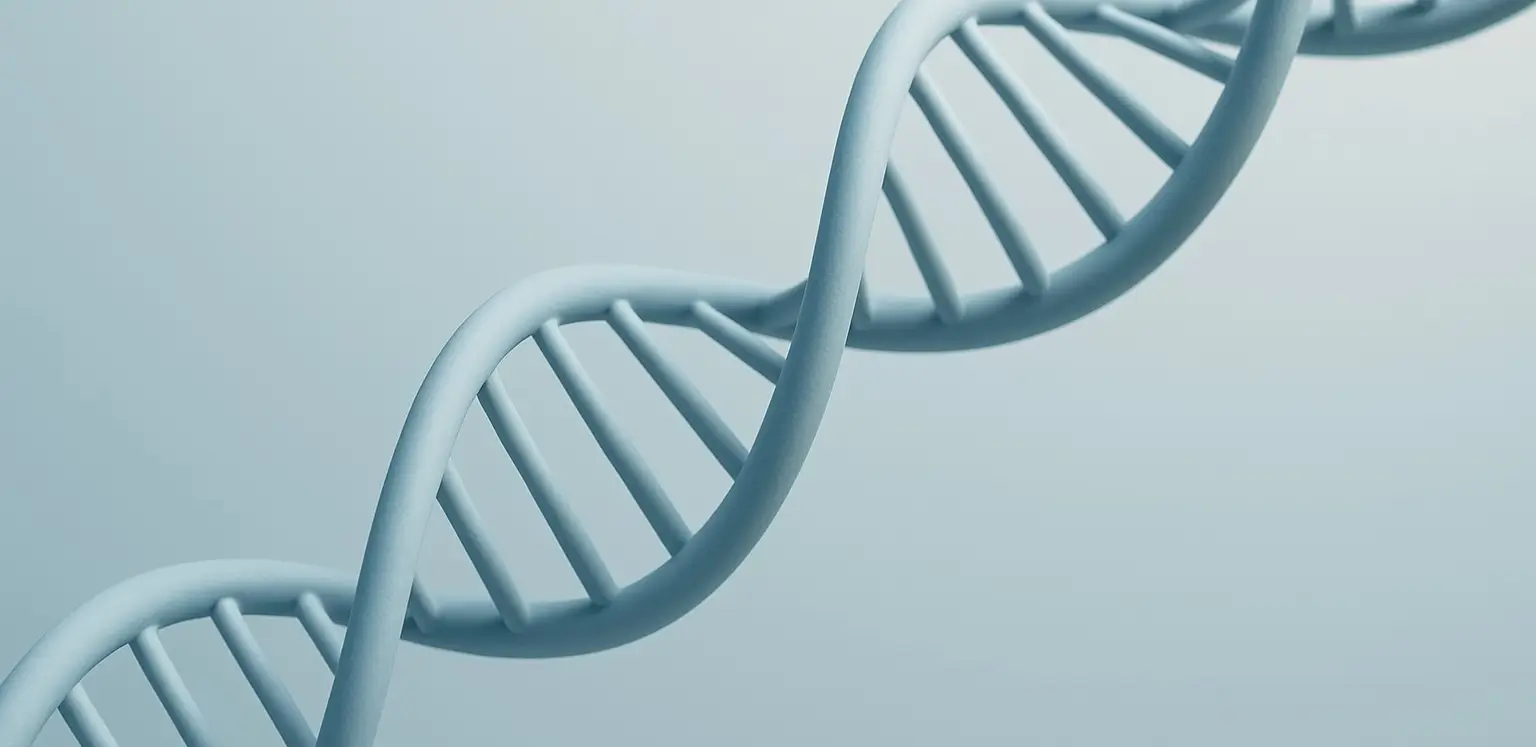
- DNA, or Deoxyribonucleic Acid, is a long, double-stranded molecule that carries the genetic instructions used in the growth, development, functioning, and reproduction of all known living organisms and many viruses.
- DNA (Deoxyribonucleic Acid) is composed of two strands forming a double helix, made up of repeating units called nucleotides.
- Each nucleotide consists of a sugar (deoxyribose), a phosphate group, and one of four nitrogenous bases—adenine (A), thymine (T), cytosine (C), or guanine (G).
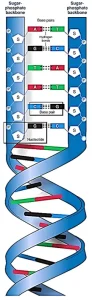
Structure DNA (Deoxyribonucleic Acid):
-
Double Helix:
- DNA is composed of two long strands that form a double helix, which looks like a twisted ladder.
- Backbone: Each strand consists of a sugar-phosphate backbone, with the sugar being deoxyribose.
- Bases: Attached to each sugar is one of four nitrogenous bases: adenine (A), thymine (T), cytosine (C), and guanine (G).
- Base Pairing: The strands are held together by hydrogen bonds between the bases, with A pairing with T and C pairing with G.
-
Antiparallel Orientation:
- The two strands run in opposite directions, one from 5′ to 3′ and the other from 3′ to 5′.
-
Major and Minor Grooves:
- The twisting of the helix creates grooves, which are the sites of protein binding for replication and transcription.
-
Chromatin and Chromosomes:
- DNA is packaged into chromatin, which further condenses to form chromosomes during cell division.
Advertisements
Functions of DNA (Deoxyribonucleic Acid):
- Genetic Information Storage: DNA holds the genetic blueprint for the development, functioning, and reproduction of all living organisms and many viruses.
- Replication: DNA can replicate itself, ensuring that genetic information is passed from cell to cell and from generation to generation.
- Gene Expression: DNA sequences (genes) are transcribed into RNA, which then directs the synthesis of proteins.
- Regulation: DNA contains regulatory sequences that control the expression of genes, influencing when, where, and how much gene product is made.