
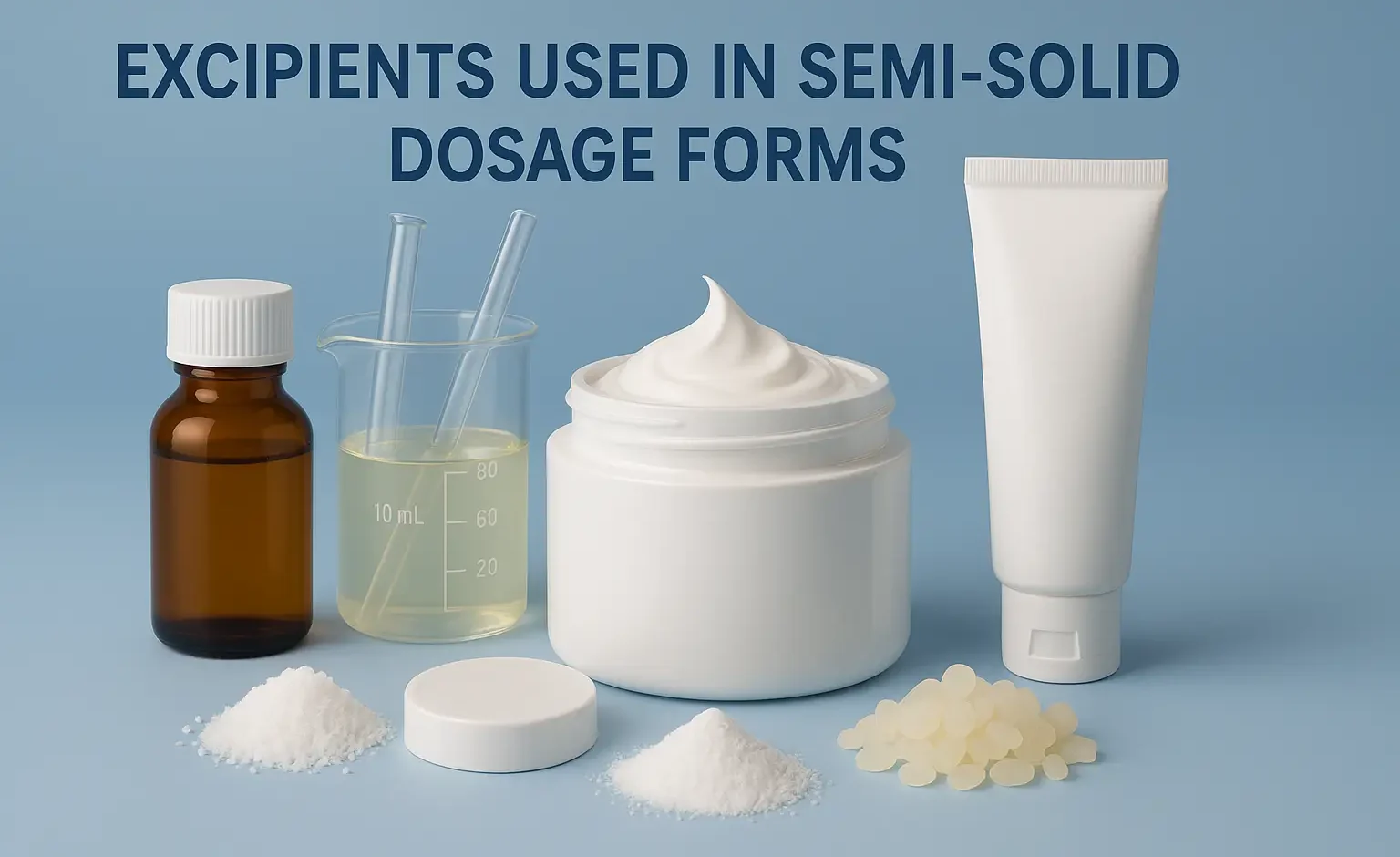
- Excipients are inactive ingredients added to enhance the physical properties, stability, and patient acceptability of semisolid dosage forms.
- Common types include:
-
Bases:
- Provide structure and consistency. They can be lipophilic (e.g., petrolatum, lanolin) or hydrophilic (e.g., polyethylene glycols).
-
Gelling Agents:
- Form the gel structure in semisolids. Examples include carbomers, hydroxyethyl cellulose, and xanthan gum.
-
Emulsifying Agents:
- Stabilize emulsions in creams and ointments. Examples include polysorbates, cetyl alcohol, and sorbitan esters.
-
Solvents:
- Dissolve or disperse drugs and excipients. Examples include water, glycerin, propylene glycol, and ethanol.
-
Penetration Enhancers:
- Improve drug absorption through the skin. Examples include oleic acid, ethanol, and sodium lauryl sulfate.
-
Stabilizers:
- Maintain product stability. Includes antioxidants (e.g., BHT), chelating agents (e.g., EDTA), and pH adjusters (e.g., citric acid).
-
Preservatives:
- Prevent microbial growth in water-containing formulations. Examples include parabens, benzalkonium chloride, and phenoxyethanol.
-
Thickeners:
- Increase viscosity. Examples include colloidal silicon dioxide and carboxymethyl cellulose.
-
Humectants:
- Retain moisture and improve skin hydration. Examples include glycerin, propylene glycol, and sorbitol.
-
Coloring Agents, Fragrances, and Flavors:
- Enhance appearance and acceptability. Examples include FD&C dyes, essential oils, and natural/artificial Flavors.
Click Here to Watch the Best Pharma Videos
Advertisements