
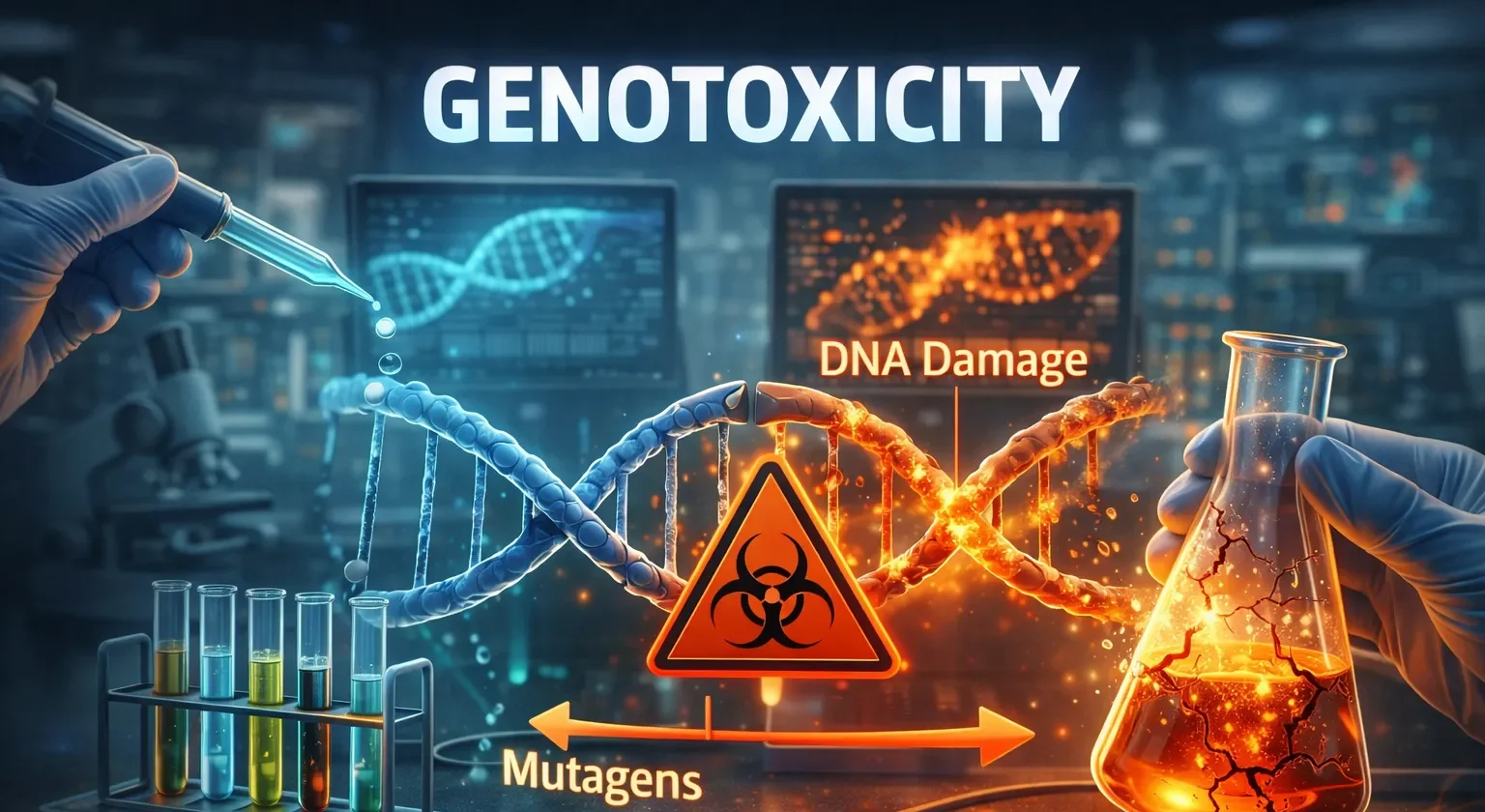
Definition of Genotoxicity:
- Genotoxicity is the property of a substance to damage the genetic material (DNA) within a cell.
- This damage can manifest as breaks in DNA strands, alterations in base pairs, or formation of DNA adducts.
Mechanisms of Genotoxicity:
- Direct interaction with DNA: Some chemicals can directly bind to DNA, causing structural changes or breaks.
- Indirect interaction: Some substances form reactive intermediates (e.g., reactive oxygen species) that indirectly damage DNA.
Consequences:
- DNA mutations: If the DNA repair mechanisms fail, mutations can be passed on during cell division.
- Cancer risk: Genotoxic substances may initiate the carcinogenic process.
- Heritable effects: In germ cells, DNA damage can be inherited by the next generation.
Examples:
- Polycyclic aromatic hydrocarbons (PAHs).
- Aflatoxins (produced by certain molds).
- Certain chemotherapy drugs.
Advertisements
- Cyclophosphamide: An alkylating chemotherapeutic agent known to cause DNA cross-linking and breakage, leading to genotoxic effects.