
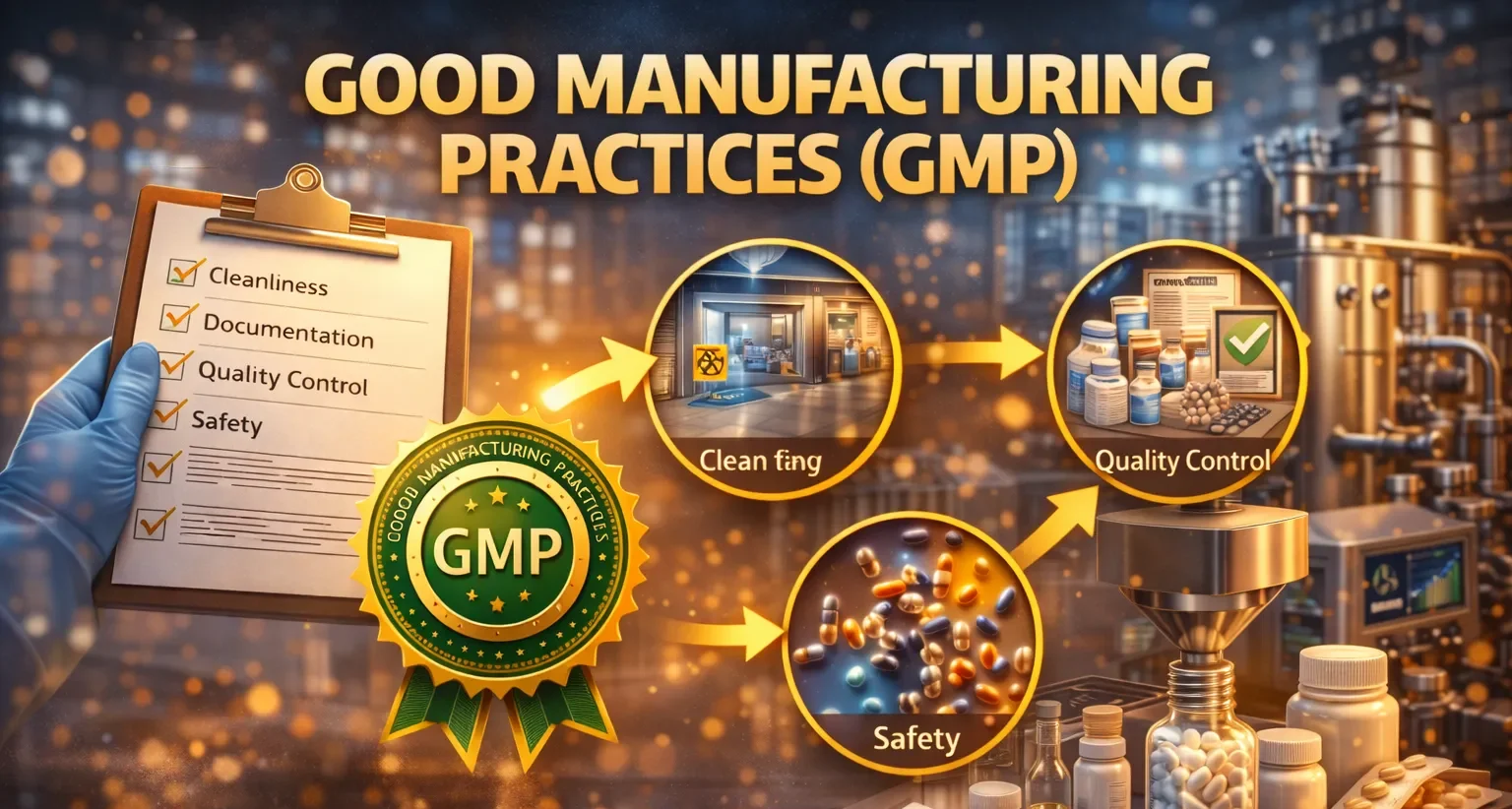
Definition of Good Manufacturing Practices (GMP):
- Good Manufacturing Practices are guidelines and regulations designed to ensure products are consistently produced and controlled according to established quality standards appropriate for their intended use.
Concept of Good Manufacturing Practices (GMP):
- GMP provides systematic, documented, and detailed guidelines on manufacturing practices, covering facilities, personnel, hygiene, equipment, production processes, packaging, storage, and documentation.
- GMP ensures products are safe, pure, and effective.
Key Features of GMP:
- Hygiene and cleanliness: Strict protocols for facility maintenance and employee hygiene.
- Controlled production environment: Monitoring factors such as temperature, humidity, and contamination.
- Comprehensive documentation: Maintaining batch records, deviation reports, and validation protocols.
- Equipment maintenance: Ensuring machinery is regularly calibrated and maintained.
- Regulatory compliance: Adhering to guidelines from agencies like the FDA, WHO, and EMA.
Advertisements
Examples of GMP Implementation:
- A pharmaceutical company documenting every step of drug production.
- A food processing company ensuring their equipment is sanitized properly.
Advertisements
Importance of GMP
- GMP minimizes manufacturing risks, ensuring high-quality, safe, and effective
- It is mandatory for companies in the pharmaceutical and medical device industries, playing a crucial role in patient safety and public health.
Click Here to Watch the Best Pharma Videos
Advertisements