
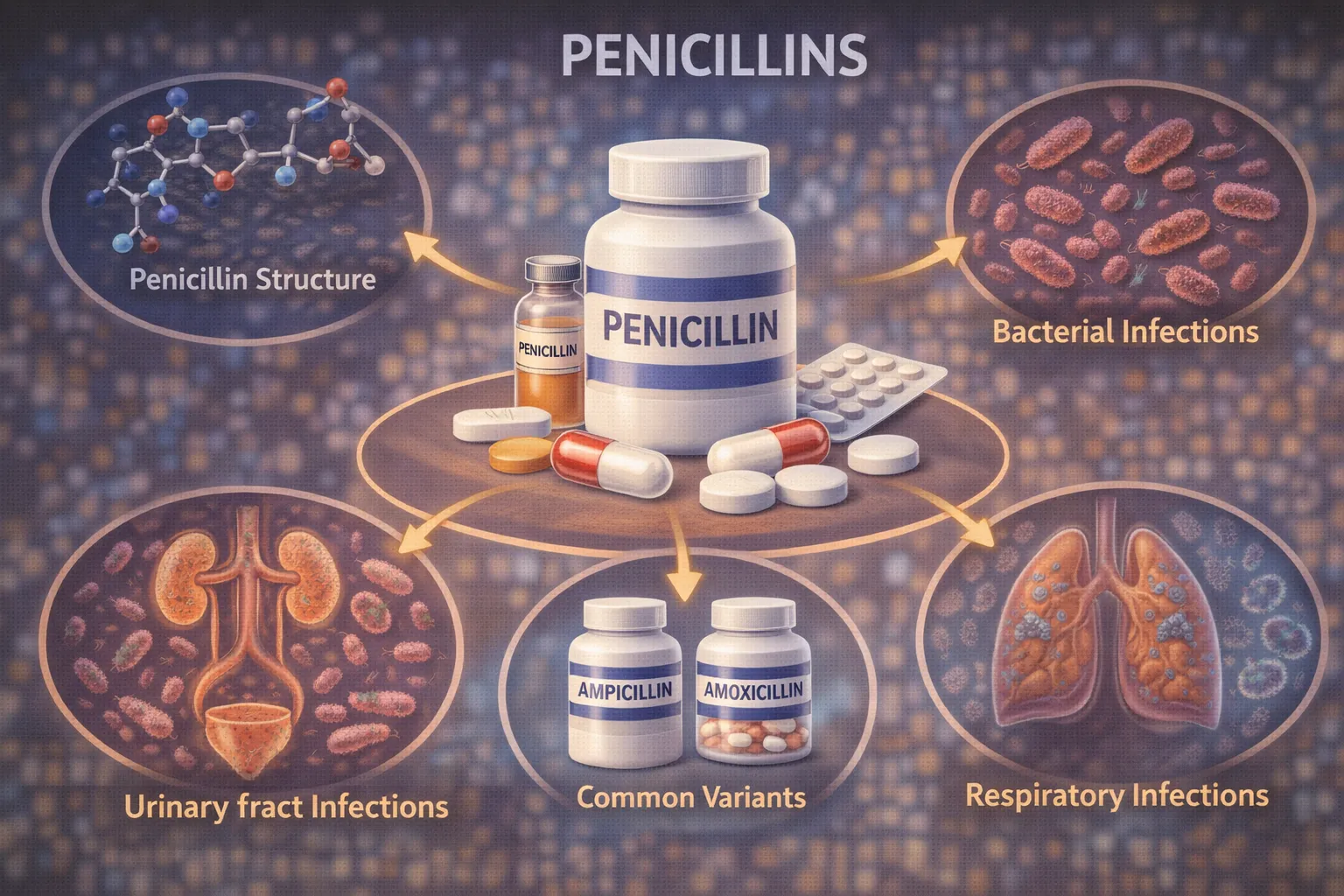
Penicillins are β-lactam antibiotics that inhibit bacterial cell wall synthesis and are widely used to treat infections.
Mechanism of Action:
- These are β-lactam antibiotics that inhibit bacterial cell wall synthesis.
- They bind to penicillin-binding proteins (PBPs) and inhibit the transpeptidation step in peptidoglycan synthesis, causing bacterial cell lysis.
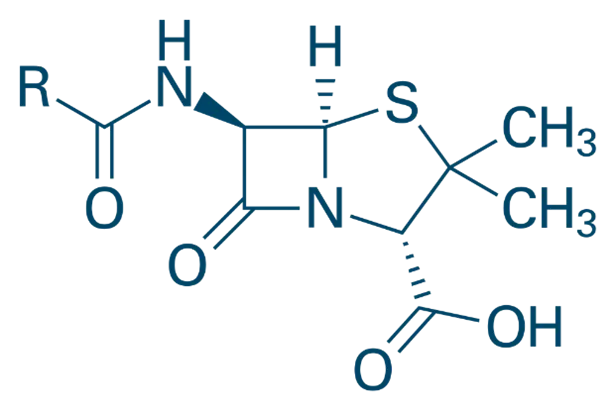
Types of Penicillins
- Natural – e.g., Penicillin G, Penicillin V
- Penicillinase-resistant – e.g., Methicillin, Nafcillin
- Aminopenicillins – e.g., Amoxicillin, Ampicillin
- Extended-spectrum – e.g., Piperacillin
Spectrum:
- Mostly Gram-positive
- Broad-spectrum penicillins also cover some Gram-negative
Resistance:
- β-lactamase production (penicillinase)
- Altered PBPs (e.g., MRSA)
- Efflux pumps and porin mutations (Gram-negative)
Adverse Effects:
- Hypersensitivity (rash to anaphylaxis)
- Diarrhea
- Neurotoxicity (high doses)
- Interstitial nephritis (methicillin)
Uses:
- Respiratory tract infections, syphilis, otitis media, endocarditis, meningitis (depending on type).