
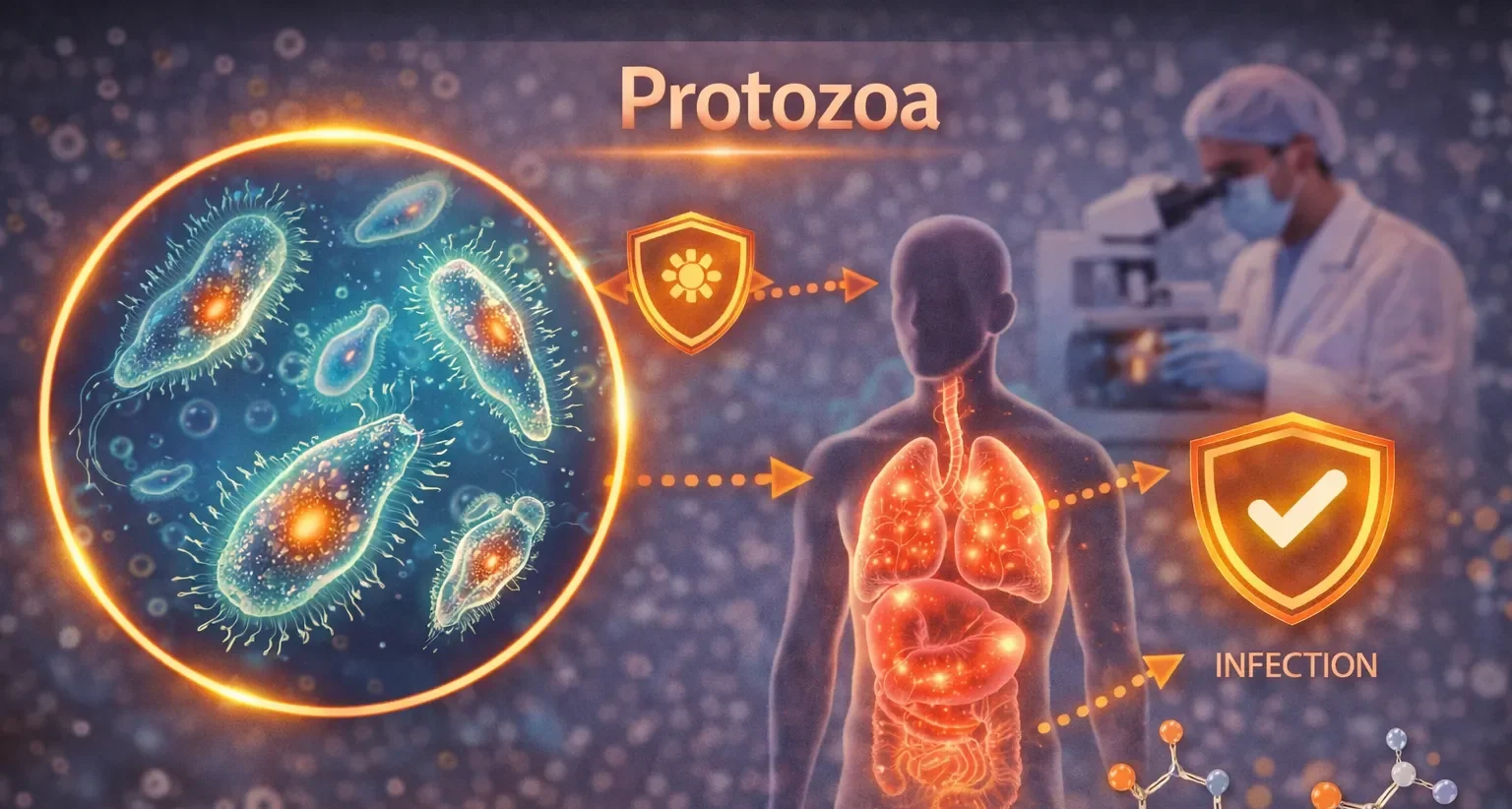
- Protozoa are single-celled, microscopic eukaryotic organisms belonging to the Protista kingdom.
- They exist in various environments, including soil, water, and as parasites within other organisms.
- Some protozoa are harmless, while others cause infections in humans and animals.
- They have a complex structure with a cell membrane, nucleus, and organelles, enabling reproduction, metabolism, and movement.
Transmission routes
- Ingestion of contaminated food or water.
- Contact with infected animals or humans.
- Vector-borne transmission (e.g., insect bites).
Advertisements
Common protozoan diseases:
- Malaria
- Amoebic dysentery
- Giardiasis
- Leishmaniasis
- Trypanosomiasis (African sleeping sickness, Chagas disease)
- Toxoplasmosis