
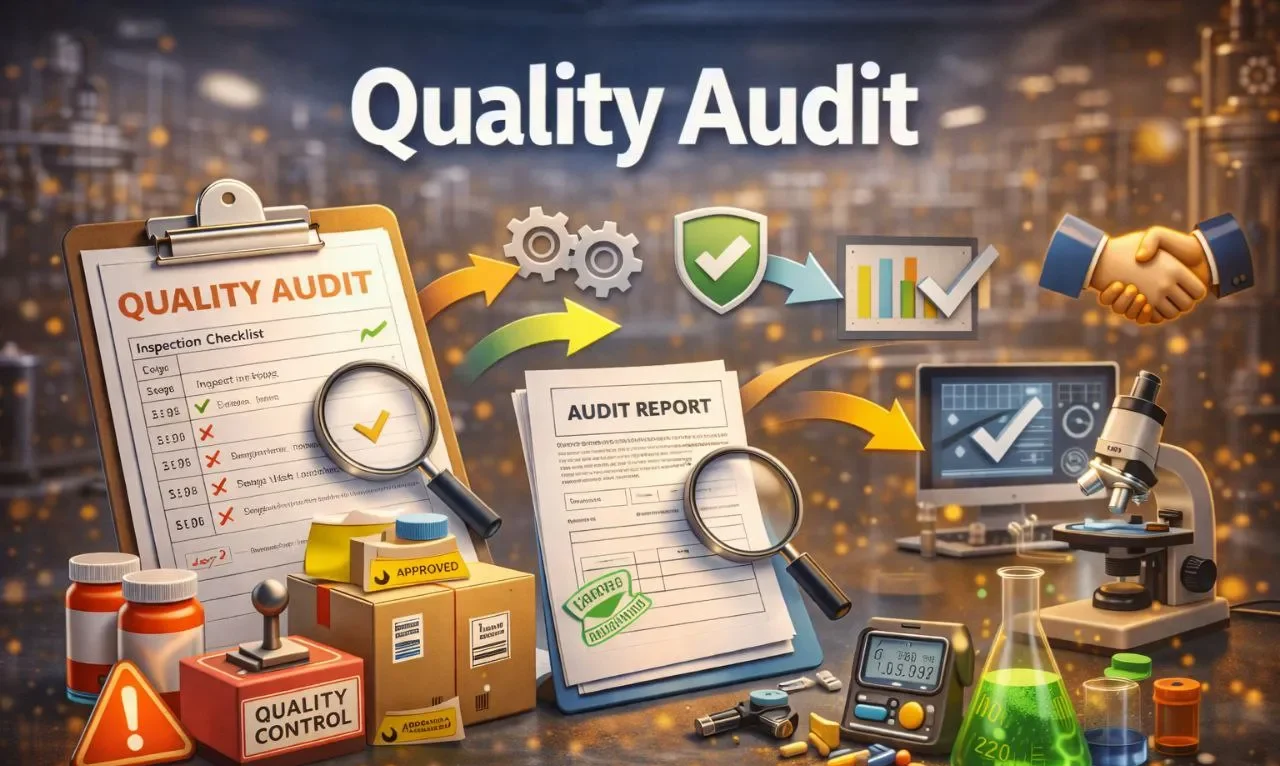
- A Quality Audit is a systematic examination of the quality management system (QMS) to ensure compliance with GMP, WHO, FDA, and other regulatory requirements.
Purpose of a Quality Audit
- Ensure the QMS is operating effectively and efficiently.
- Identify areas of non-compliance and opportunities for improvement.
- Enhance product quality, customer satisfaction, and regulatory compliance.
- Required by many regulatory agencies to ensure adherence to quality standards.
Types
- Internal Audit: Conducted by the company’s quality assurance (QA) team.
- External Audit: Conducted by regulatory agencies or third-party auditors.
- Supplier Audit: Performed at raw material suppliers or contract manufacturers.
- Regulatory Inspection: Conducted by government agencies like FDA, MHRA, or EMA.
Steps
- Planning & Scheduling the audit.
- Review of Documentation (SOPs, MFR, BMR, validation records).
- On-Site Inspection of manufacturing and testing facilities.
- Interviews with Personnel.
- Finding and Reporting discrepancies or non-conformities.
- Corrective and Preventive Actions (CAPA).
Advertisements
Regular quality audits help in continuous improvement and regulatory compliance.