
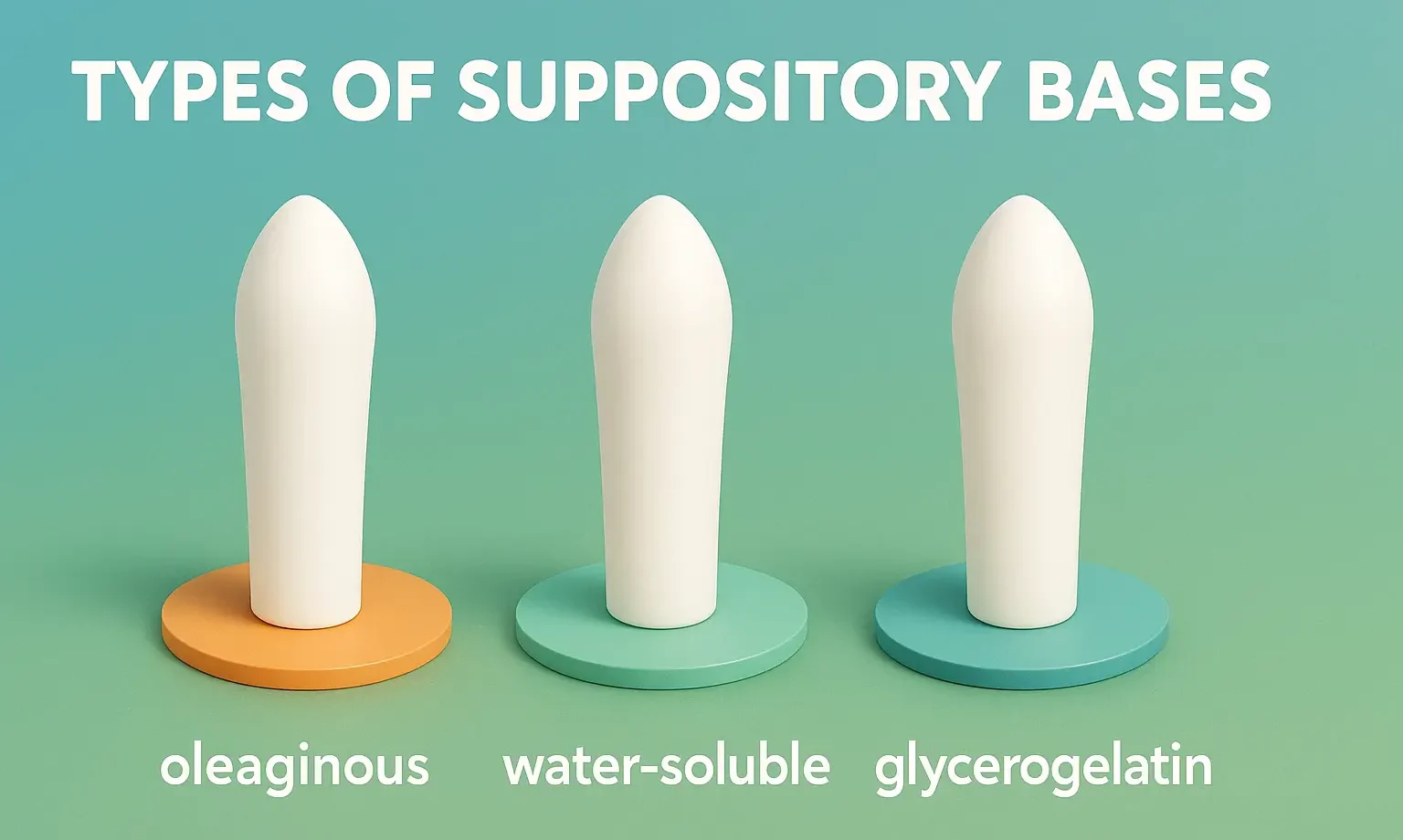
- Suppository bases are vehicles that carry the active ingredients in suppositories.
- They are classified into two main categories: lipophilic (fat-soluble) and hydrophilic (water-soluble).
- The choice of base depends on factors such as drug solubility, stability, and release characteristics.

1. Lipophilic Bases
-
Cocoa Butter (Theobroma Oil)
- A natural fat from cocoa beans, widely used in suppositories.
- Melts at 34-36°C, just below body temperature, releasing the drug upon insertion.
- Primarily used for rectal suppositories, but also suitable for vaginal use.
-
Hydrogenated Vegetable Oils
- Examples: palm kernel oil, cottonseed oil.
- Similar melting points to cocoa butter but may offer better stability and drug compatibility.
-
Fatty Acid Esters
- Examples: glyceryl monostearate, glyceryl monopalmitate.
- Synthetic bases with varying melting points, chosen for specific drug release profiles.
Advertisements
2. Hydrophilic Bases
-
Glycerinated Gelatin
-
Polyethylene Glycols (PEGs)
- Water-soluble polymers available in various molecular weights.
- Dissolve or erode in body fluids, releasing the drug.
- Used for flexible control of melting point and drug release.
-
Poloxamers
- Nonionic surfactants with thermoreversible gelation (gel at body temperature).
- High water content, ideal for vaginal or rectal use.