
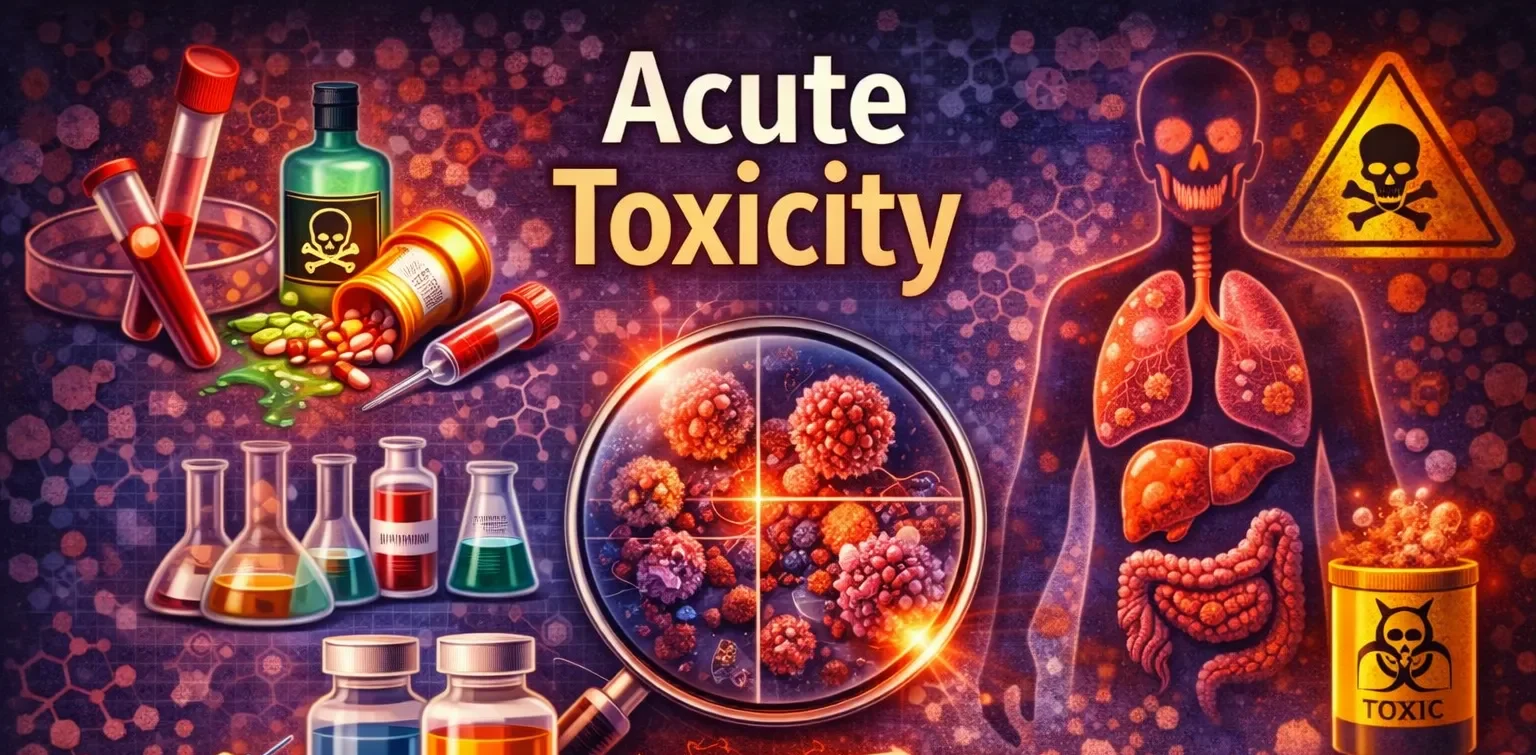
Definition of Acute toxicity:
- Acute toxicity refers to the harmful effects that occur following a single exposure or multiple exposures to a substance over a short period, typically less than 24 hours.
- It is commonly assessed using the lethal dose (LD₅₀), which represents the dose required to kill 50% of a test population (often lab animals) under controlled conditions.
Characteristics:
- Rapid onset of symptoms: Effects appear quickly—within minutes, hours, or up to one day after exposure.
- High dose over a short time: Symptoms arise due to a relatively large amount of the toxicant being absorbed in a brief period.
- Short-term exposure: Usually results from a one-time or brief encounter with a toxic substance.
Causes:
- Accidental ingestion of toxic substances (e.g., household cleaners, pesticides).
- Inhalation of harmful gases or vapors (e.g., carbon monoxide, chlorine gas).
- Intravenous overdose or misuse of medications or illicit drugs.
- Dermal exposure to corrosive or toxic chemicals.
- Industrial accidents involving chemical spills or releases.
Advertisements
Examples:
- Swallowing bleach or rat poison.
- Breathing in ammonia fumes or smoke from a fire.
- Injecting a high dose of morphine or other drugs.
Factors Influencing Acute Toxicity:
- Route of exposure: Ingestion, inhalation, dermal contact, intravenous injection, etc.
- Dose: Larger amounts over a short period typically result in more severe effects.
- Individual susceptibility: Age, genetics, pre-existing health conditions, and immune status can influence how a person responds.
- Chemical properties: The nature and potency of the substance also determine toxicity levels.
Click Here to Watch the Best Pharma Videos
Advertisements