
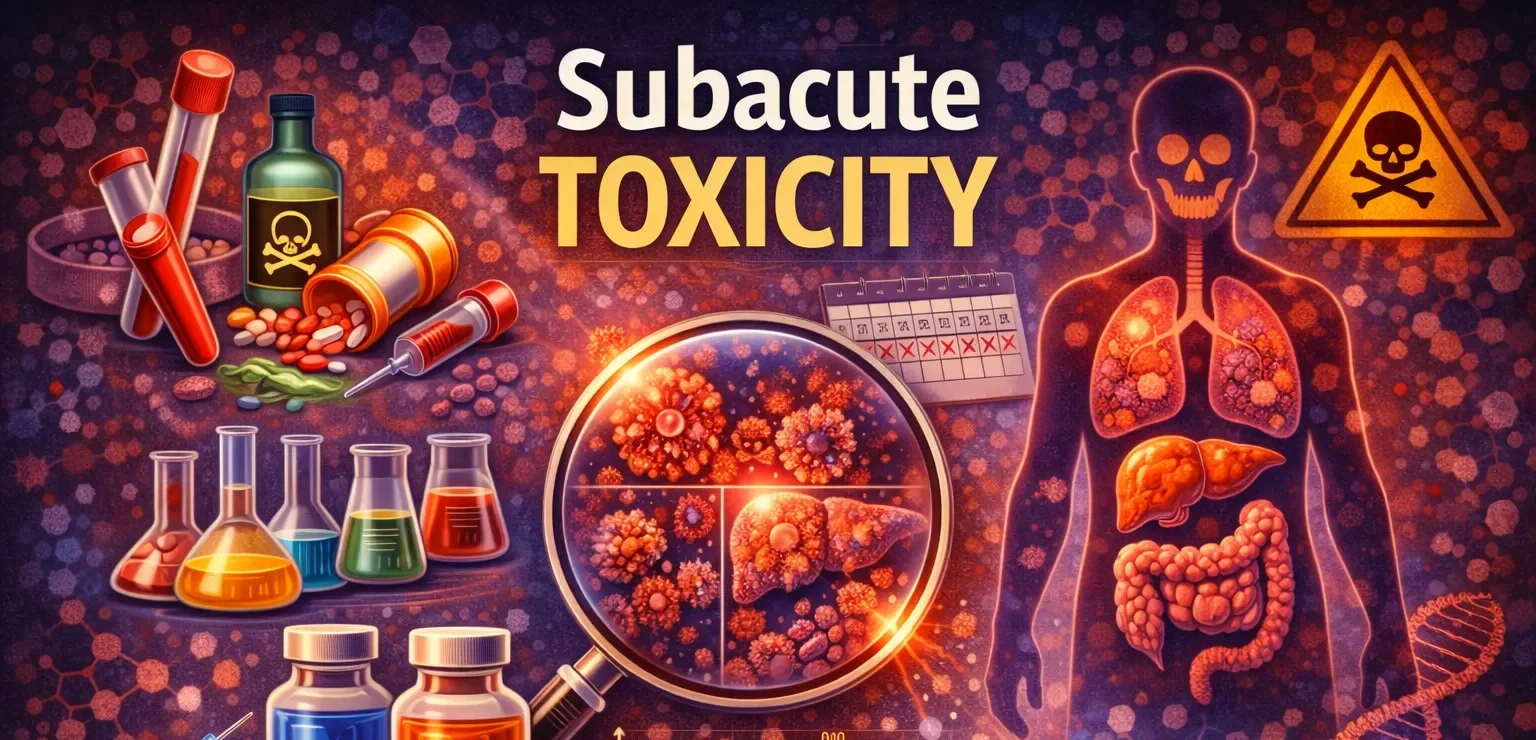
Subacute Toxicity refers to adverse effects from repeated exposure to a substance over a short duration, usually weeks.
Definition of Subacute toxicity:
- It refers to the adverse effects resulting from repeated or continuous exposure to a toxic substance over a period of a few days up to about 28 days.
- It represents the intermediate phase between a single high-dose exposure (acute) and prolonged long-term exposure (chronic).
Characteristics:
- Repeated low or moderate doses over a short period (days to weeks).
- Gradual buildup of toxicity in the body due to continuous exposure.
- Subtle or delayed symptoms, unlike the immediate effects seen in acute toxicity.
Causes of Subacute toxicity:
- Daily exposure to environmental toxins, such as indoor air pollutants or food contaminants.
- Short-term occupational exposure to industrial chemicals without proper protection.
- Frequent dosing of medications that may have cumulative effects within a few weeks.
Advertisements
Study and Testing:
- Typically involves 14 to 28-day animal studies.
- Evaluates biochemical markers, organ weights, and histopathological changes.
- Common organs assessed: liver, kidneys, lungs, heart, and reproductive organs.