
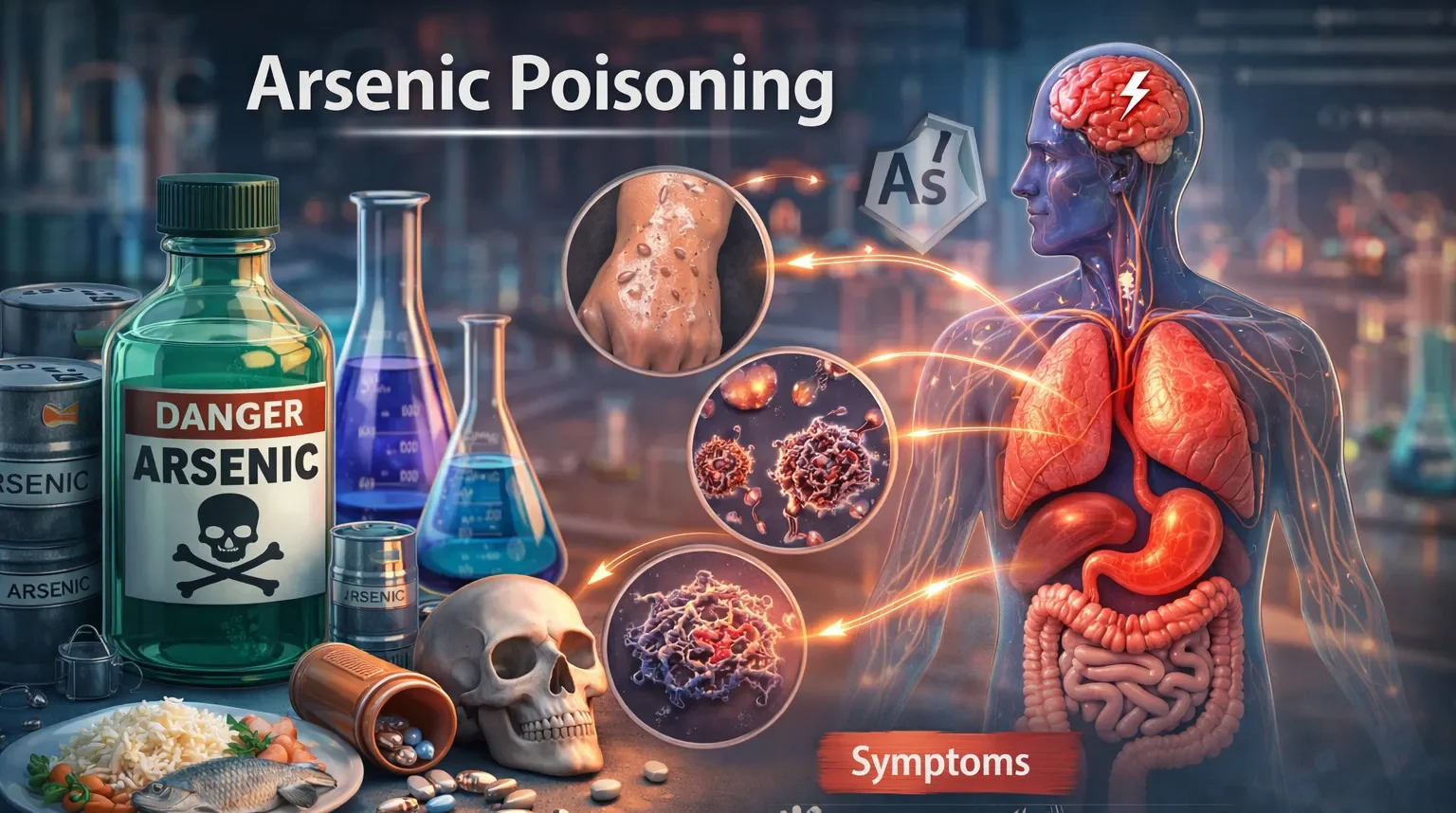
Sources of Arsenic Poisoning
- Contaminated groundwater (naturally high arsenic areas).
- Pesticides, herbicides, wood preservatives.
- Industrial processes: smelting, semiconductor manufacturing.
Clinical Symptoms
-
Acute Poisoning:
- GI distress: Severe vomiting, abdominal pain, diarrhea (“rice-water stools”).
- Hypotension, shock (from fluid loss).
- Garlic odor on breath or tissues.
- Multi-organ failure (cardiac, renal).
-
Chronic Poisoning (Arsenicosis):
- Skin changes: Hyperpigmentation, hyperkeratosis (especially palms and soles).
- Peripheral neuropathy: Sensory loss, weakness.
- Increased cancer risk: Skin, lung, bladder.
Advertisements
Management of Arsenic Poisoning
-
Stabilization:
- IV fluids, electrolyte correction.
-
Chelation Therapy:
- Dimercaprol (BAL) – for acute poisoning.
- DMPS or DMSA (Succimer) – preferred for chronic or mild cases.
-
Supportive Care:
- Monitor cardiac, renal, and neurological status.
- Gastric lavage or activated charcoal if early presentation (note: charcoal has limited efficacy for arsenic).