
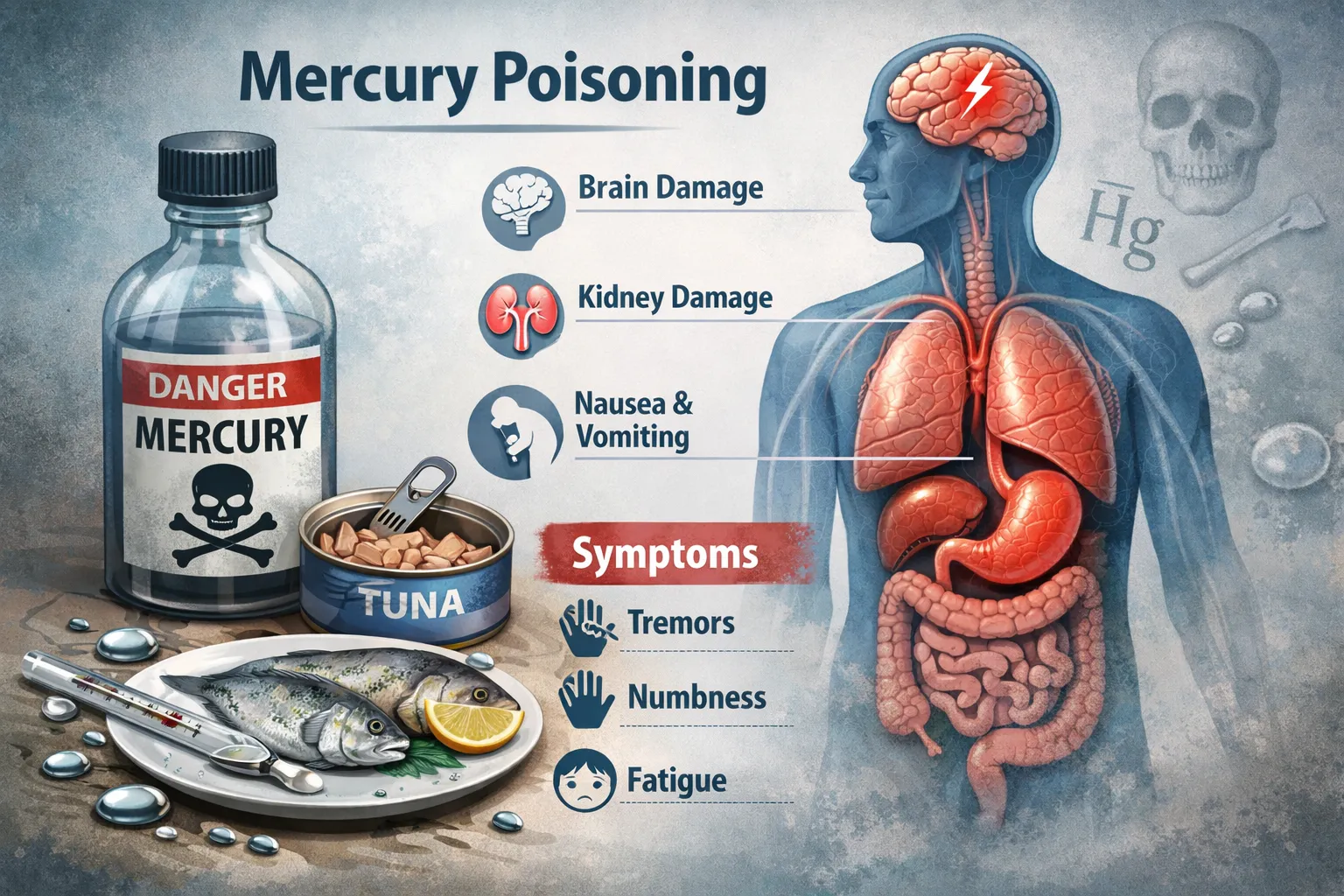
Mercury Poisoning is toxicity due to mercury exposure affecting the nervous system, kidneys, and other organs.
Forms of Mercury
- Elemental Mercury (Hg⁰): Found in thermometers, dental amalgams. Vapor is most toxic.
- Inorganic Mercury (Hg²⁺ salts): e.g., mercury chloride.
- Organic Mercury (Methylmercury): From industrial pollution; bioaccumulates in large fish.
Clinical Symptoms of Mercury Poisoning
-
Acute Inhalation (Elemental Mercury Vapor):
- Pneumonitis, cough, chest tightness, dyspnea, CNS symptoms.
-
Chronic Exposure (Inorganic Mercury):
- Tremors (“mercurial tremors”), gingivitis.
- Erethism (triad: irritability, excitability, memory loss).
-
Methylmercury Poisoning:
- Neurotoxicity: ataxia, sensory deficits, dysarthria.
- Especially dangerous to fetal brain development.
Management of Mercury Poisoning
- Remove source of exposure.
- Chelation Therapy:
- Dimercaprol (BAL) or D-Penicillamine for inorganic mercury.
- Succimer (DMSA) – preferred in milder cases, especially children.
- DMPS (Sodium dimercaptopropane sulfonate) – another chelating agent.
- Supportive Care:
- Respiratory support for inhalation cases.
- Hydration and management of neurological symptoms.
Advertisements