
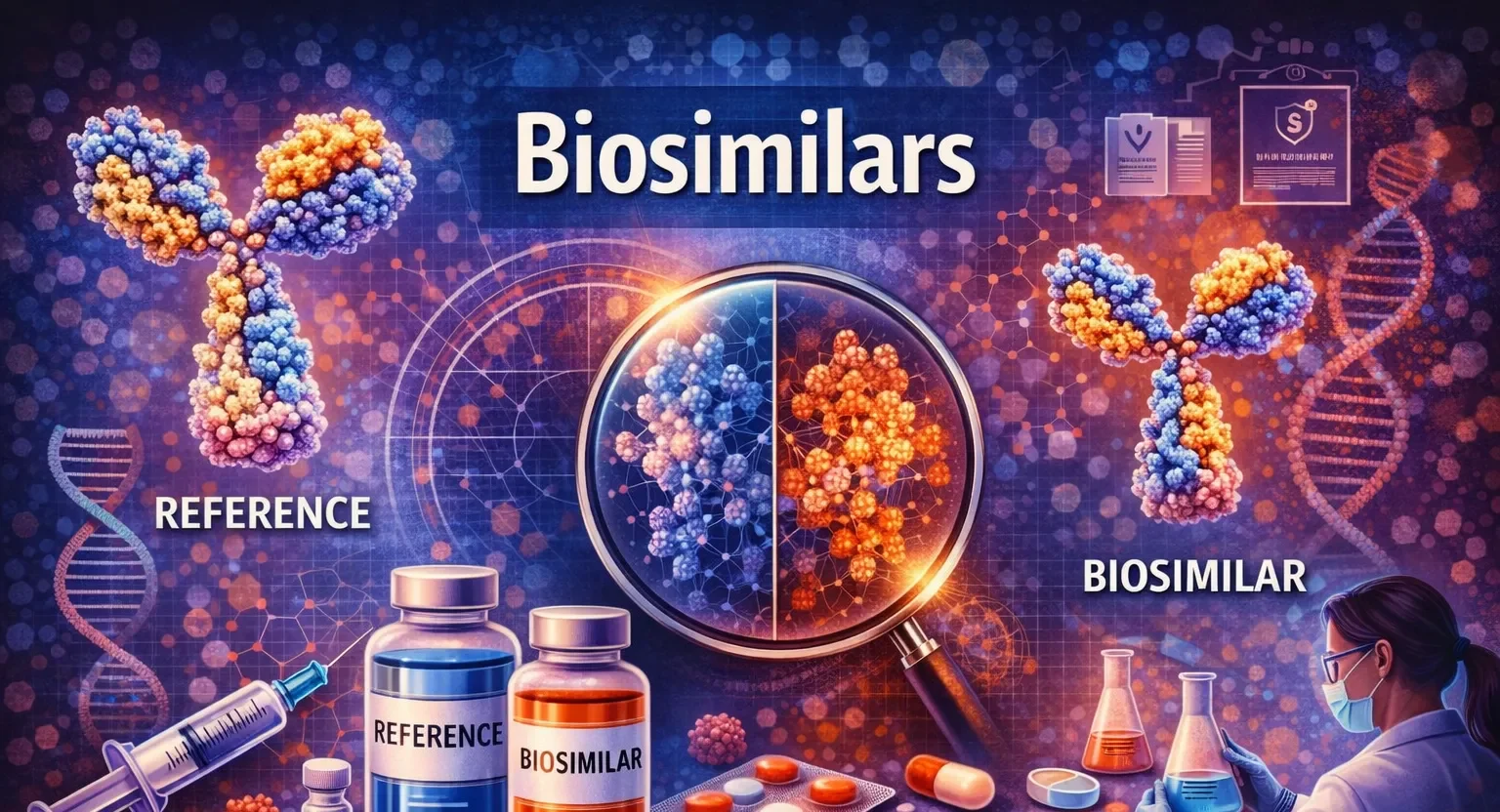
Definition of Biosimilars
- Biosimilars are biological products that are highly similar to an already approved reference biologic drug, with no clinically meaningful differences in terms of safety, purity, or potency.
Key Characteristics
- Produced using living cells
- Similar, but not identical, to reference drugs (due to natural biological variability)
- Developed after patent expiry of original biologics
- Require regulatory approval based on:
- Analytical studies
- Animal studies
- Clinical trials demonstrating equivalence
Difference from Generic Drugs
| Feature | Biosimilars | Generic Drugs |
| Molecule size | Large, complex proteins | Small, simple molecules |
| Production | Living cells, biologics | Chemical synthesis |
| Identical to origin | No – highly similar | Yes – exact copy |
| Approval process | Extensive clinical trials | Bioequivalence testing only |
Benefits of Biosimilars
- Lower cost alternatives to expensive biologics
- Improve patient access to life-saving therapies
- Help reduce healthcare burden
Considerations
- Not automatically interchangeable with reference drugs (depends on regulations)
- Healthcare providers must evaluate patient-specific factors
- Pharmacovigilance is essential to monitor safety
Advertisements