
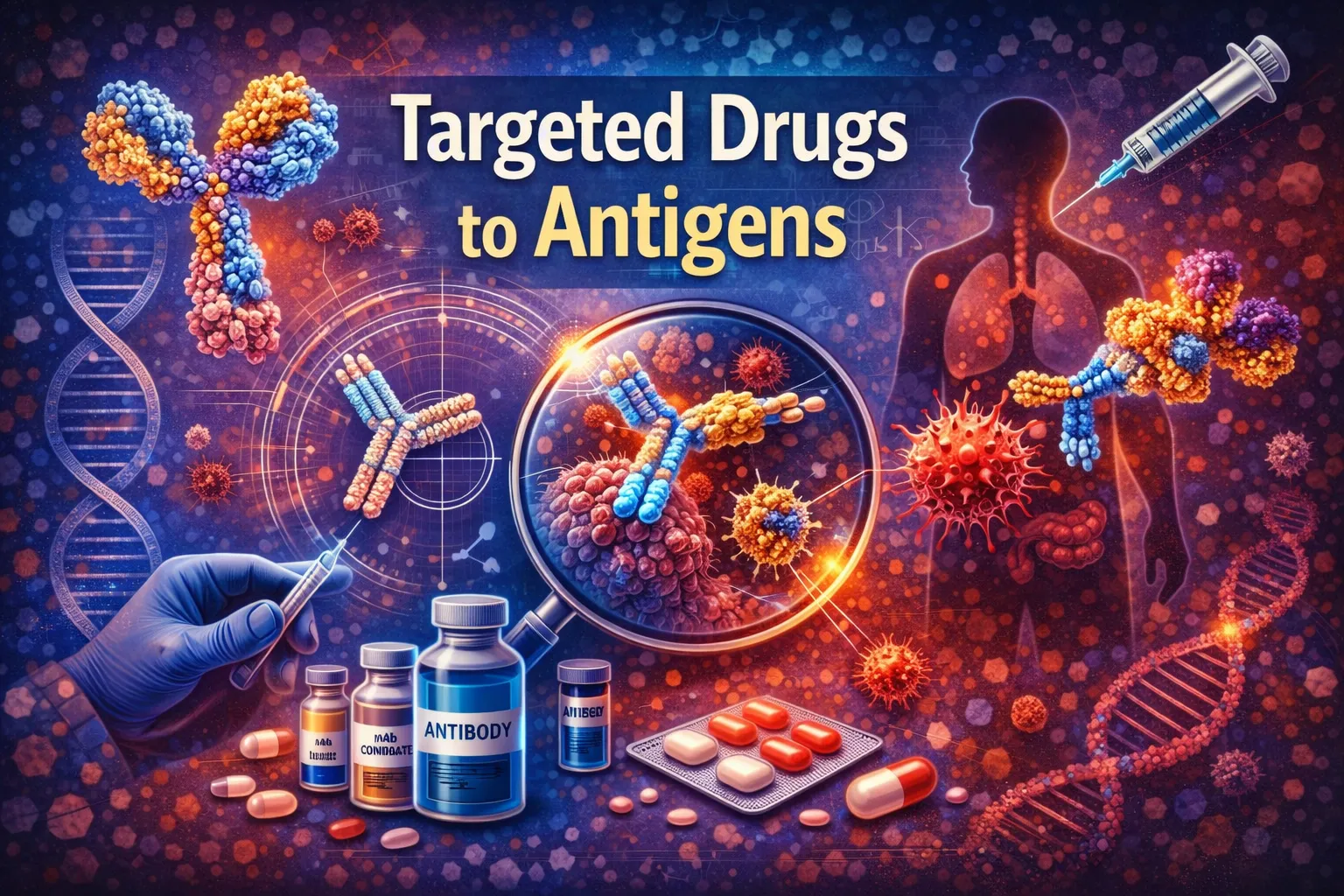
Overview of Targeted Drugs to Antigens
- Targeted drugs are therapies designed to specifically bind to antigens—unique molecular markers—on cells involved in diseases like cancer, autoimmune disorders, and infections.
- These drugs are often monoclonal antibodies (mAbs) or engineered molecules that deliver precise treatment.
Mechanism of Action
- Bind specifically to disease-related antigens (e.g., proteins or receptors)
- Block signaling pathways or cell functions
- Mark diseased cells for destruction by the immune system
- Spare healthy tissues → fewer side effects compared to traditional drugs
Applications by Disease Types of Targeted Drugs to Antigens
-
Cancer
- Example Targets:
- HER2 in breast cancer → Targeted by Trastuzumab
- EGFR in lung cancer → Targeted by Erlotinib
- Action: Inhibit growth signals or promote cancer cell destruction
- Example Targets:
-
Autoimmune Disorders
- Example Drug:
- Adalimumab (Humira)
- Target: TNF-alpha, a pro-inflammatory cytokine
- Use: Rheumatoid arthritis, Crohn’s disease
- Action: Reduces inflammation by blocking cytokine activity
- Example Drug:
-
Infectious Diseases
- Examples:
- Bamlanivimab, Casirivimab/Imdevimab → Target SARS-CoV-2
- Action: Bind to viral proteins, neutralize virus, prevent infection progression
- Examples:
Advertisements
Advantages of Targeted Therapy
- High specificity
- Lower risk of harming healthy tissues
- Reduced systemic side effects
- Personalized treatment options
Advertisements