
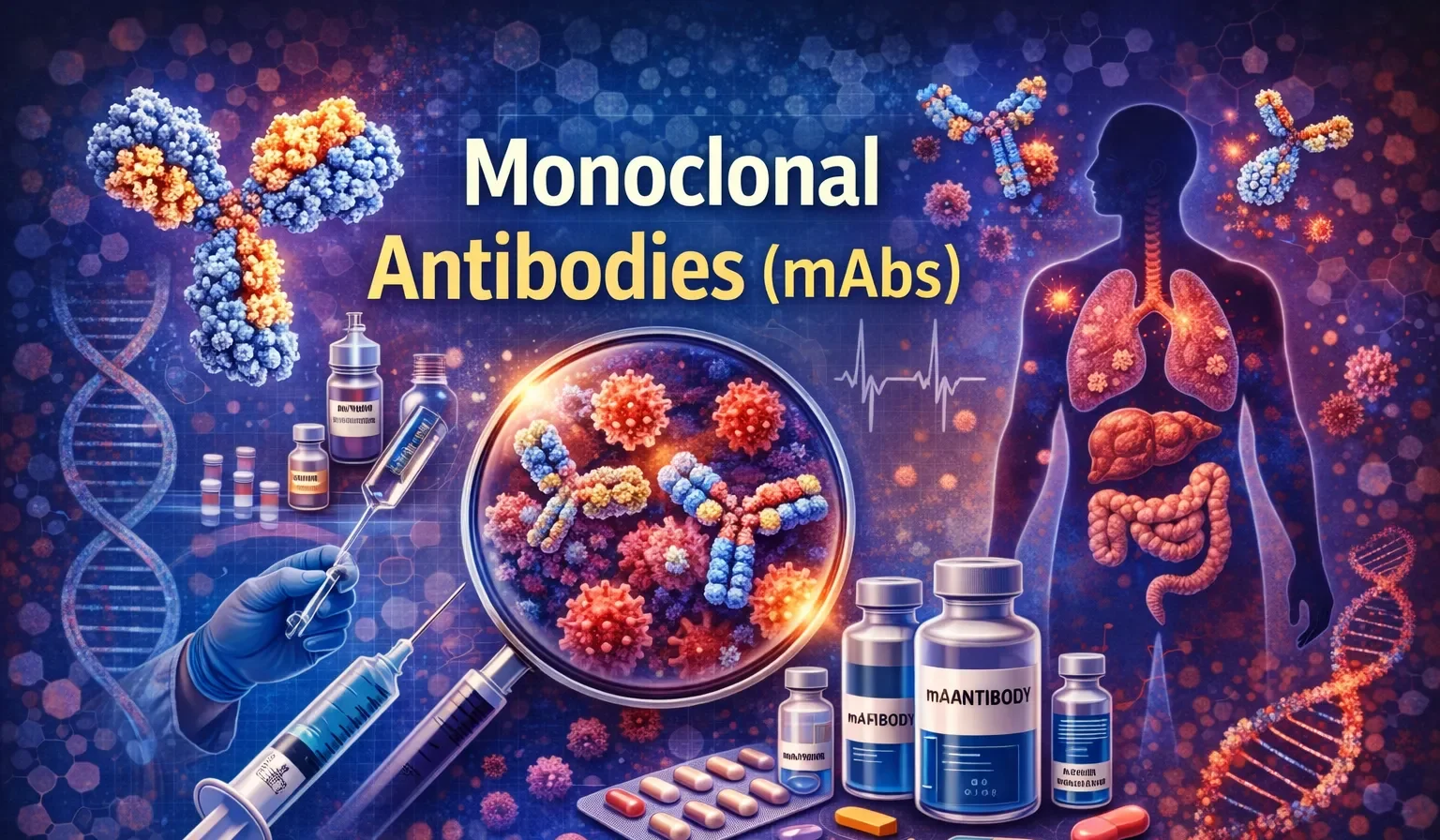
Monoclonal Antibodies (mAbs) are targeted protein drugs that bind specific antigens and treat cancer and autoimmune diseases.
Monoclonal Antibodies (mAbs)
- Lab-produced proteins that mimic natural antibodies
- Designed to bind specific antigens (e.g., proteins on cancer cells or pathogens)
- Produced using hybridoma technology (fusion of B-cells with myeloma cells)
Mechanism of Action
- Bind to specific targets (antigens) on cells
- Can:
- Block receptor activity
- Induce apoptosis
- Mark cells for immune destruction
Uses of Monoclonal Antibodies
- Cancer treatment
- Autoimmune diseases
- Infectious diseases
- Allergies
- Organ transplantation
Advertisements
Examples of Monoclonal Antibodies

-
Trastuzumab (Herceptin)
- Targets HER2 protein in HER2-positive breast cancer
- Slows/stops cancer cell growth
- Often combined with chemotherapy
-
Adalimumab (Humira)
- Treats rheumatoid arthritis, psoriasis, Crohn’s disease
- Blocks TNF-alpha, reducing inflammation
-
Bevacizumab (Avastin)
- Used in colorectal, lung, brain cancers
- Blocks VEGF to inhibit tumor blood supply
-
Rituximab (Rituxan)
- Treats non-Hodgkin’s lymphoma, CLL, rheumatoid arthritis
- Binds to CD20 on B-cells → promotes their destruction
-
Omalizumab (Xolair)
- Used for allergic asthma, chronic hives
- Binds to IgE → reduces allergic response