
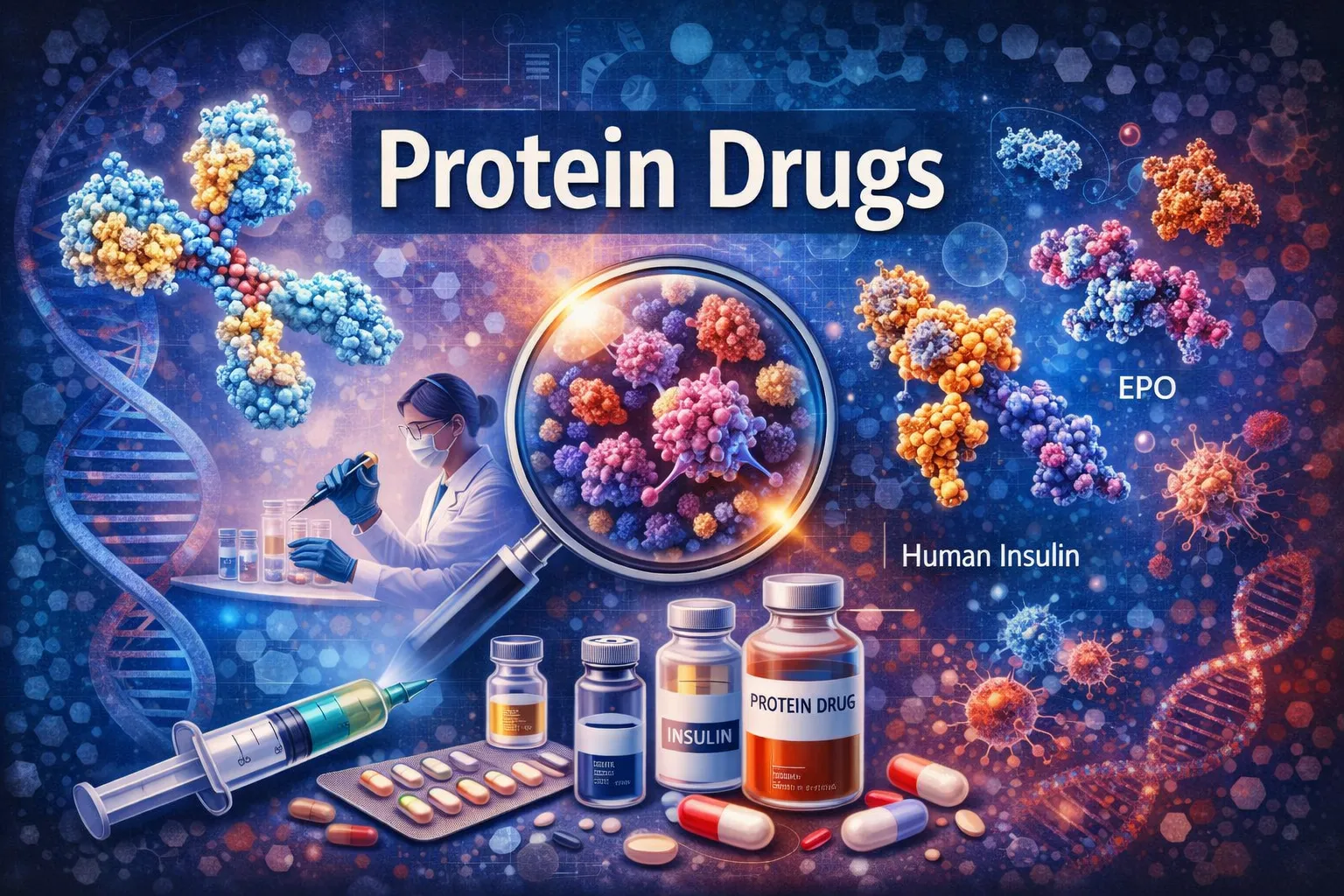
Definition of Protein Drugs
- These are therapeutic agents derived from proteins (e.g., antibodies, enzymes, hormones) used to treat various medical conditions.
- They are typically produced using recombinant DNA technology.
Mechanism of Action
- Protein drugs work by:
- Binding to specific molecules (e.g., cytokines, receptors)
- Modulating biological activity
- Replacing missing/dysfunctional proteins
- Inhibiting enzymes
- Targeting specific cells or signaling pathways
Pharmacological Considerations
- Route of Administration: Often parenteral (IV, subcutaneous) because proteins are degraded in the GI tract.
- Immunogenicity: Protein drugs can be recognized as foreign by the immune system, potentially triggering anti-drug antibodies.
- Pharmacokinetics:
- Large molecular size → limited distribution.
- Often have longer half-lives but can be cleared by the reticuloendothelial system.
- Storage and Stability: Must be handled carefully (temperature-sensitive, easily denatured).
Advertisements
Types & Examples of Protein Drugs

-
Monoclonal Antibodies (mAbs)
- Target specific antigens (e.g., cancer cells, inflammatory proteins)
- Uses: Cancer, autoimmune diseases, infections
-
Enzyme Replacement Therapy
- Replace deficient/defective enzymes
- Examples: Gaucher disease, Fabry disease
-
Hormone Therapy
- Replace or supplement hormones
- Examples: Insulin (diabetes), Growth hormone (growth disorders)
-
Cytokines
- Regulate immune responses
- Uses: Cancer, autoimmune disorders
-
Blood Clotting Factors
- Treat bleeding disorders (e.g., hemophilia)
Uses
- Autoimmune disorders
- Cancer treatment
- Hormonal disorders
- Rare genetic conditions
- Infectious diseases
Advertisements
Side Effects
- Allergic reactions
- Injection site reactions
- Flu-like symptoms
- Nausea, vomiting
- Blood clotting issues
- Immune system disturbances