Hydrolysis

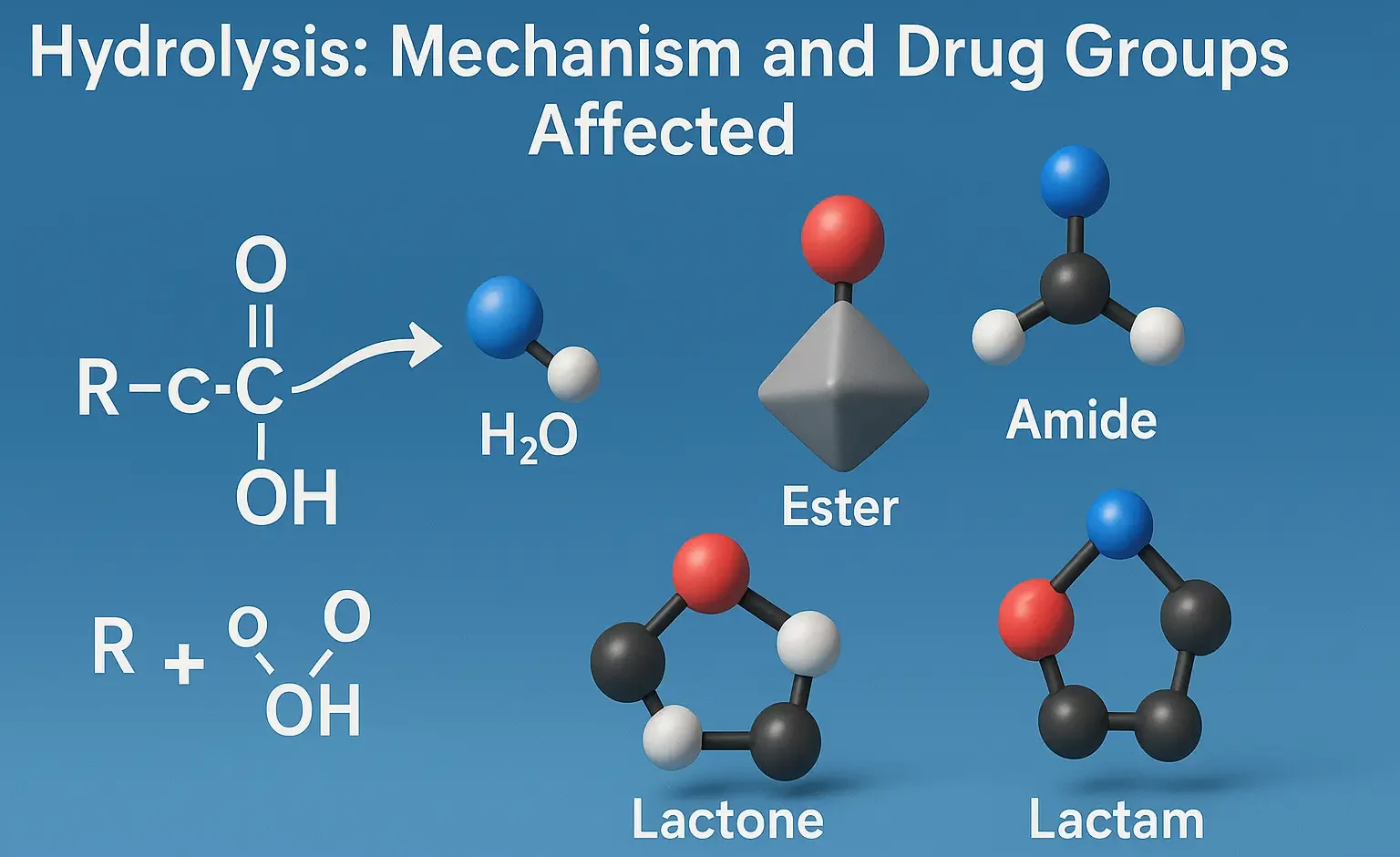
Hydrolysis

Mechanism of Hydrolysis: Hydrolysis involves nucleophilic attack of water on labile functional groups, breaking chemical bonds such as esters and amides. Example: $\mathrm{R{-}COOR’} + H_{2}O \;\longrightarrow\; \mathrm{R{-}COOH} + \mathrm{R’OH}$ Commonly Affected Drug Classes: Esters: aspirin, procaine Amides: lidocaine, procainamide Lactams: penicillins, cephalosporins Carbamates, imines Stabilization Strategies for Hydrolysis Strategy Explanation pH control (buffering) Adjust formulation … Read more

Specific & General Acid-Base Catalysis

Specific & General Acid-Base Catalysis

Specific Acid/Base Catalysis: Catalysis by hydronium (H₃O⁺) or hydroxide (OH⁻) only. Rate is pH-dependent. Rate law: \(\text{Rate} = k_H [H_3O^+] + k_{OH} [OH^-]\) General Acid/Base Catalysis: Catalysis by any proton donor (acid) or proton acceptor (base), e.g., acetate, phosphate, ammonia. Buffers can contribute to catalysis. Rate law (general form): $\text{Rate} = k + k_{AH}[AH] + … Read more

Dielectric Constant

Dielectric Constant

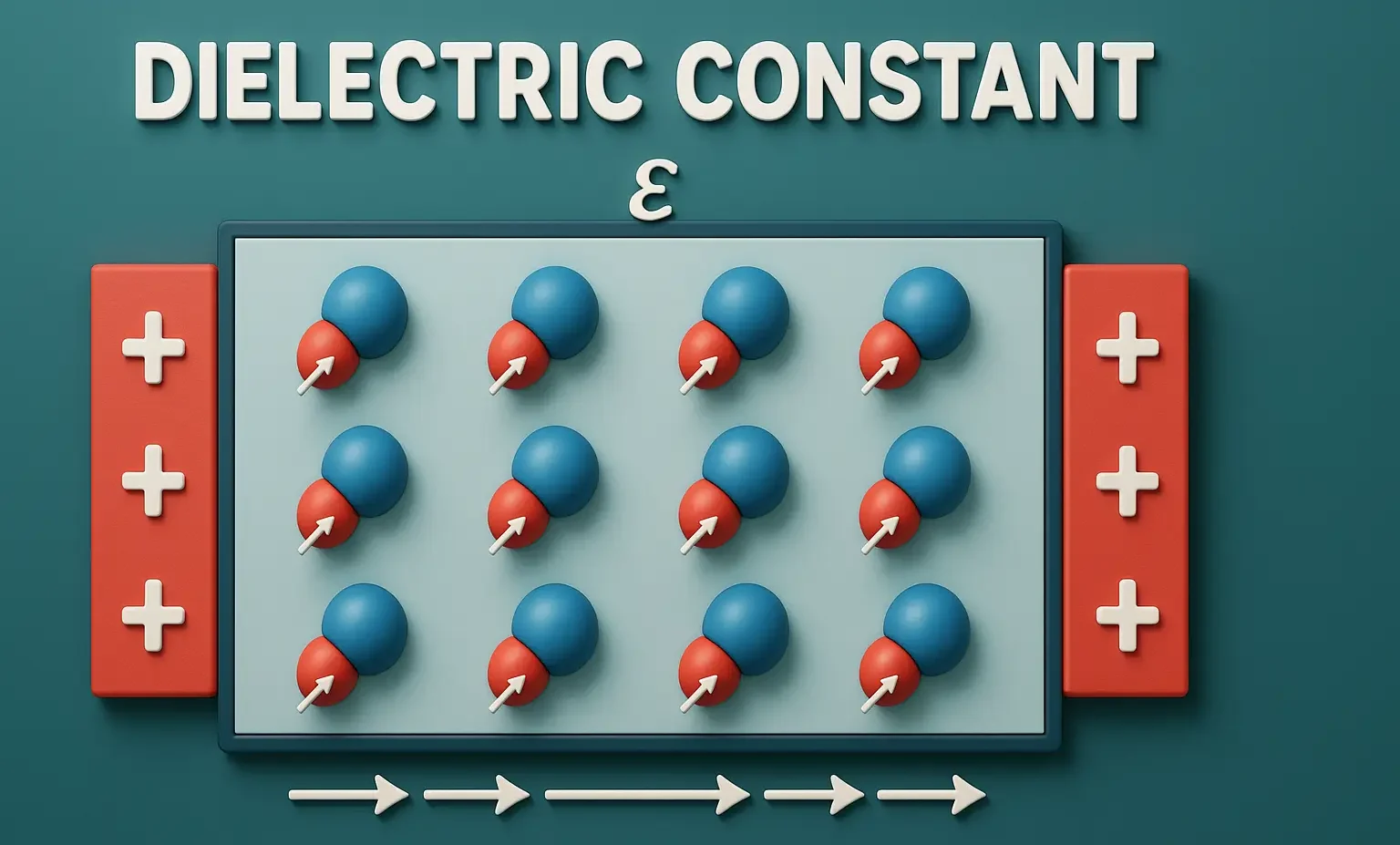
Definition of Dielectric Constant: Dielectric Constant Measure of a solvent’s polarity. High dielectric constant = high polarity (e.g., water = 80). Effect: High ε (e.g., water) stabilizes ionic species and may increase or decrease the rate depending on the mechanism. Solvents with low dielectric constants may: Promote neutral or non-ionic pathways Inhibit ionization-dependent reactions For … Read more

Ionic Strength

Ionic Strength

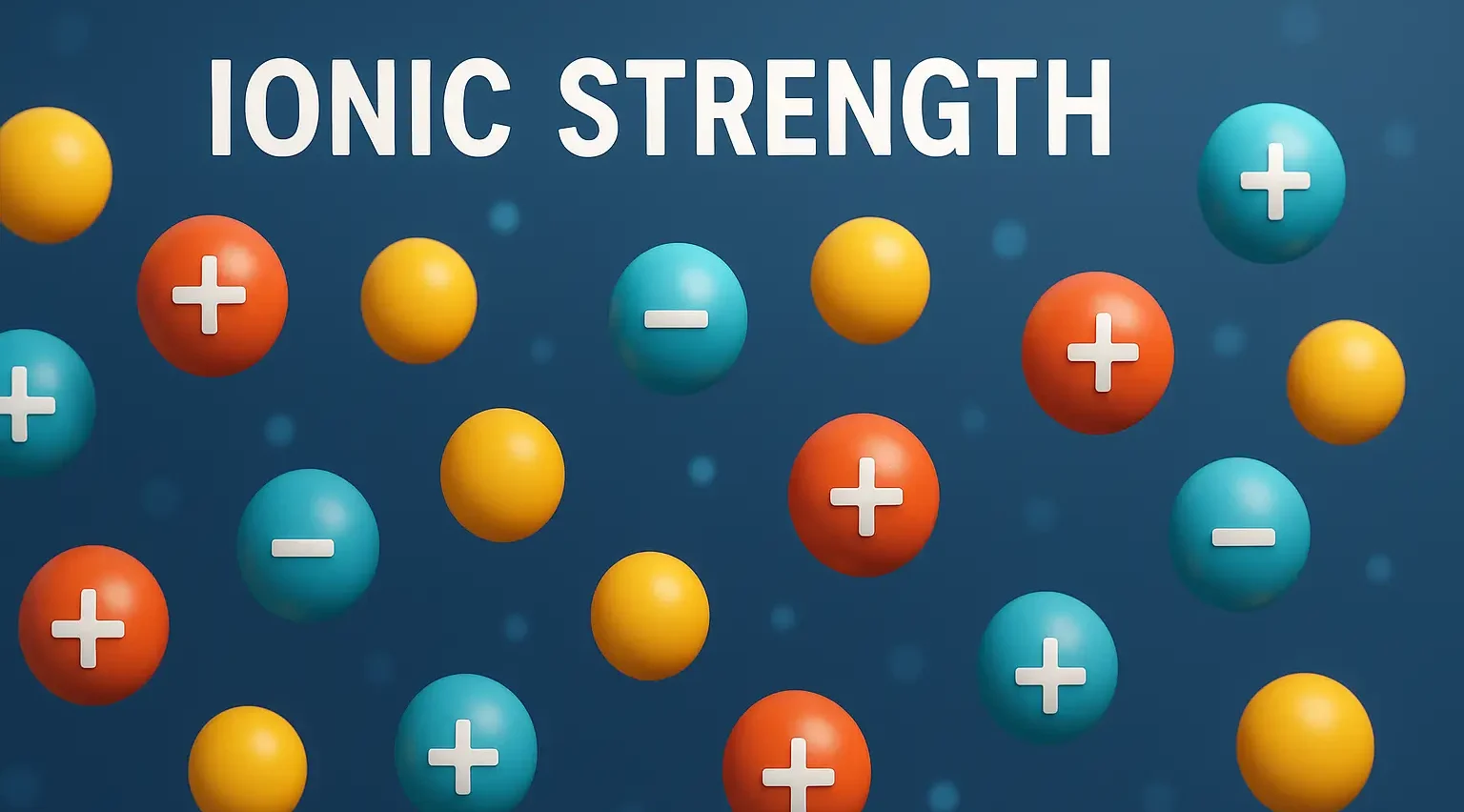
Definition of Ionic Strength: Ionic strength (μ) is a measure of total ion concentration in solution. $\mu = 12 \sum c_i z_i^2$$\mu = \tfrac{1}{2} \sum c_i z_i^2$$\mu = 21 \sum c_i z_i^2$ Where: ci​ = concentration of ion i zi​ = charge of ion i Effect: Reactions involving charged species are influenced by ionic strengths: … Read more

Solvent

Solvent

Effect of Solvent: Solvents can change the reaction medium, affecting: Solubility of the drug Polarity of the medium Hydrolysis or oxidation rate Some solvents may stabilize or destabilize the drug. Co-solvent Systems: Adding solvents like ethanol can: Change solvation Affect reaction kinetics Modify degradation pathways Examples: Hydrolysis is faster in aqueous solutions. Adding organic solvents … Read more

Temperature

Temperature

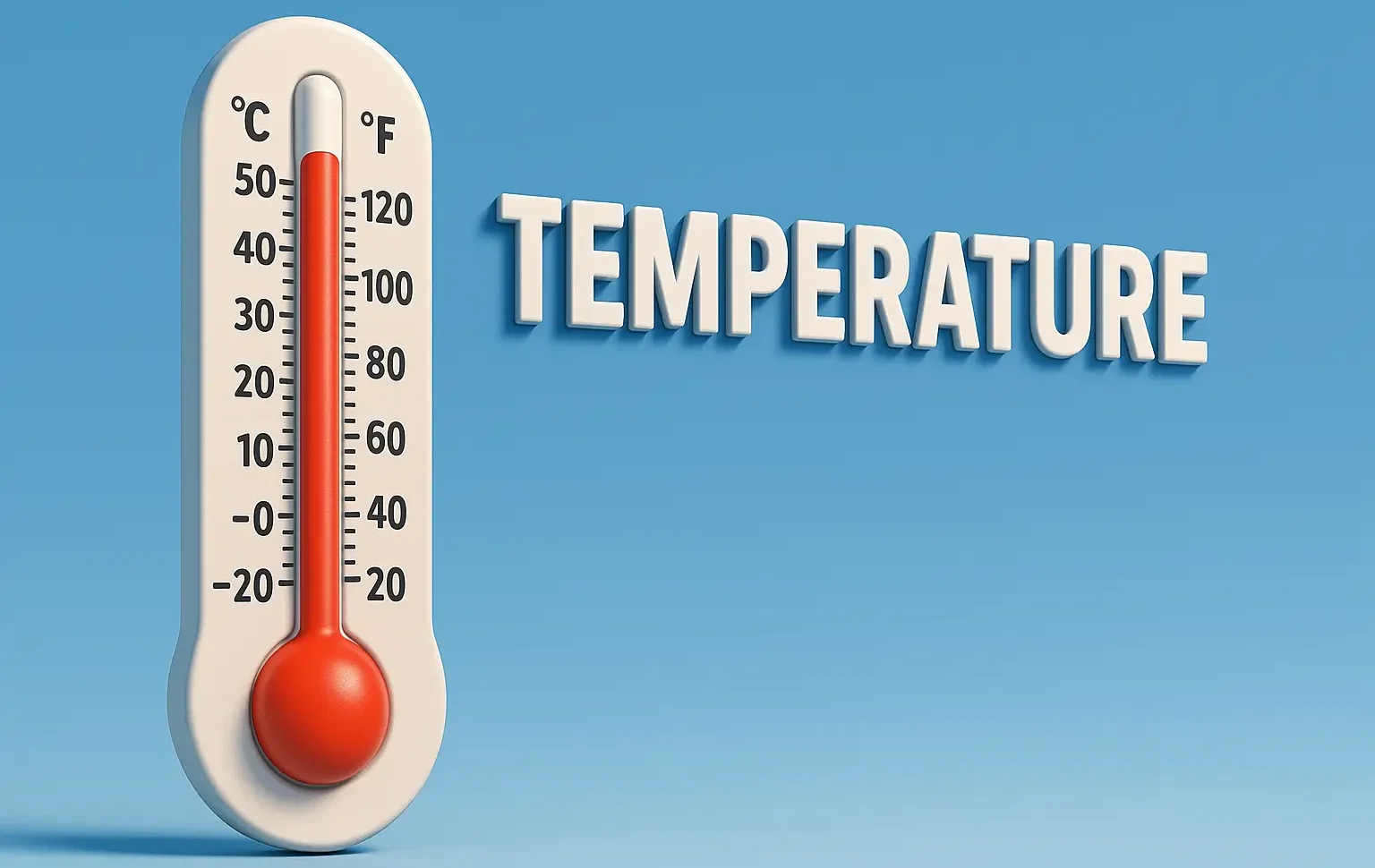
Effect of Temperature: As Temperature increases, the rate of degradation increases. Described by Arrhenius equation: $k = A \cdot e^{-\tfrac{E_a}{RT}}$ Where: k = rate constant A = frequency factor Ea​ = activation energy (J/mol or cal/mol) R = gas constant (8.314 J/mol·K or 1.987 cal/mol·K) T = temperature in Kelvin Implications: Helps estimate shelf life … Read more

Renal Clearance (Clᵣ)

Renal Clearance (Clᵣ)

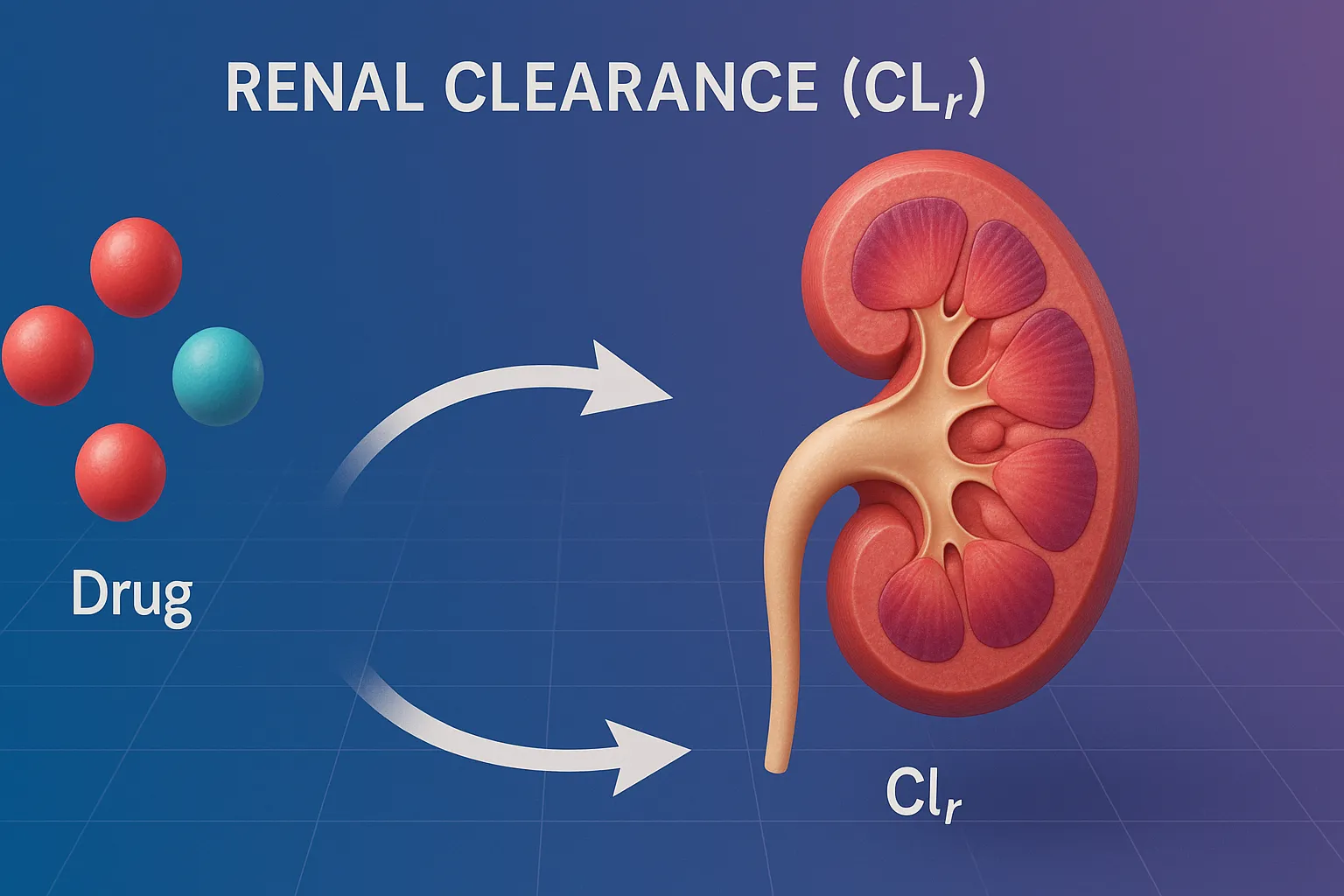
Renal Clearance (Clᵣ) explains the volume of plasma cleared of a drug per unit time, key in pharmacokinetics and dosing. Renal Clearance (Clᵣ) is the volume of plasma cleared of a drug by the kidneys per unit time (mL/min or L/h). It evaluates kidney efficiency in drug elimination and helps determine appropriate drug dosing, especially … Read more

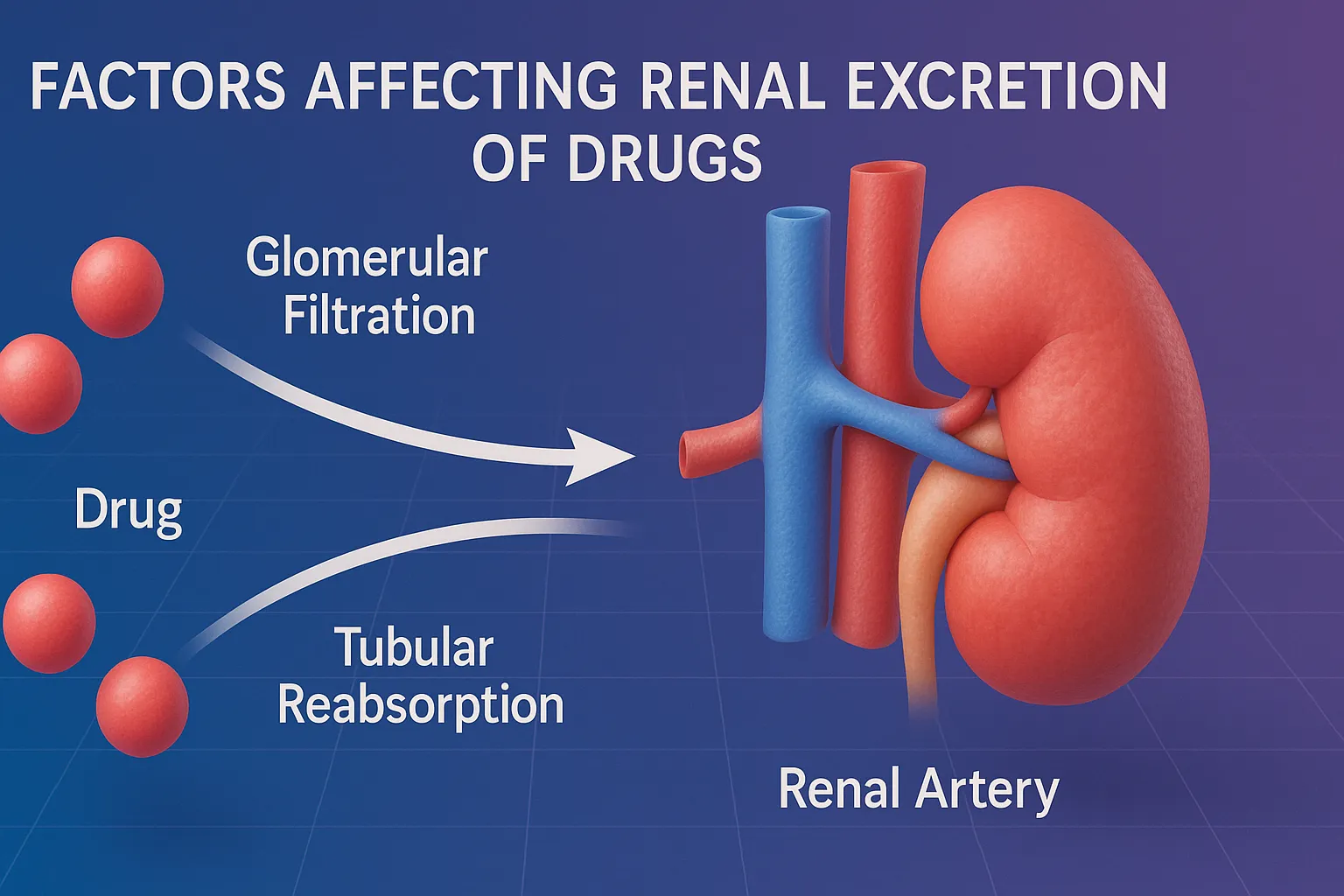
Factors Affecting Renal Excretion of Drugs

Factors Affecting Renal Excretion of Drugs

Factors Affecting Renal Excretion of Drugs include pH, protein binding, blood flow, drug solubility, and renal function. Factors Affecting Renal Excretion of Drugs Plasma Protein Binding Only free (unbound) drug is filtered. High protein binding may reduce filtration but can still be secreted via active transport. Urine pH and Drug Ionization Weak acids and bases … Read more

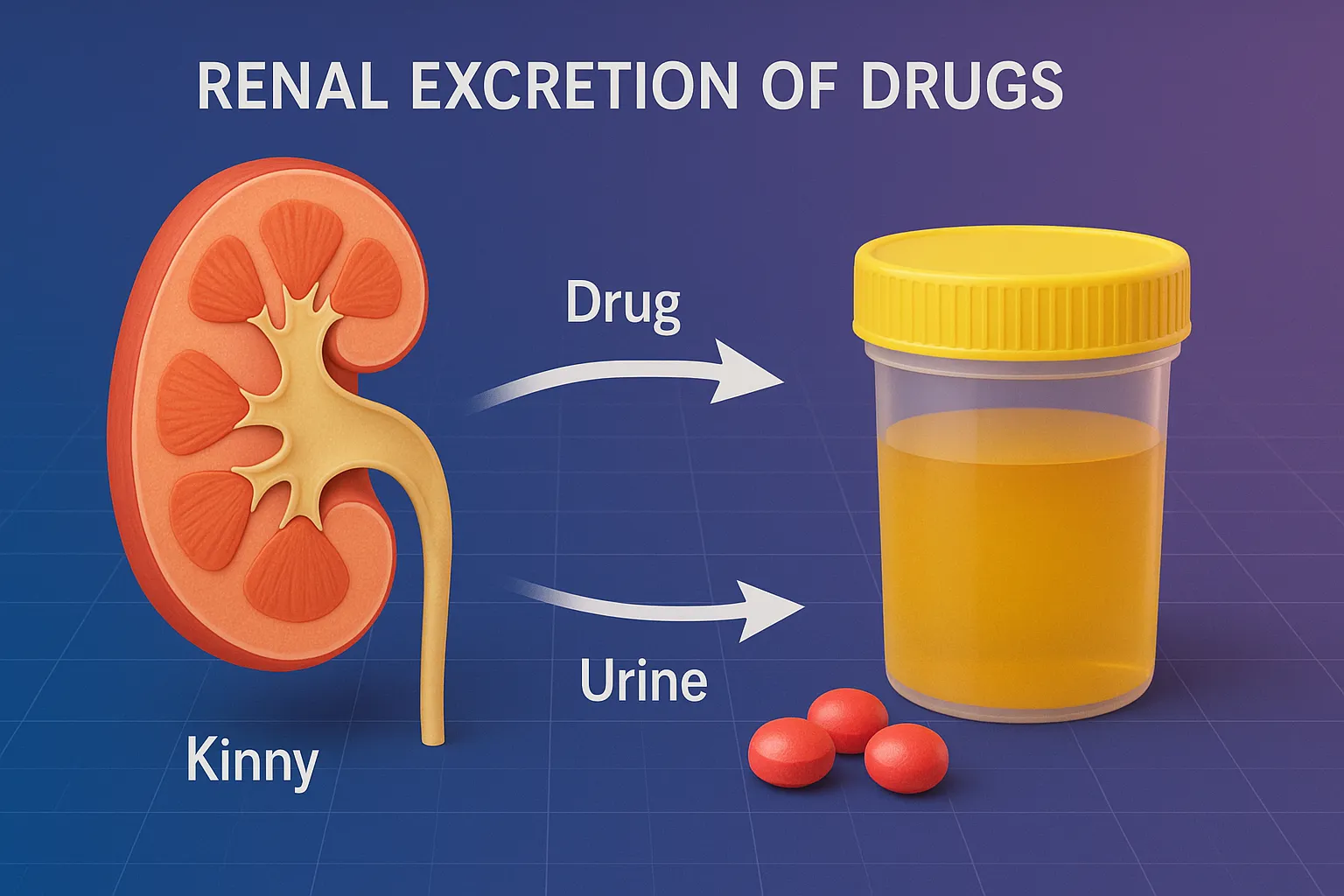
Renal Excretion of Drugs

Renal Excretion of Drugs

Renal Excretion of Drugs involves filtration, secretion, and reabsorption processes that remove drugs through the kidneys. Renal Excretion of Drugs After metabolism (or sometimes directly if they are already sufficiently water-soluble), drugs and their metabolites are excreted from the body. The kidneys are the primary route for most water-soluble agents. Basic Renal Anatomy & Physiology … Read more

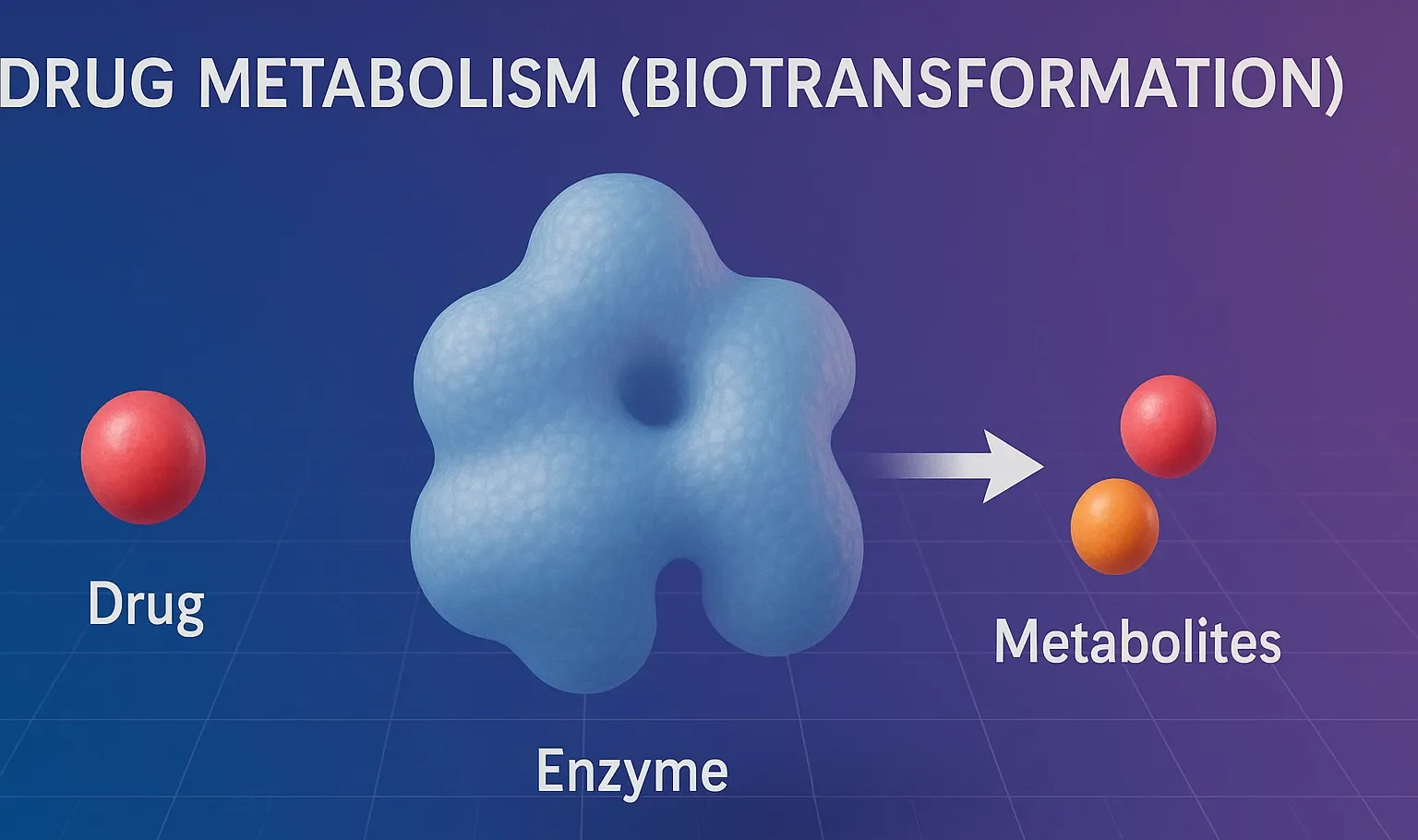
Drug Metabolism (Biotransformation)

Drug Metabolism (Biotransformation)

Drug Metabolism (Biotransformation) involves enzymatic conversion of drugs into active or inactive metabolites for elimination. Drug metabolism is the enzymatic conversion of drugs into metabolites for easier elimination, primarily occurring in the liver but also in the kidneys, lungs, intestines, and plasma. Phases of Drug Metabolism Phase I (Functionalization Reactions) These reactions introduce or expose … Read more