
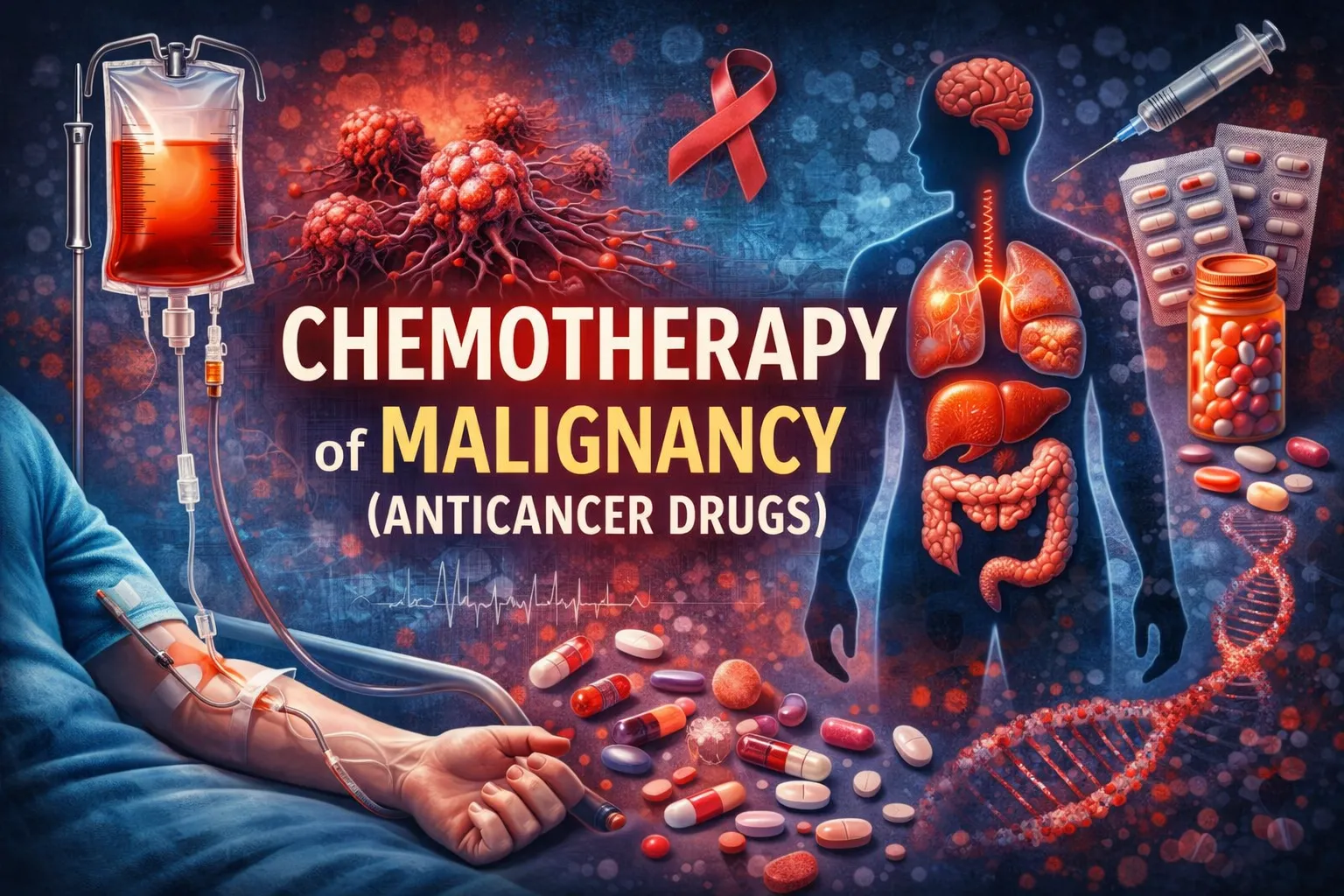
Chemotherapy of Malignancy (Anticancer Drugs) explains drugs used to kill or inhibit cancer cells by targeting cell division.
Chemotherapy of Malignancy (Anticancer Drugs)
- Chemotherapy is a cancer treatment that uses drugs to kill cancer cells or stop them from growing and dividing.
- It can be used to treat many types of cancer, including leukemia, lymphoma, breast cancer, lung cancer, and others.
Administration methods:
Advertisements
-
- Intravenous (IV)
- Oral
- Topical
- Chemotherapy is often given in cycles, which consist of treatment periods followed by rest periods to allow the body to recover.
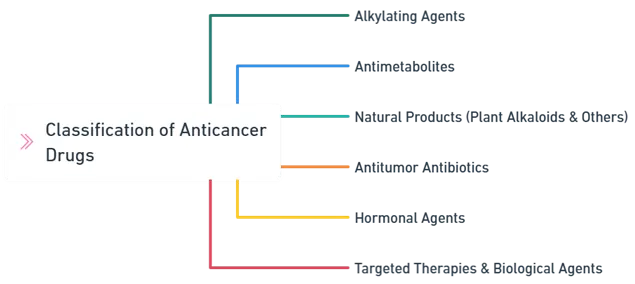
Classification of Anticancer Drugs Based on Mechanism of Action
Advertisements
-
Alkylating Agents
- Mechanism:
- Attach alkyl groups to DNA, causing cross-linking, strand breaks, or abnormal base-pairing, leading to inhibition of DNA replication and transcription.
- Examples:
- Cyclophosphamide, Cisplatin, Carboplatin, Busulfan.
- Mechanism:
-
Antimetabolites
- Mechanism:
- Mimic natural metabolites involved in DNA synthesis, thereby disrupting DNA and RNA synthesis.
- Examples:
- Methotrexate (Folate antagonist)
- 5-Fluorouracil (Pyrimidine analog)
- Cytarabine
- Mechanism:
-
Natural Products (Plant Alkaloids and Others)
- Mechanism:
- Interfere with microtubule dynamics or inhibit topoisomerases essential for DNA replication.
- Examples:
- Vinca Alkaloids: Vincristine, Vinblastine
- Taxanes: Paclitaxel
- Topoisomerase Inhibitors: Etoposide
- Mechanism:
-
Antitumor Antibiotics
- Mechanism:
- Intercalate between DNA base pairs, inhibit DNA/RNA synthesis, or generate free radicals that cause DNA strand breaks.
- Examples:
- Doxorubicin, Daunorubicin, Bleomycin
- Mechanism:
-
Hormonal Agents
- Mechanism:
- Target hormone-dependent tumors by blocking hormone receptors or inhibiting hormone synthesis.
- Examples:
- Tamoxifen, Anastrozole, Flutamide
- Mechanism:
-
Targeted Therapies and Biological Agents
- Mechanism:
- Specifically target molecular pathways or proteins essential for cancer cell survival and proliferation.
- Examples:
- Imatinib (Tyrosine kinase inhibitor)
- Rituximab (Monoclonal antibody)
- Mechanism:
Side Effects of Chemotherapy
- Nausea and vomiting
- Hair loss
- Fatigue
- Decreased blood cell counts
- Skin and nail changes
- Increased risk of infection
- Neuropathy (nerve damage causing numbness, tingling, or pain)
Click Here to Watch the Best Pharma Videos
Advertisements