
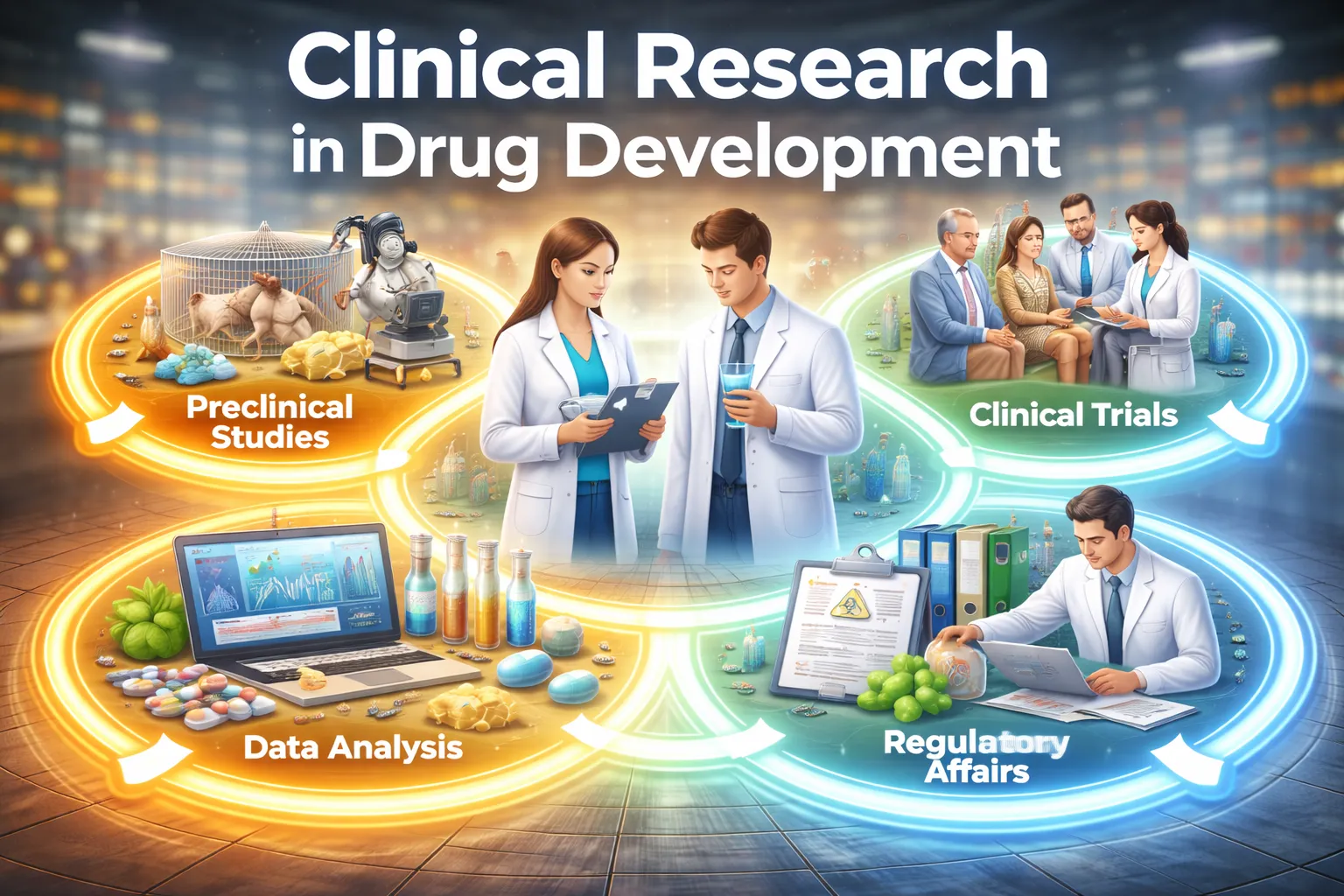
Clinical Research in Drug Development evaluates safety and efficacy of drugs through human trials before approval.
Purpose and Scope of Clinical Research in Drug Development
- Clinical research in industrial pharmacy aims to establish the safety and efficacy of new pharmaceuticals through a series of clinical trials (Phases I-IV) that progressively evaluate safety, dosage, effectiveness, and side effects.
Phases of Clinical Trials
-
Phase I
- Participants: 20-100 healthy volunteers or patients.
- Objective: Assess safety, tolerability, pharmacokinetics, and pharmacodynamics.
-
Phase II
- Participants: 100-300 patients.
- Objective: Evaluate drug efficacy, determine optimal dosing, and continue safety assessments.
-
Phase III
- Participants: 1,000-3,000 patients.
- Objective: Confirm efficacy, monitor side effects, and compare with standard treatments.
-
Phase IV (post-marketing)
- Objective: Gather additional information on long-term risks, benefits, and optimal use.
Regulatory Compliance
- Clinical trials must follow regulatory standards, such as Good Clinical Practice (GCP), which includes ethical considerations, informed consent, and rigorous methodologies.
Advertisements
Data Analysis and Reporting
- Data from these trials are analyzed and compiled into reports for regulatory submissions, such as the New Drug Application (NDA).