
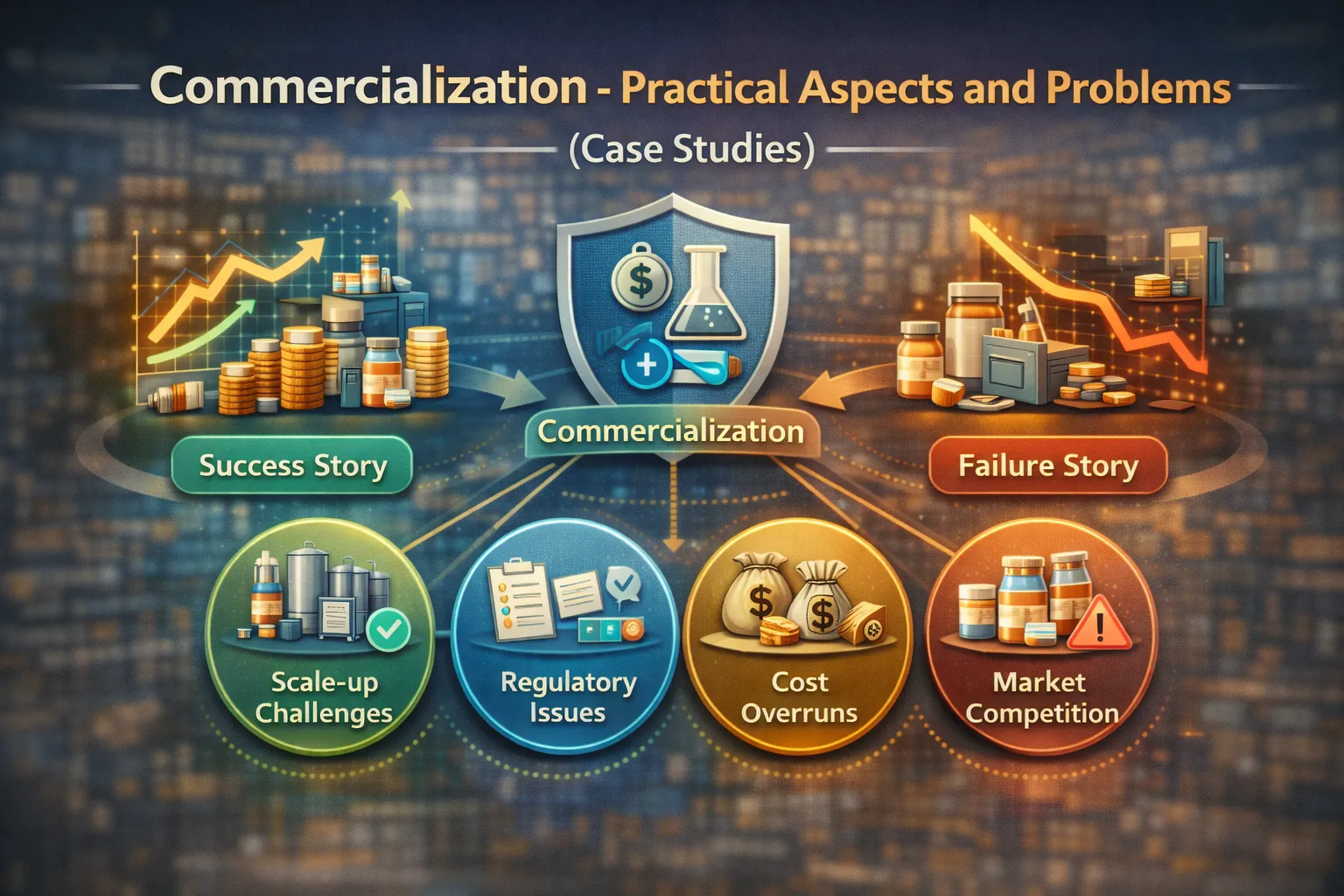
- Commercialization is the process of launching a new product or production method into the market. In pharmaceuticals, this involves research, clinical trials, regulatory approvals, scaling up production, marketing, and distribution.
- Below are key aspects and challenges encountered in commercialization, with a case study to illustrate.
Steps in Commercialization
- Scale-Up: Increasing production capacity while maintaining product quality.
- Market Authorization: Obtaining regulatory approval to market the product.
- Launch Planning: Developing strategies for product introduction to the market.
- Distribution and Marketing: Establishing supply chains and promotional activities.
Practical Challenges
-
Regulatory Hurdles:
- Approval Delays: Extended timelines for regulatory review.
- Compliance Issues: Non-conformities leading to rejection or recalls.
-
Supply Chain Issues:
- Raw Material Shortages: Impacting production schedules.
- Logistics: Challenges in distribution and storage.
-
Quality Issues:
- Product Variability: Inconsistencies in product quality.
- Process Deviations: Unplanned changes affecting outcomes.
-
Intellectual Property Concerns:
- Patent Infringements: Legal disputes over technology use.
- Licensing Agreements: Negotiating terms with technology owners.
Advertisements
Case Studies
-
Pharmaceutical Company A:
- Issue: Faced regulatory delays due to incomplete validation data.
- Solution: Implemented a robust validation protocol and improved documentation.
-
Biotech Firm B:
- Issue: Encountered supply chain disruptions for critical excipients.
- Solution: Developed multiple supplier relationships and increased inventory buffers.
-
Generic Manufacturer C:
- Issue: Quality issues leading to product recalls.
- Solution: Strengthened QC processes and enhanced staff training.