
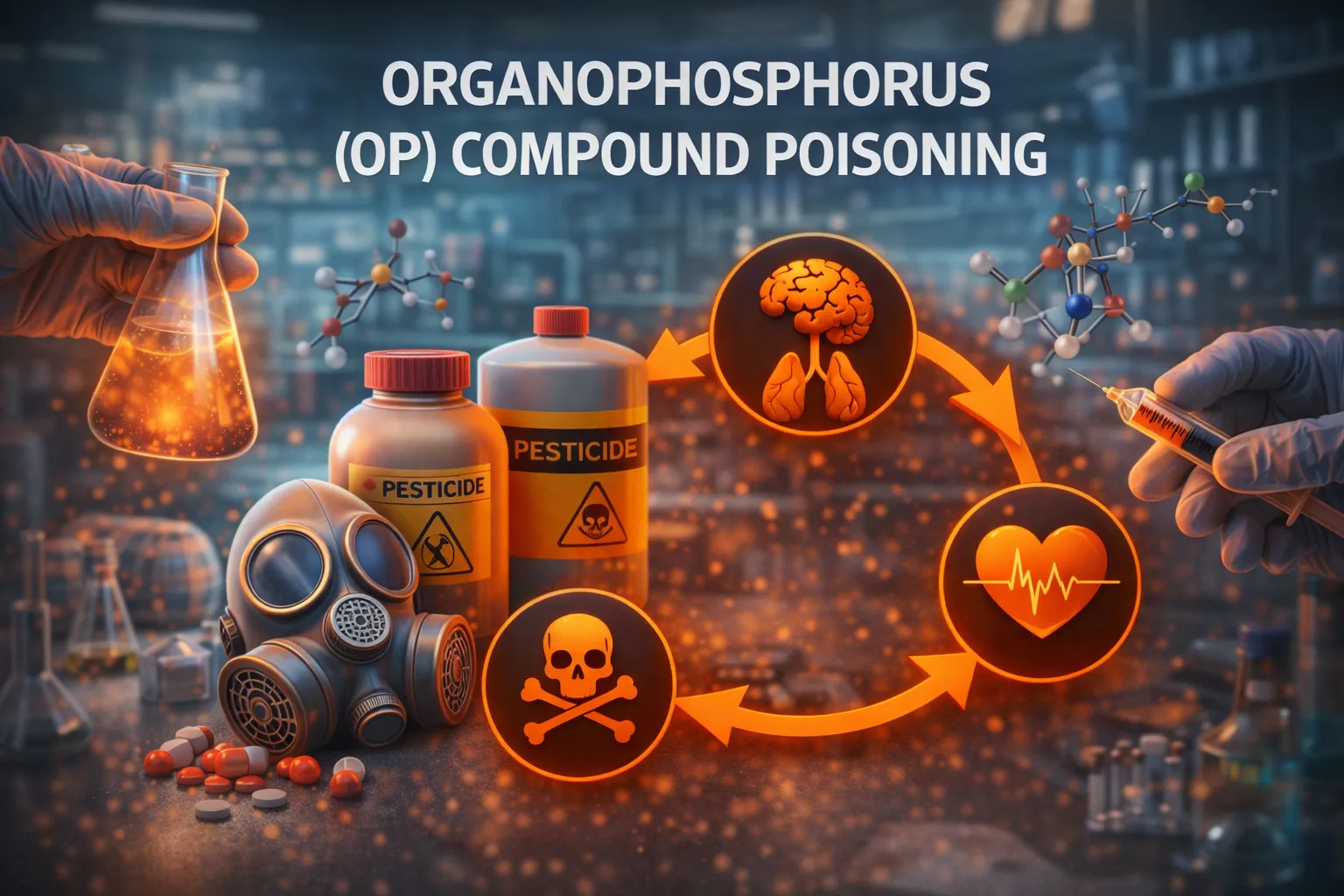
Overview of Organophosphorus (OP) Compound Poisoning
- OP compounds are cholinesterase inhibitors used as pesticides (e.g., parathion, malathion, diazinon).
- They cause accumulation of acetylcholine (ACh) → overstimulation of muscarinic and nicotinic receptors.
Clinical Symptoms (Cholinergic Syndrome)
Mnemonic: SLUDGE-M or DUMBBELSS + Killer B’s
- Salivation
- Lacrimation
- Urination
- Diarrhea
- GI upset
- Emesis
- Miosis (pupil constriction)
- Muscle twitching, weakness, paralysis (nicotinic effects)
- CNS Effects: Confusion, anxiety, seizures, coma (in severe cases)
- Killer B’s:
- Bradycardia
- Bronchorrhea
- Bronchospasm
Advertisements
Management of Organophosphorus (OP) Compound Poisoning
-
Decontamination:
- Remove contaminated clothing.
- Wash skin thoroughly to prevent further absorption.
-
Supportive Care:
- Maintain airway and oxygenation.
- IV fluids, monitor vitals closely.
-
Antidotes:
- Atropine: Blocks muscarinic receptors—repeated dosing until secretions dry and heart rate normalizes.
- Pralidoxime (2-PAM): Reactivates acetylcholinesterase if given early; relieves both muscarinic and nicotinic symptoms.
-
Monitoring:
- Monitor for symptom recurrence (may need atropine infusion).
- Check cholinesterase levels (plasma pseudocholinesterase or RBC AChE).
Click Here to Watch the Best Pharma Videos
Advertisements