
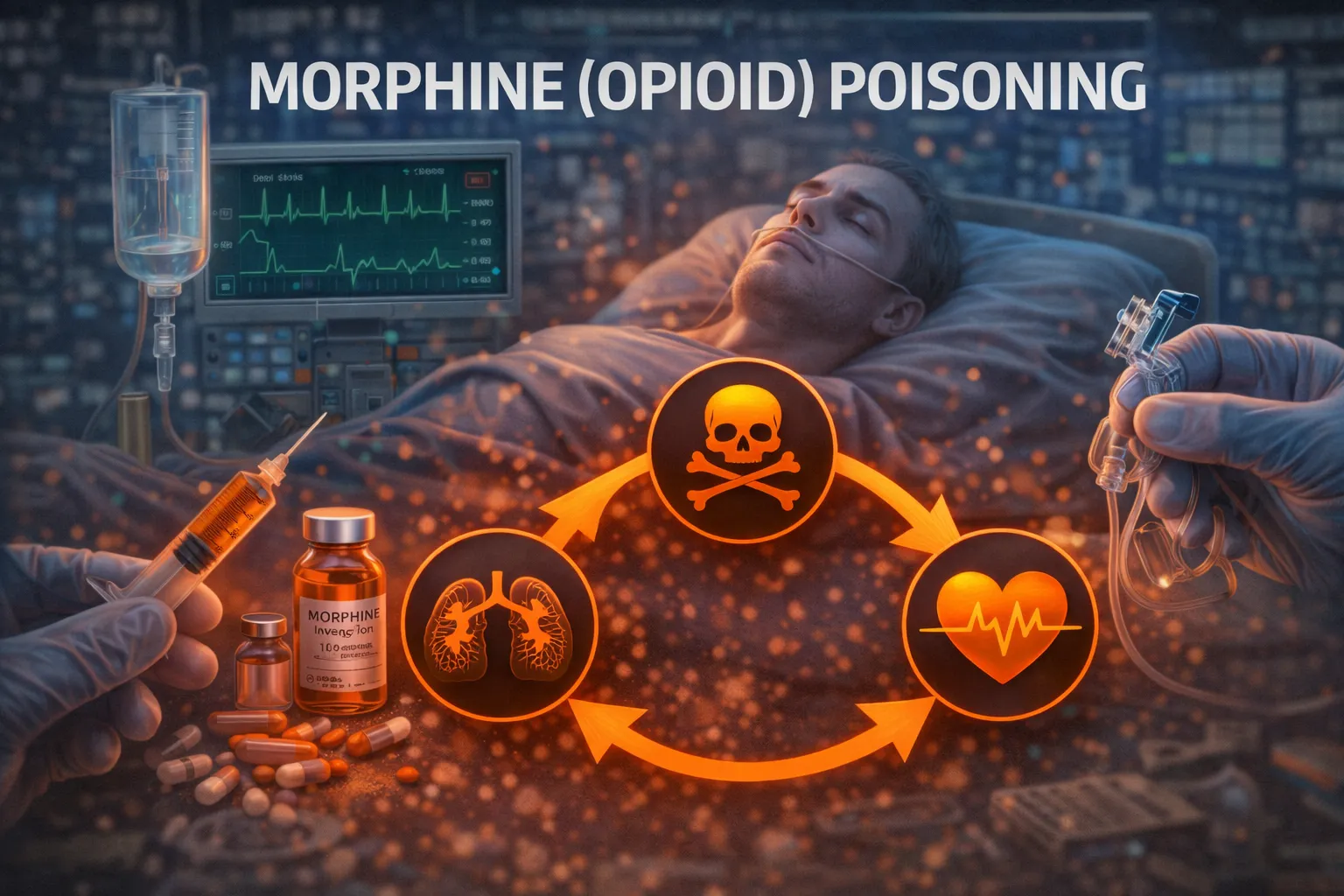
Overview of Morphine (Opioid) Poisoning
- Morphine is a potent opioid analgesic that acts on mu-opioid receptors in the CNS.
- Overdose leads to CNS and respiratory depression.
Clinical Symptoms
- Pinpoint Pupils (Miosis): Classic sign (though may be absent in mixed overdoses).
- Respiratory Depression: Slow, shallow breathing—primary cause of death.
- CNS Depression: Drowsiness, stupor, coma.
- Cardiovascular: Hypotension, bradycardia.
- GI Effects: Constipation (less prominent in acute toxicity).
Advertisements
Management of Morphine (Opioid) Poisoning
-
Supportive Care:
- Secure airway: provide respiratory support if needed.
- IV fluids for hypotension.
-
Antidote – Naloxone (Narcan):
- Opioid receptor antagonist.
- Administered IV, IM, or intranasally.
- Reverses CNS and respiratory depression rapidly.
- Repeated dosing may be necessary (shorter duration than morphine).
-
Monitoring:
- Watch for opioid withdrawal symptoms in opioid-dependent patients.