
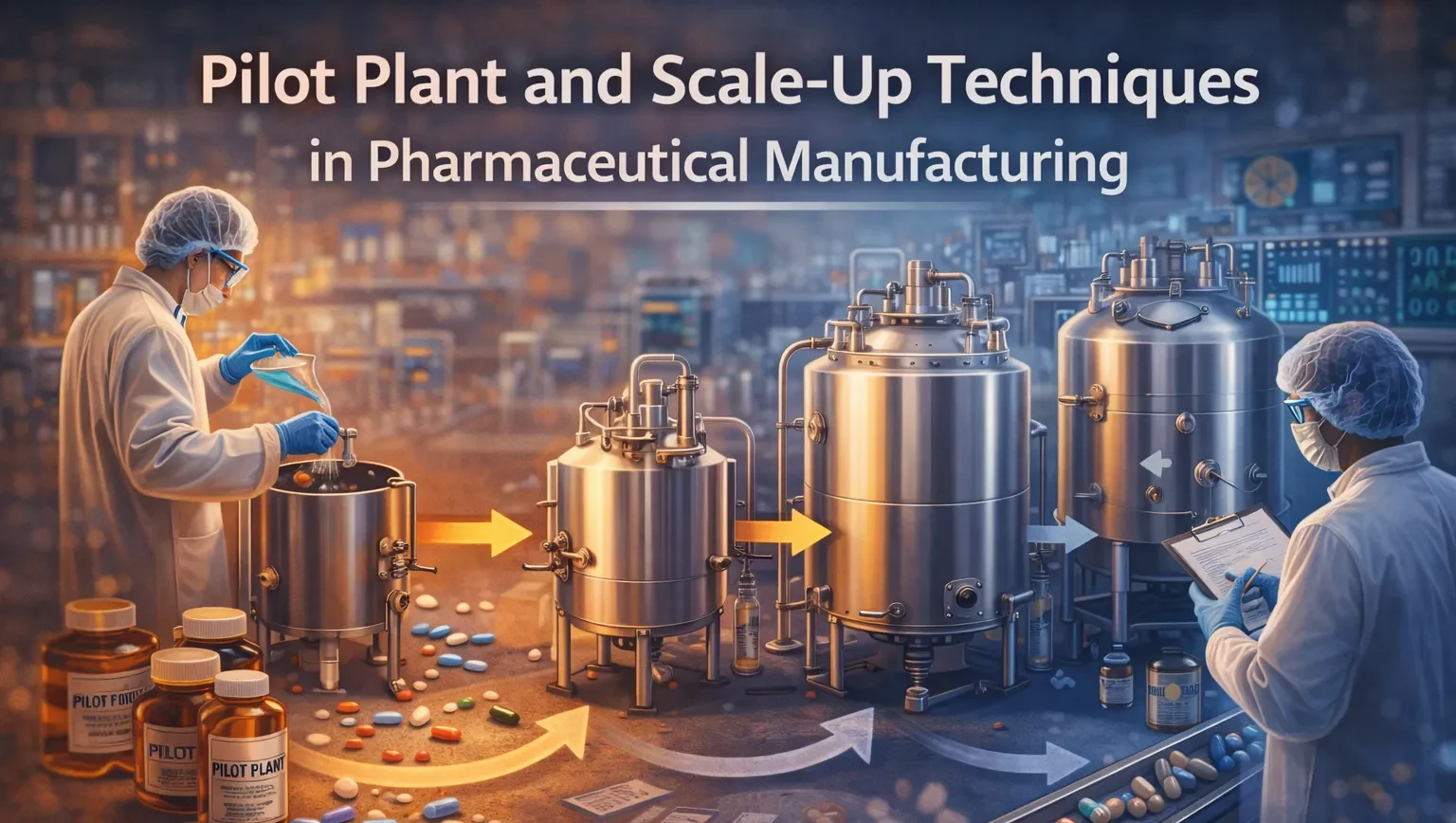
Pilot Plant and Scale-Up Techniques in Pharmaceutical Manufacturing
Pilot Plant and Scale-Up Techniques in Pharmaceutical Manufacturing explain processes for scaling lab production to industrial level.
Pilot Plant
- A pilot plant is a small-scale manufacturing facility that replicates full-scale production conditions for pharmaceutical formulations developed in the lab.
- It allows researchers and engineers to validate and optimize production protocols, address scalability issues, and ensure compliance with Good Manufacturing Practices (GMP) before moving to commercial-scale manufacturing.
Scale-Up Techniques
- Scale-up techniques are systematic methods for increasing production volume from lab scale to pilot plant scale, and eventually to commercial scale.
- This process requires adjusting parameters, equipment, and formulations to maintain product quality, efficacy, and safety as production volumes increase, while meeting regulatory standards.
Advertisements
Objectives of a Pilot Plant

- Bridge the Gap: Smoothly transition from lab-scale to commercial-scale production.
- Process Validation and Optimization: Test and refine the manufacturing process under real conditions.
- Quality Assurance: Ensure consistent product quality as production scales up.
- Regulatory Compliance: Generate data for regulatory submissions and comply with GMP.
- Risk Mitigation: Identify and resolve scalability issues early to reduce production risks.
- Cost Control: Troubleshoot and optimize in a cost-effective environment before full-scale production.
- Stability Testing: Produce quantities needed for stability and other essential tests.
- Training and Skill Development: Train personnel in conditions that mimic commercial manufacturing.
By fulfilling these objectives, pilot plants play a critical role in ensuring that new pharmaceutical products can be produced at commercial scale with consistent quality and regulatory compliance.
Advertisements