
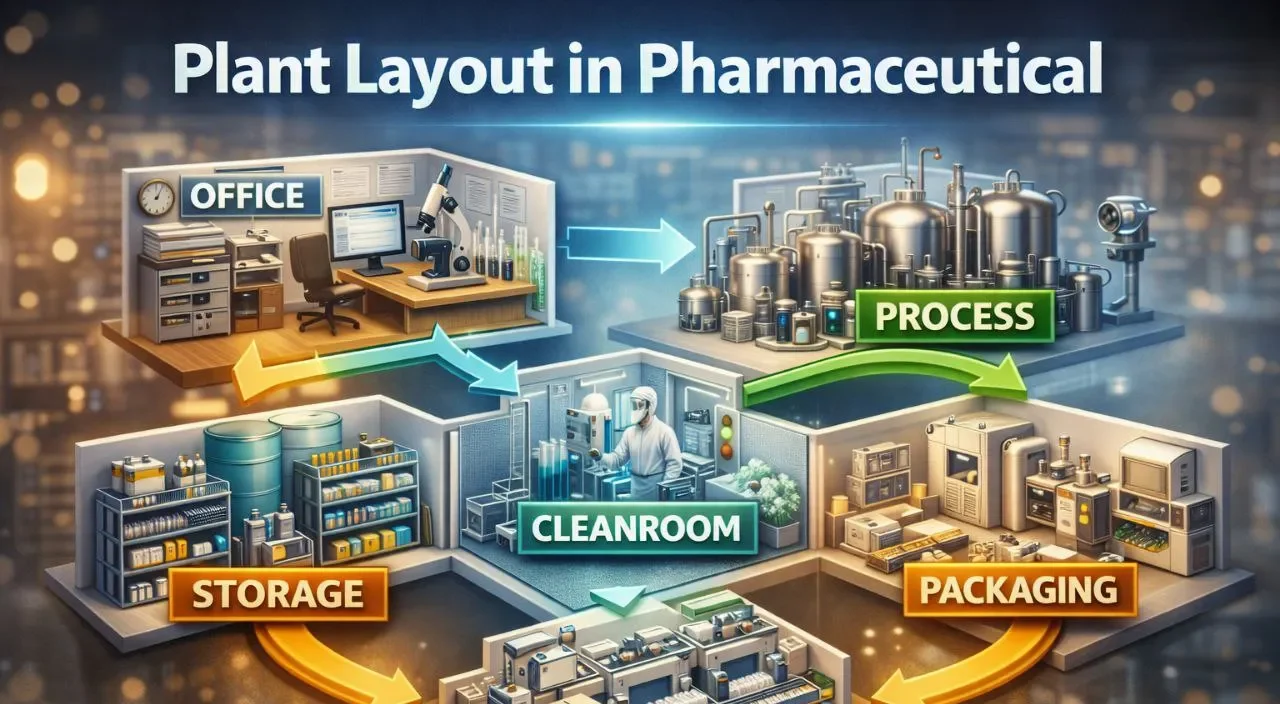
Plant Layout in Pharmaceutical Manufacturing explains facility design workflow and space planning for efficient drug production.
Plant Layout in Pharmaceutical Manufacturing
- A well-planned plant layout ensures smooth operations while preventing contamination risks.
- The layout should follow a unidirectional flow of personnel, raw materials, and finished products to prevent mix-ups.
Basic Principles of Plant Layout
-
Logical Workflow
- Movement of materials and personnel should follow a sequential manner:
-
- Raw Material → Processing → Packaging → Storage
-
- Movement of materials and personnel should follow a sequential manner:
-
Segregation of Areas
- Dedicated zones should be established for different activities to minimize contamination.
-
Minimization of Cross-Contamination
- Proper air handling systems and physical barriers should be in place to separate different areas.
Advertisements
Utilities Placement
- Strategic Positioning: Utilities such as water systems, compressed air, and steam should be placed strategically to facilitate maintenance without disrupting production.
- Labeling and Identification:
- All pipelines, valves, and utility lines must be clearly labeled.
- This ensures quick identification during operations or emergencies and prevents mix-ups.
Key Areas in a Pharmaceutical Plant
- Raw Material and Packaging Material Storage: Controlled environment for incoming materials.
- Processing Area (Manufacturing Area): Separate areas for different operations (granulation, compression, coating, etc.).
- Quality Control (QC) Laboratory: Physically separate from manufacturing to avoid contamination.
- Packaging Area: Clearly defined space for packaging operations to prevent mix-ups.
- Finished Product Storage: Proper temperature and humidity control to ensure product stability.
- Personnel and Utility Areas: Change rooms, washrooms, and cafeterias located away from critical zones.
Click Here to Watch the Best Pharma Videos
Advertisements