
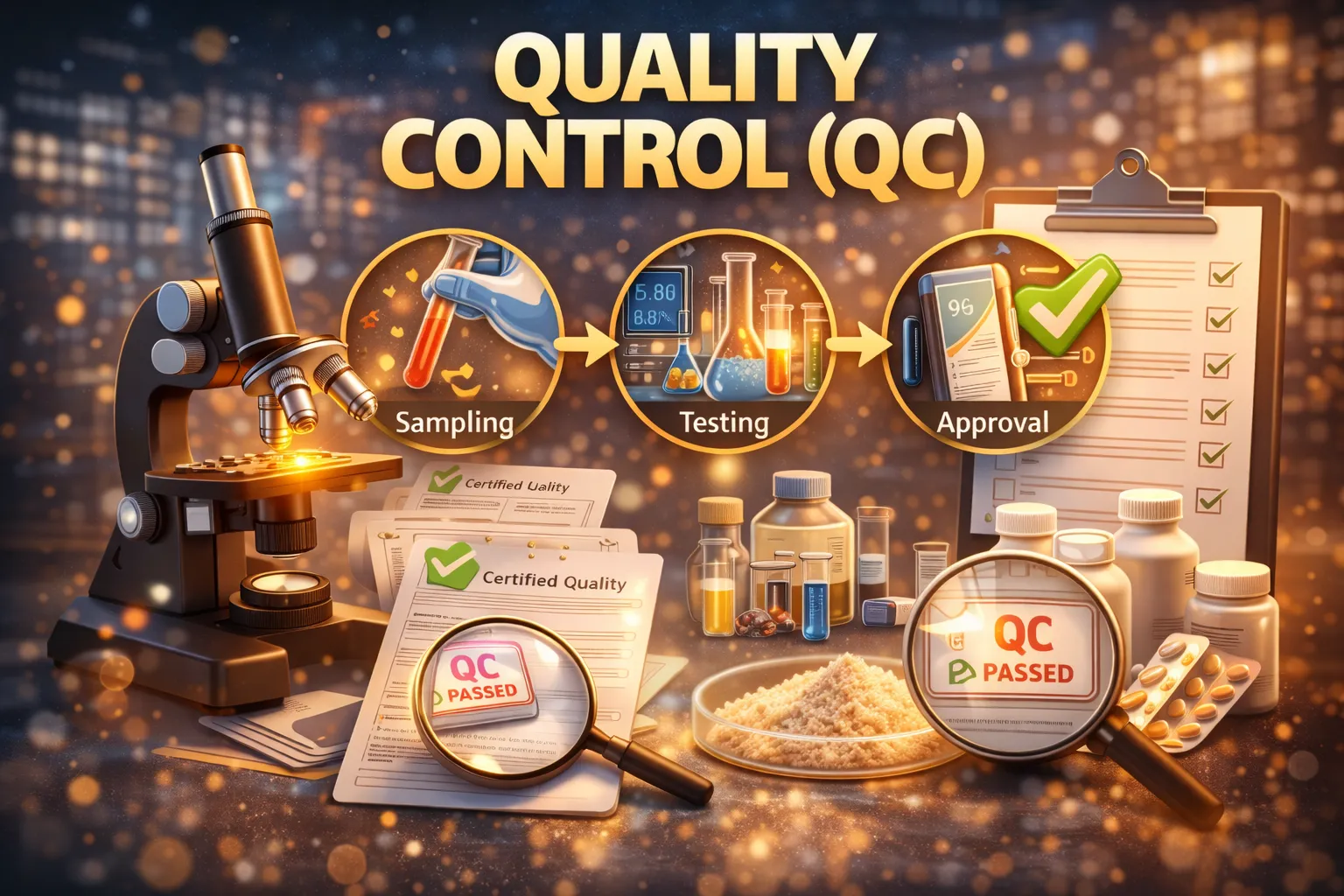
Definition of Quality Control (QC):
- Quality Control (QC) is a product-oriented process that focuses on detecting defects or errors in finished products before they reach customers.
- It involves testing, inspection, and verification of products to ensure they meet specified requirements.
Concept:
- Quality Control emphasizes identifying and correcting defects in products after their creation.
- It is reactive and primarily concerned with the end-product’s compliance to standards through testing and inspection.
Key Features of Quality Control:
- Reactive process: Detects defects and deviations after production.
- Inspection-based: Includes testing raw materials, in-process samples, and finished products.
- Compliance-driven: Ensures products meet regulatory and company standards.
- Statistical tools usage: Employs statistical sampling, Six Sigma, and control charts to monitor quality.
Examples of Quality Control:
- A pharmaceutical company testing drug samples for purity and potency.
- A car manufacturer conducting final inspections to check for defects before shipping.
Advertisements