
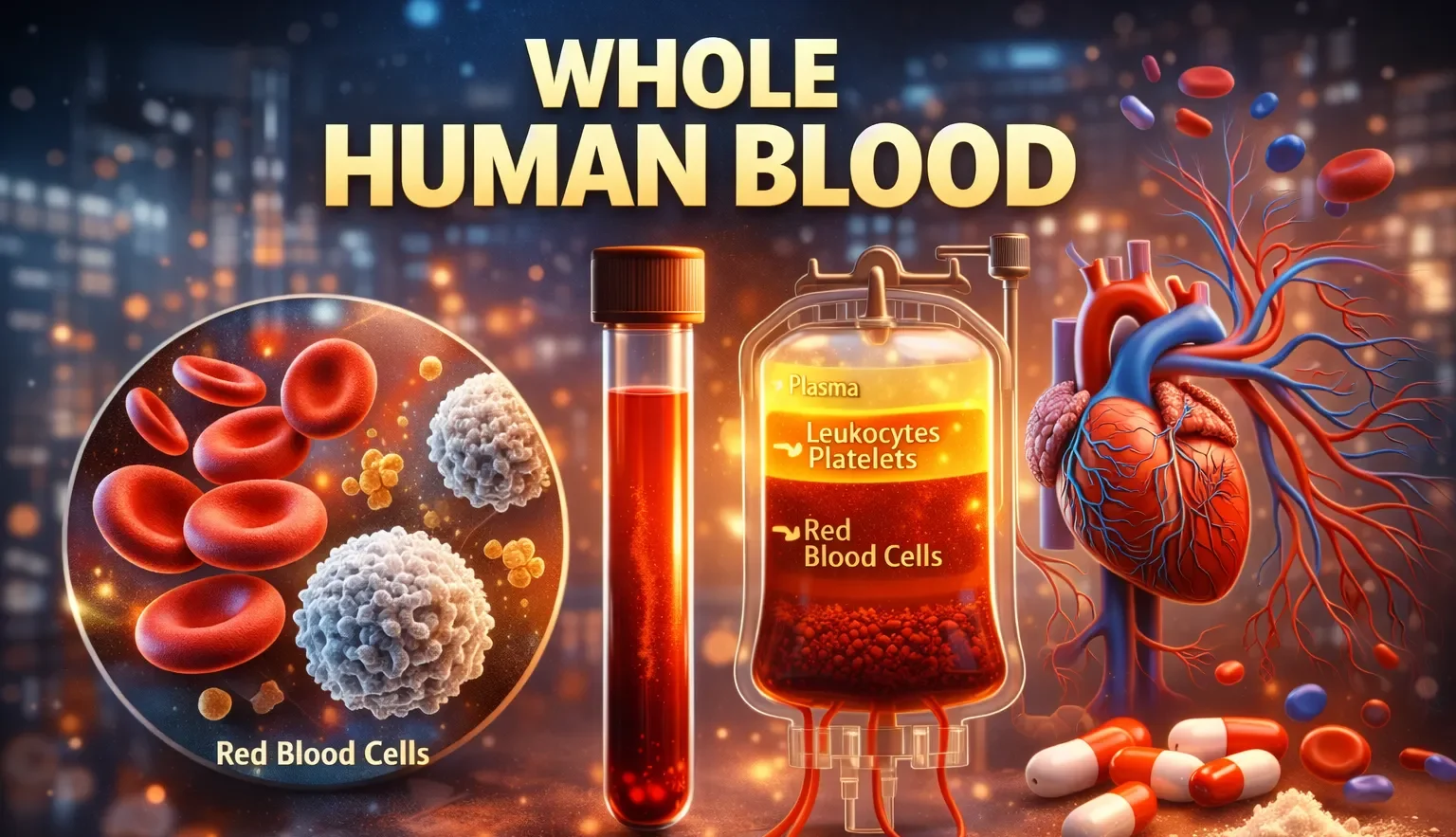
- Whole blood is collected from a donor and used for transfusions or further processed into its individual components, such as red blood cells, platelets, and plasma.
- The collection, processing, and storage of whole blood are crucial for ensuring its safety and effectiveness.
Collection of Whole Human Blood
- Whole blood is collected using a sterile collection bag, needle, and tubing with anticoagulants to prevent clotting.
- Before donation, the donor’s health history and vital signs are evaluated for eligibility.
- Once collected, the blood is transported to a blood bank or processing facility for further processing.
Processing of Whole Human Blood
- Blood is separated into its components using a centrifuge, which spins the blood at high speed to separate:
- Red Blood Cells (RBCs)
- Platelets
- Plasma
- These components are further processed into blood products such as packed red blood cells, platelet concentrates, and fresh frozen plasma.
Advertisements
Storage of Whole Human Blood
- Blood must be stored at 1-6°C to maintain its viability and prevent bacterial growth.
- Specialized refrigerators with temperature monitoring and alarms ensure proper storage conditions.
- Whole blood has a shelf life of up to 42 days, after which it is discarded.
Safety Testing and Transfusion
- Donated blood undergoes rigorous testing to screen for infectious diseases such as HIV, Hepatitis B and C, and syphilis.
- Blood type compatibility is checked before transfusion to ensure patient safety.
Click Here to Watch the Best Pharma Videos
Advertisements