Whole Human Blood

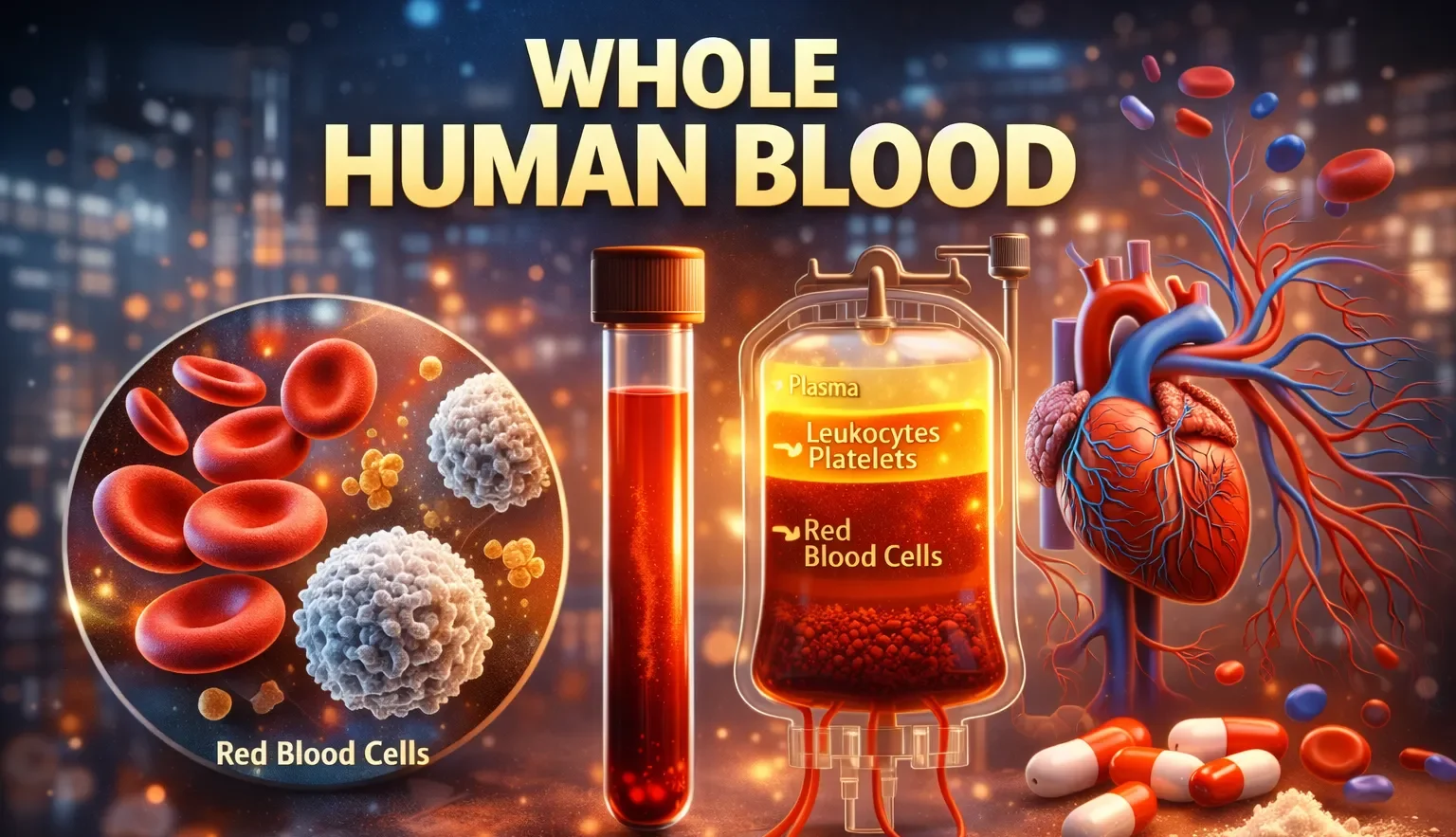
Whole Human Blood

Whole blood is collected from a donor and used for transfusions or further processed into its individual components, such as red blood cells, platelets, and plasma. The collection, processing, and storage of whole blood are crucial for ensuring its safety and effectiveness. Collection of Whole Human Blood Whole blood is collected using a sterile collection … Read more
Dried Human Plasma

Dried Human Plasma

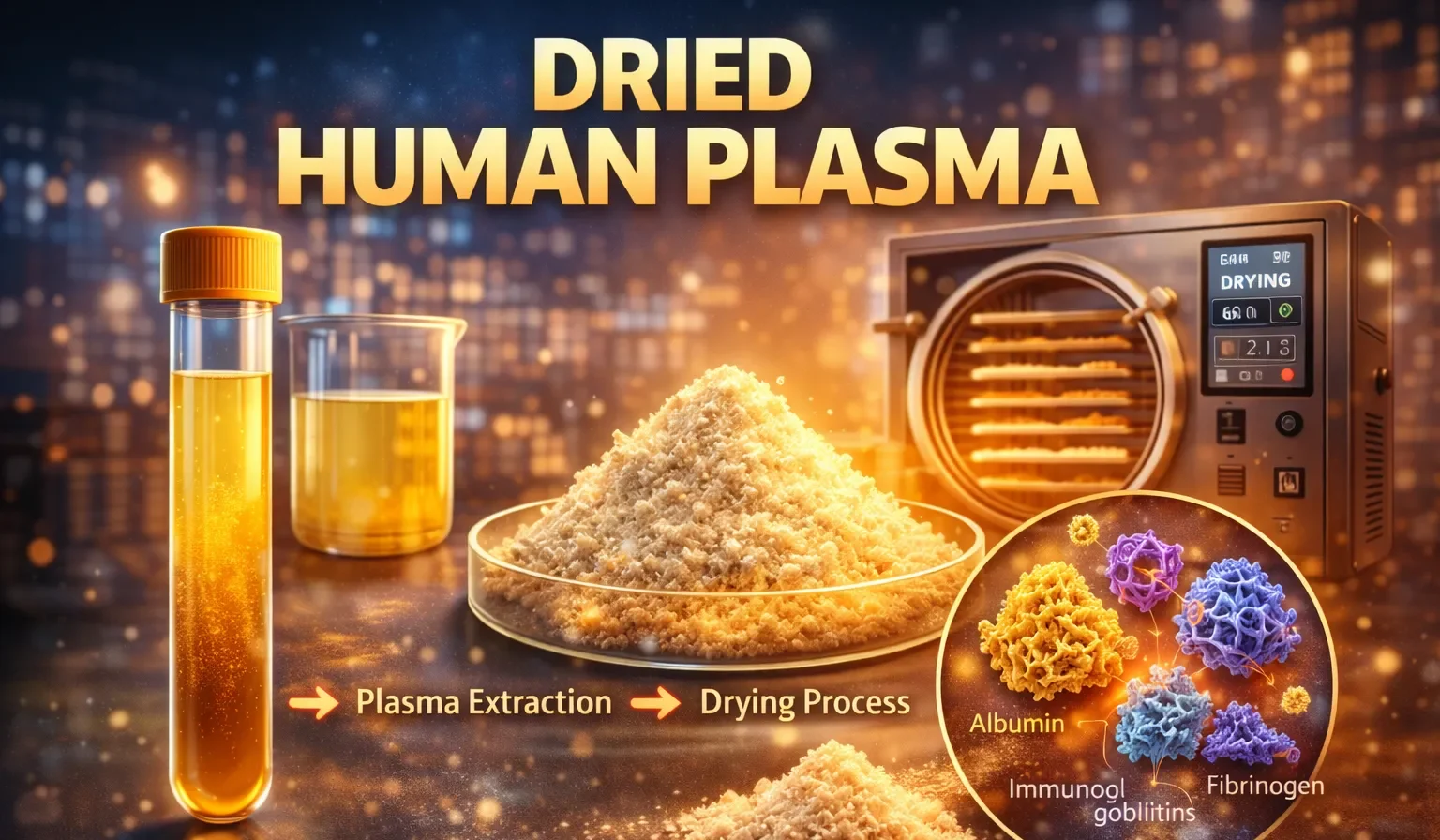
Definition of Dried Human Plasma: Also called lyophilized plasma is plasma that has been freeze-dried to allow long-term storage without refrigeration. Production Process: Plasma Collection: Plasma is separated from whole blood via centrifugation. Sterilization & Testing: Plasma is filtered and tested for infections. Lyophilization (Freeze-Drying): Plasma is frozen and then subjected to vacuum drying to remove … Read more

Plasma Substitutes

Plasma Substitutes

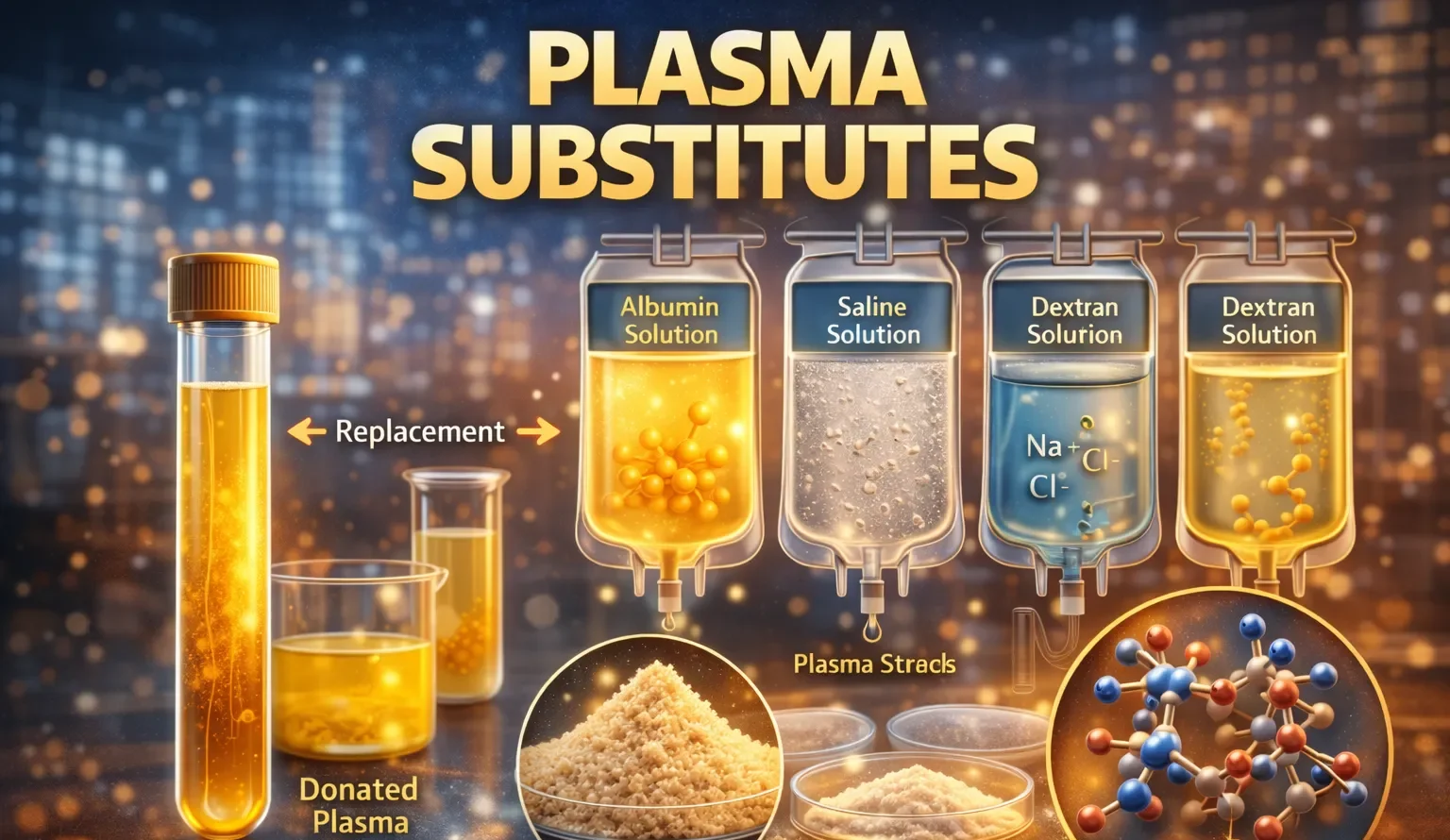
Definition of Plasma Substitutes: These are artificial fluids used to replace lost blood volume in cases of shock, severe burns, or hemorrhage. They do not contain red blood cells or clotting factors but help maintain circulation. Types of Plasma Substitutes: Crystalloids (Electrolyte Solutions): Examples: Normal saline (0.9% NaCl), Ringer’s lactate Used for short-term fluid replacement … Read more

Production of Griseofulvin (Antifungal Antibiotic)

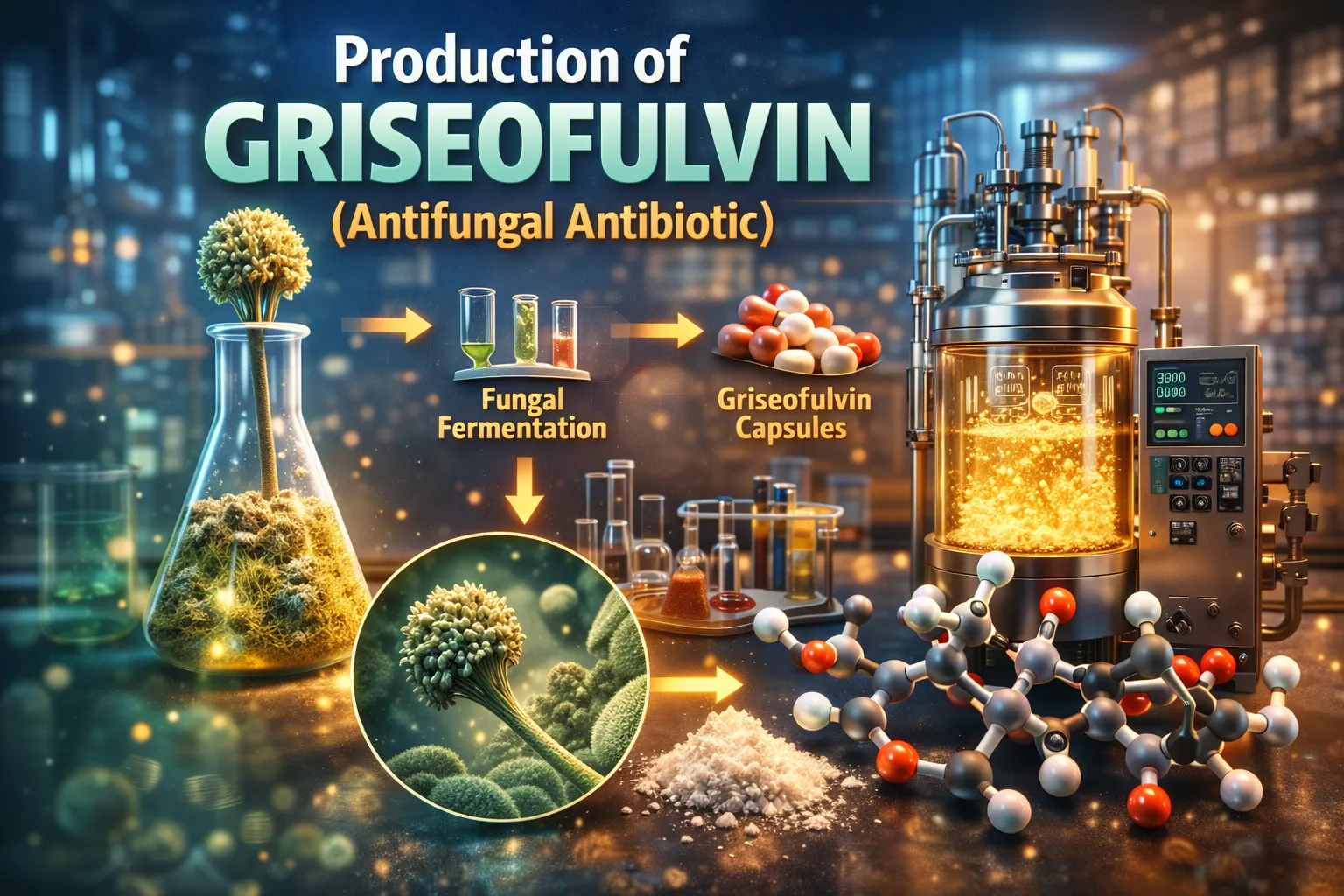
Production of Griseofulvin (Antifungal Antibiotic)

Microorganism Used in Production of Griseofulvin: Penicillium griseofulvum Fermentation Process: Fermenter Type: Stirred-tank bioreactor Fermentation Method: Submerged fermentation Medium Composition: Carbon source: Glucose, malt extract Nitrogen source: Peptone, yeast extract Trace elements: Magnesium, zinc Conditions: pH: 5.5-7.0 Temperature: 24-28°C Aeration: Moderate oxygen supply Duration: 7-10 days Downstream Processing: Filtration to remove biomass Extraction using organic … Read more

Production of Glutamic Acid (Amino Acid)

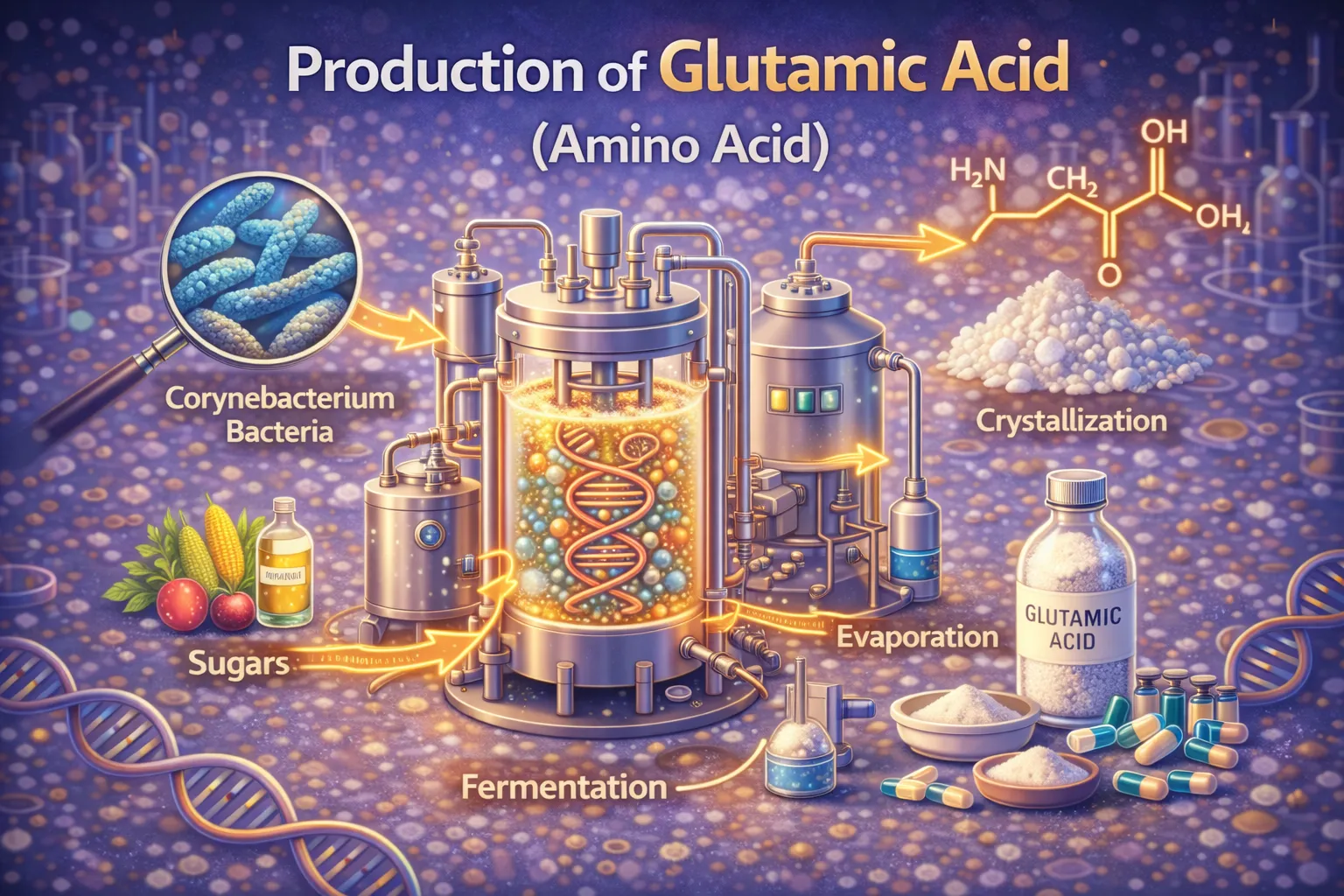
Production of Glutamic Acid (Amino Acid)

Microorganism Used: Corynebacterium glutamicum Fermentation Process: Fermenter Type: Stirred-tank bioreactor Fermentation Method: Aerobic batch fermentation Medium Composition: Carbon source: Glucose, sucrose Nitrogen source: Ammonium salts, urea Biotin (growth factor) should be limited for better glutamate secretion Conditions: pH: 6.5-7.5 Temperature: 30-37°C Aeration: High oxygen demand Duration: 2-3 days Downstream Processing: Cell removal by filtration Precipitation … Read more

Production of Vitamin B12 (Cyanocobalamin)

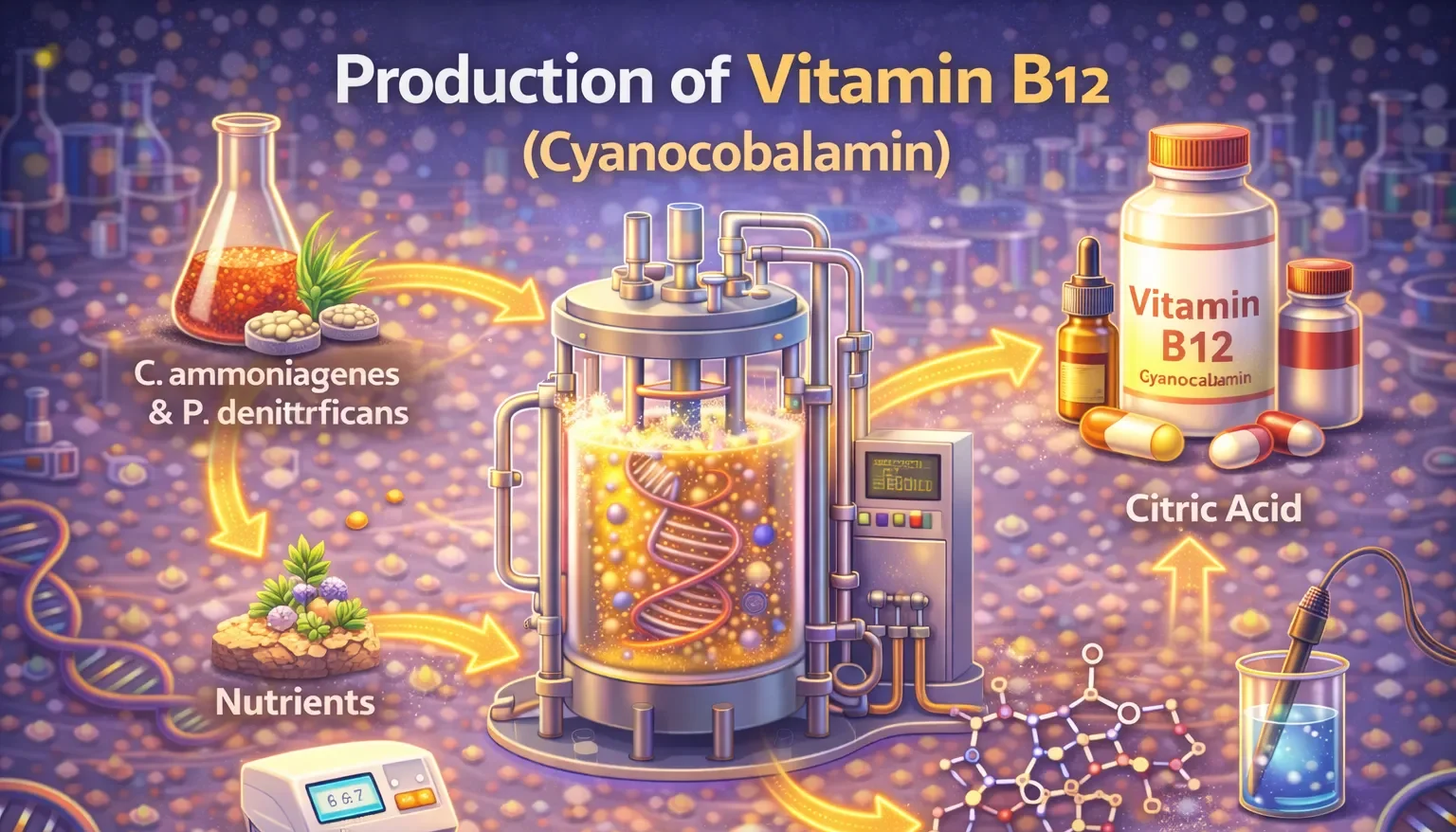
Production of Vitamin B12 (Cyanocobalamin)

Microorganisms Used in Production of Vitamin B12: Propionibacterium freudenreichii Pseudomonas denitrificans Bacillus megaterium Fermentation Process: Fermenter Type: Aerated stirred-tank fermenter Fermentation Method: Submerged fermentation Medium Composition: Carbon source: Molasses, glucose Nitrogen source: Corn steep liquor, yeast extract Cobalt salts (essential for B12 biosynthesis) Conditions: pH: 6.0-7.5 Temperature: 28-30°C Aeration: High oxygen supply Duration: 3-5 days … Read more

Production of Citric Acid (Organic Acid)

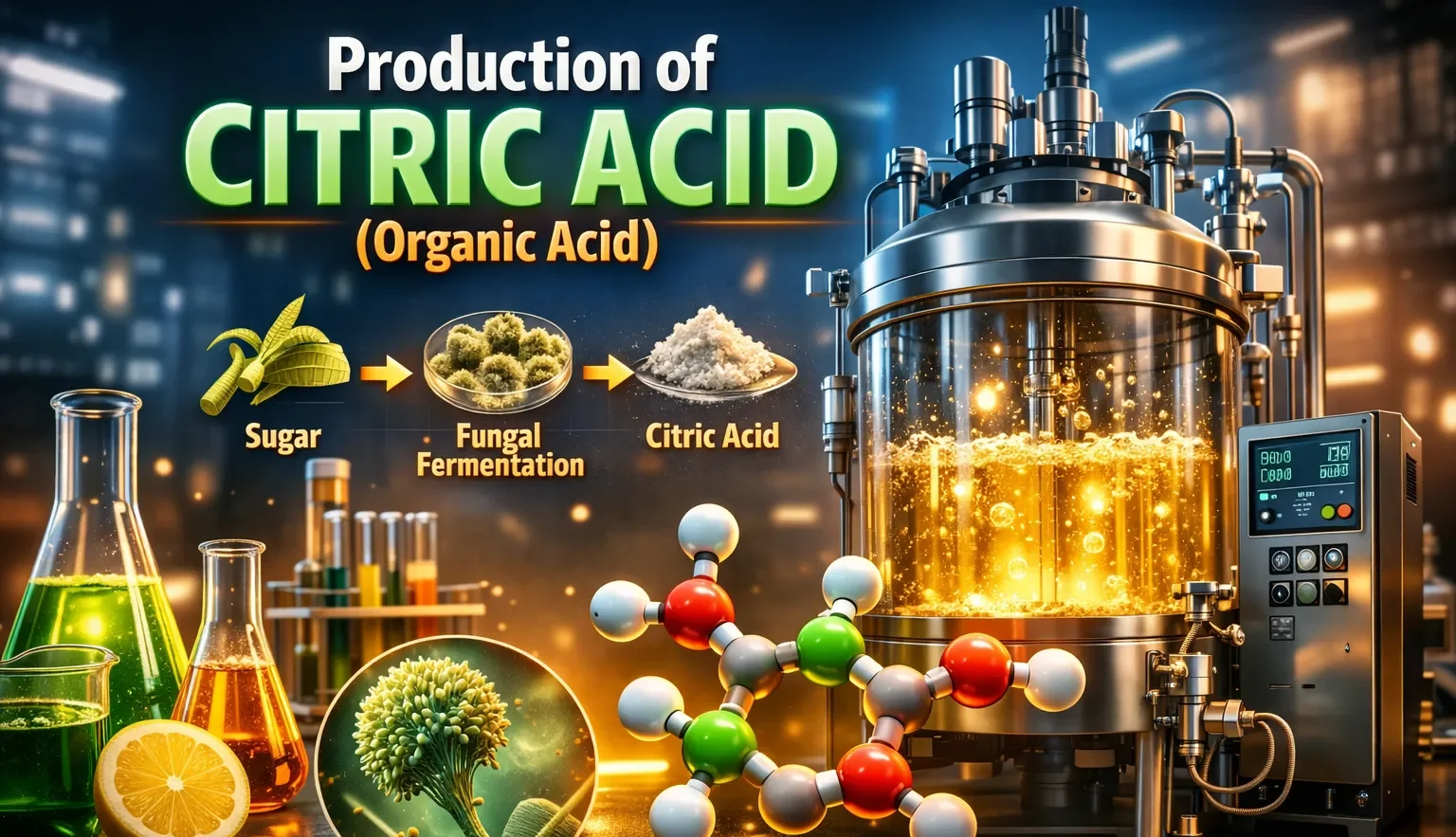
Production of Citric Acid (Organic Acid)

Microorganism Used in Production of Citric Acid: Aspergillus niger (fungus) Fermentation Process: Fermenter Type: Stirred-tank or surface fermenters Fermentation Method: Submerged or surface fermentation Medium Composition: Carbon source: Molasses, sucrose, starch hydrolysate Nitrogen source: Ammonium salts, urea Metal ions (e.g., Fe²⁺) should be kept low to prevent byproduct formation Conditions: pH: 2.0-3.5 (acidic) Temperature: 28-32°C … Read more

Equipment Used in Fermentation

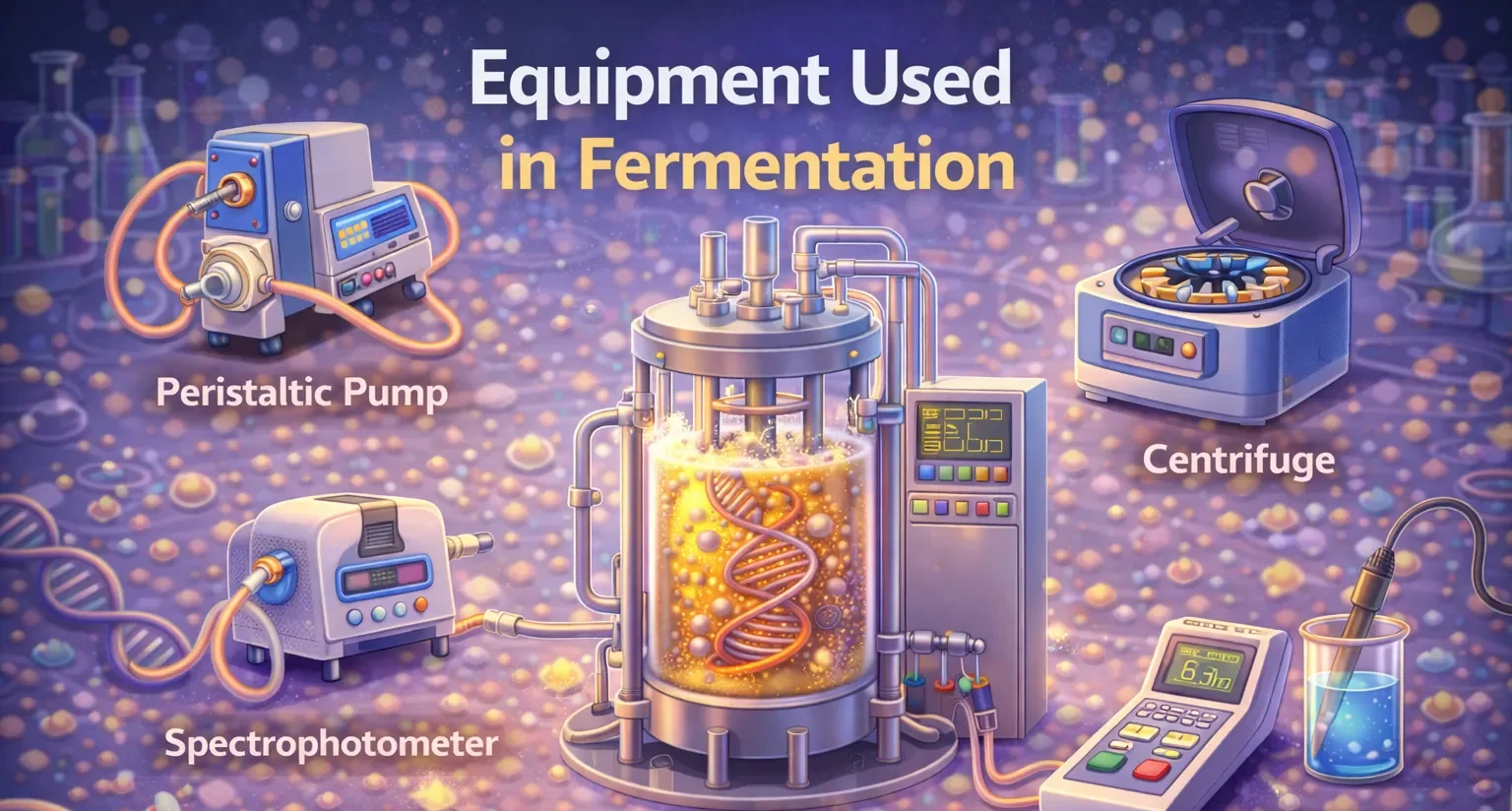
Equipment Used in Fermentation

Fermentation requires specialized equipment to support microbial growth and metabolism. The type of equipment used depends on the scale, purpose, and microorganisms involved. Common Fermentation Equipment Fermenter or Bioreactor A vessel where fermentation occurs, made of stainless steel or glass. Designed to provide a controlled environment for microorganisms. Available in sizes from small lab-scale to … Read more

Production of Penicillins (Antibiotic)

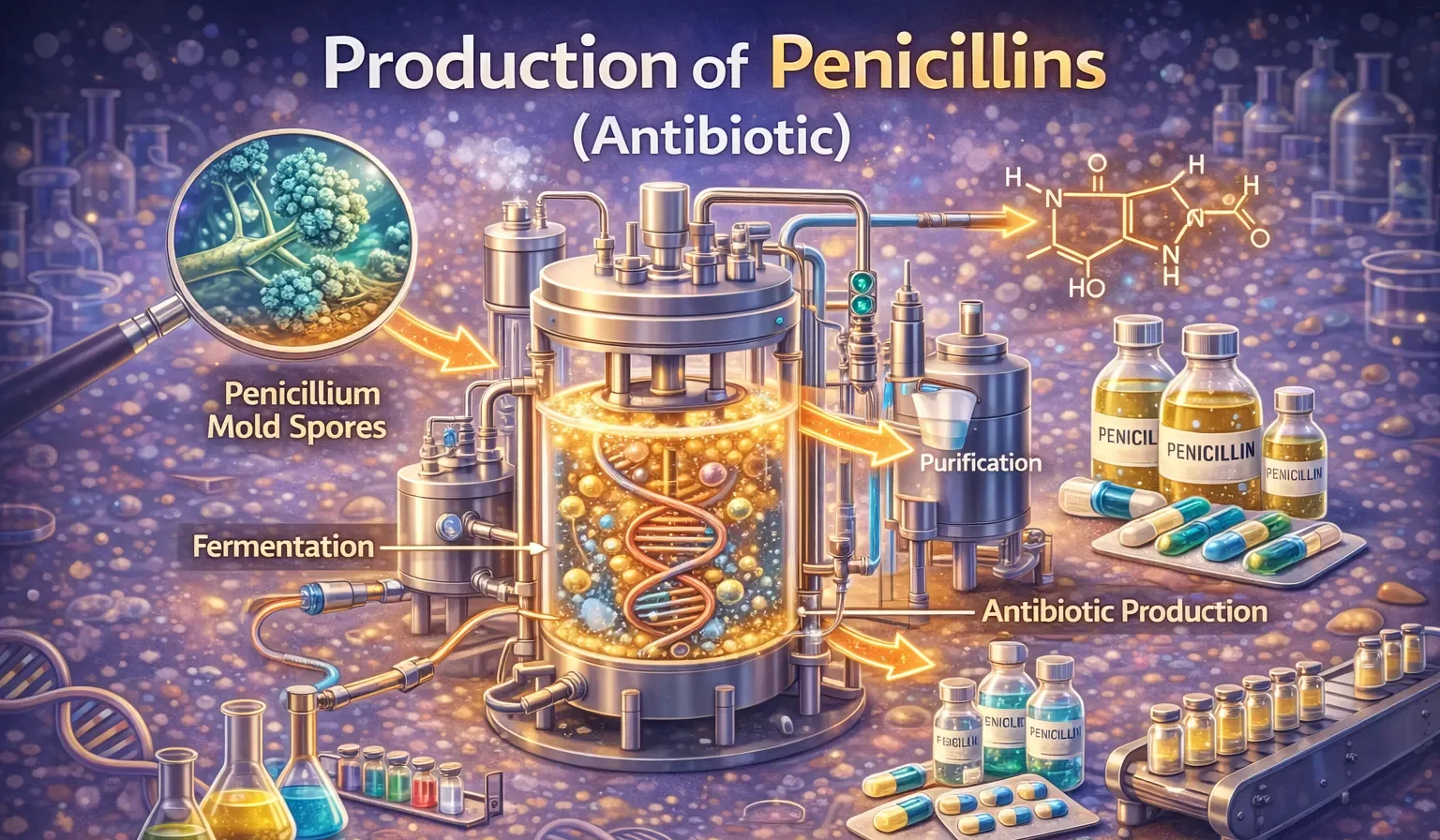
Production of Penicillins (Antibiotic)

Production of Penicillins (Antibiotic) explains fermentation process strain selection recovery steps and industrial manufacturing methods. Microorganism Used: Penicillium chrysogenum (previously Penicillium notatum) Fermentation Process: Fermenter Type: Stirred-tank bioreactor Fermentation Method: Fed-batch fermentation (to avoid catabolite repression by glucose) Medium Composition: Carbon source: Lactose, corn steep liquor Nitrogen source: Ammonium salts Precursors: Phenylacetic acid (for Penicillin … Read more

Large scale production fermenter design and its various controls

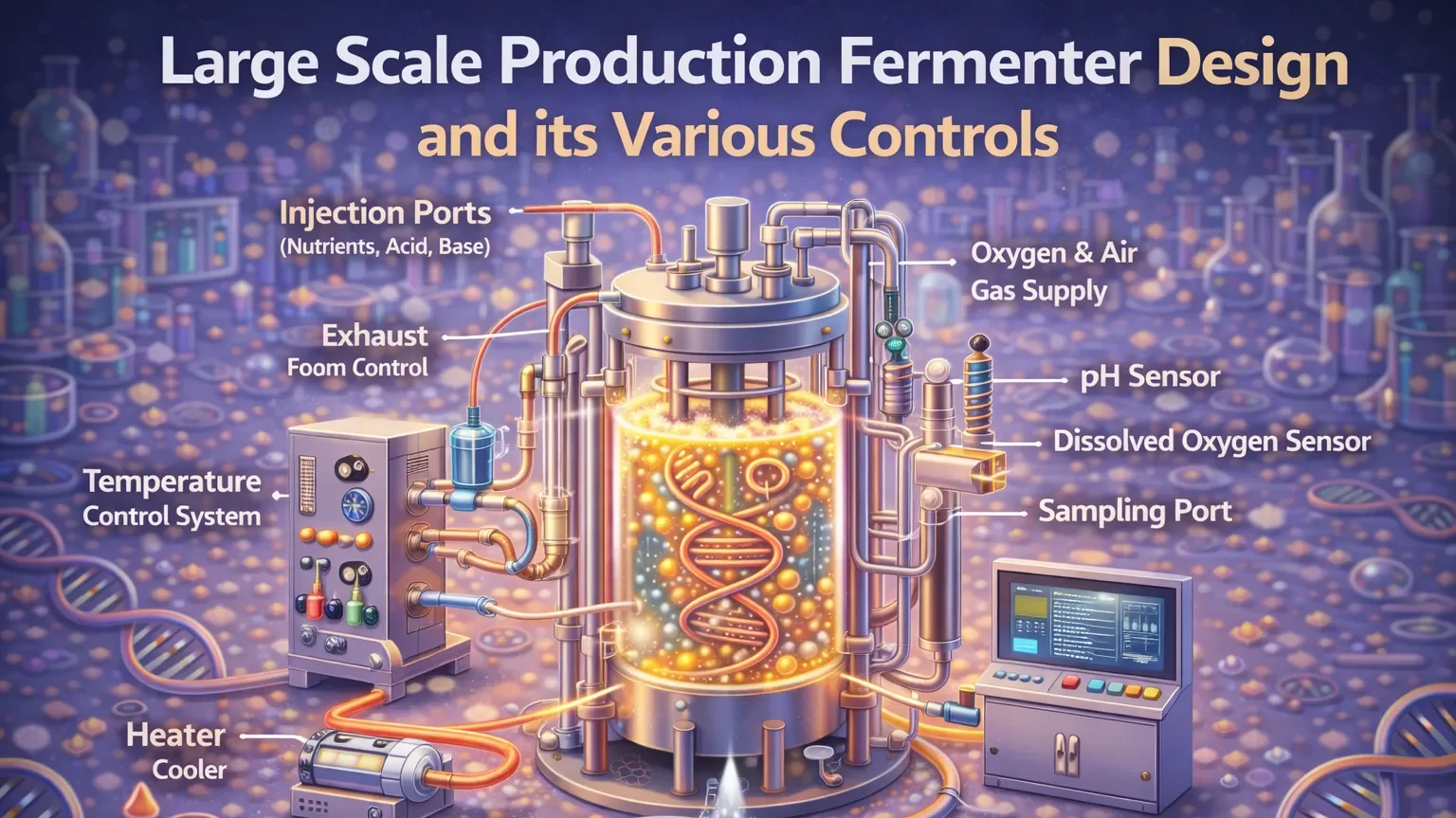
Large scale production fermenter design and its various controls

Large scale production fermenter design and its various controls explain design features monitoring systems and process control in industrial fermentation. Large scale production fermenter design and its various controls Key Components of Fermenter Design Fermenter Vessel Made of stainless steel (SS 316) to withstand pressure and corrosion. Equipped with a cooling jacket or coils for … Read more