
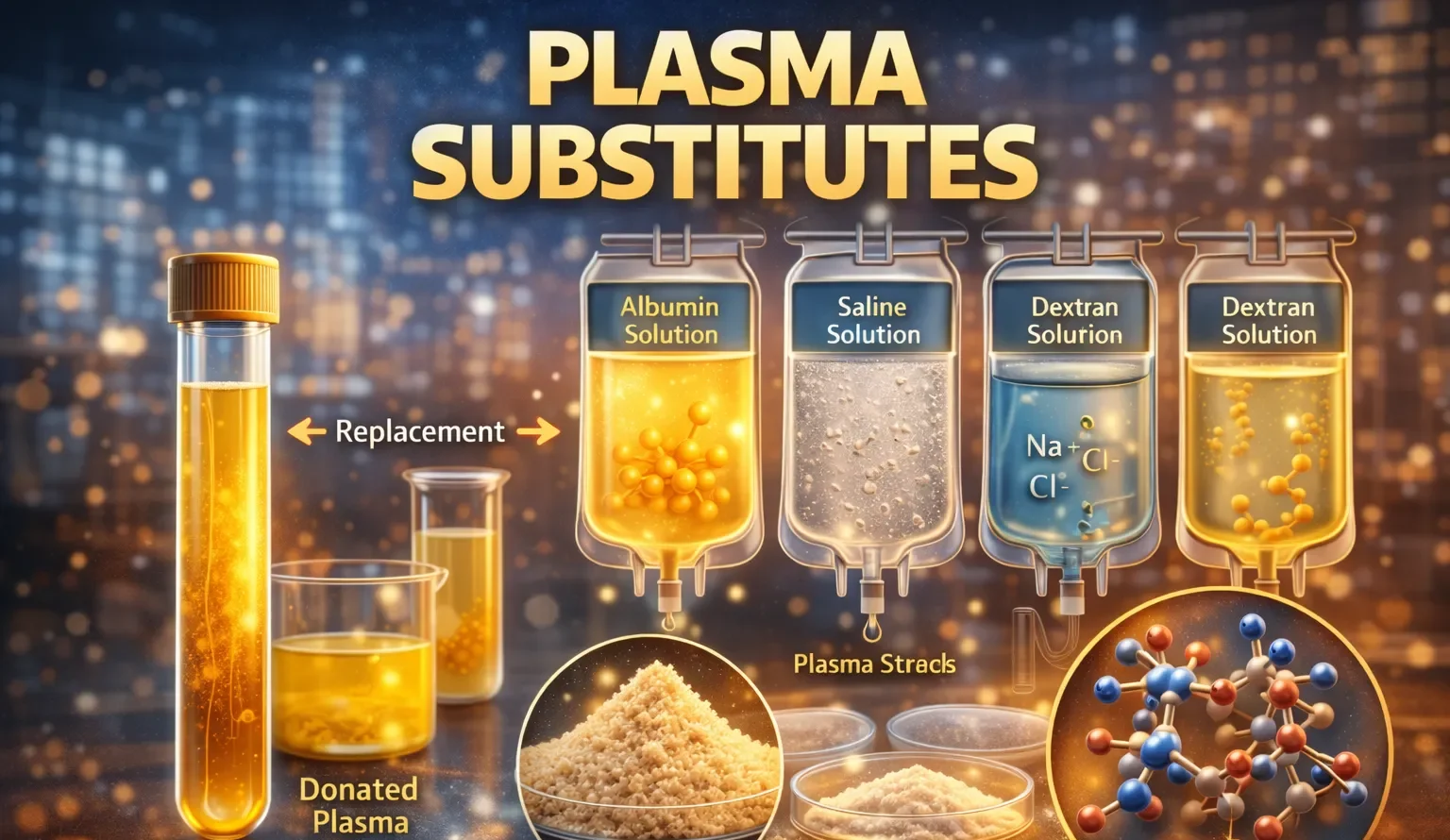
Definition of Plasma Substitutes:
- These are artificial fluids used to replace lost blood volume in cases of shock, severe burns, or hemorrhage.
- They do not contain red blood cells or clotting factors but help maintain circulation.
Types of Plasma Substitutes:

-
Crystalloids (Electrolyte Solutions):
- Examples: Normal saline (0.9% NaCl), Ringer’s lactate
- Used for short-term fluid replacement in dehydration and mild blood loss.
-
Colloids (Plasma Expanders):
- Contain large molecules that retain water in the bloodstream.
- Examples:
- Albumin (Human-derived protein) – Maintains oncotic pressure.
- Dextran (Synthetic polysaccharide) – Used for hypovolemic shock.
- Hydroxyethyl starch (HES) – Commonly used in critical care.
- Gelatin-based solutions – Alternative plasma volume expanders.
Advantages of Plasma Substitutes:
- Readily available and free from infection risks.
- No need for blood typing or cross-matching.
- Effective in treating shock and hypovolemia.
Advertisements
Limitations:
- Do not carry oxygen (unlike real blood).
- Overuse can lead to coagulation issues and kidney damage.