
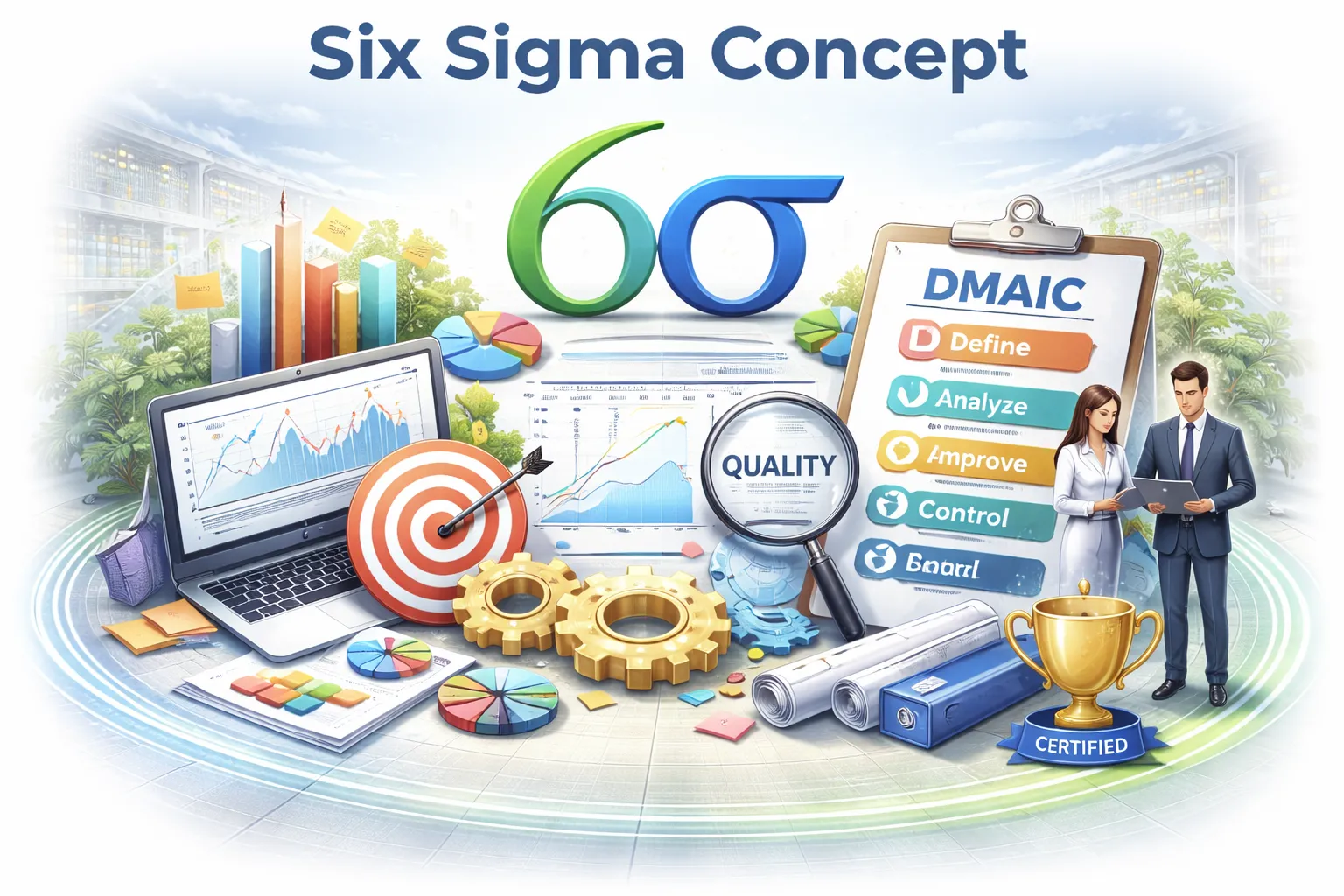
Introduction to Six Sigma concept
- Six Sigma concept is a data-driven methodology aimed at eliminating defects and reducing variability in processes.
- It seeks to improve the quality of process outputs by identifying and removing causes of defects.
Core Concepts of Six Sigma concept

-
DMAIC Methodology
- Define: Identify the problem and project goals.
- Measure: Collect data and determine current performance.
- Analyze: Identify root causes of defects.
- Improve: Implement solutions to eliminate root causes.
- Control: Maintain improvements over time.
-
Statistical Tools
- Uses statistical analysis to understand process variability.
- Tools include control charts, process capability analysis, and regression analysis.
-
Sigma Level
- Measures how much a process deviates from perfection.
- Six Sigma equates to 3.4 defects per million opportunities.
Advertisements
Roles in Six Sigma
- Executive Leadership: Sets the vision and goals.
- Champions: Translate goals into specific projects.
- Master Black Belts: Coaches for Black Belts and Green Belts.
- Black Belts: Lead problem-solving projects.
- Green Belts: Assist with data collection and analysis.
Advertisements
Benefits of Six Sigma
- Reduction in process variation and defects.
- Increased efficiency and productivity.
- Improved customer satisfaction.
- Enhanced profitability and competitiveness.
Application in Pharmaceuticals
- Optimizing manufacturing processes.
- Reducing errors in quality control.
- Enhancing compliance with regulatory standards.
Advertisements