
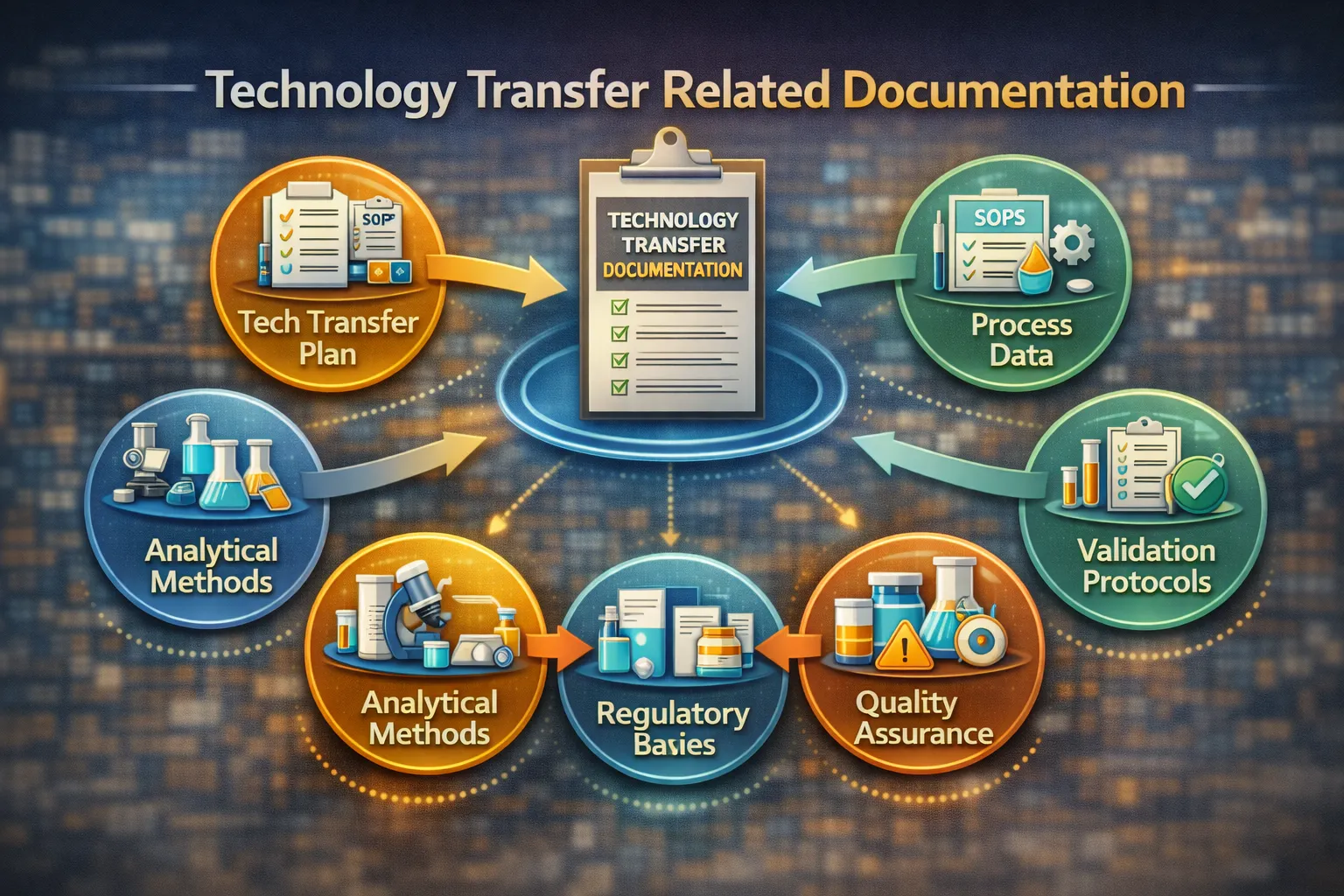
Technology Transfer Related Documentation
Technology Transfer Related Documentation records all transfer procedures, protocols, and results for traceability and compliance.
Importance of Legal Documentation in Technology Transfer
- Legal documents protect the interests of all parties involved, ensure compliance with laws, and provide a clear framework for collaboration.
Confidentiality Agreements (Non-Disclosure Agreements – NDAs)
- Purpose: To protect sensitive information shared during TT.
-
Key Clauses:
- Definition of Confidential Information: Specifies what is considered confidential.
- Obligations of Parties: Outlines how information should be handled.
- Exclusions: Information that is not covered under the agreement.
- Duration: Time period during which the agreement is in effect.
- Breach Consequences: Legal remedies in case of unauthorized disclosure.
Advertisements
Licensing Agreements
-
Types of Licenses:
- Exclusive License: Only the licensee has rights to the technology.
- Non-Exclusive License: Multiple parties can be granted rights.
- Sublicensing: Licensee can grant rights to third parties.
-
Terms and Conditions:
- Scope of Use: Defines how the technology can be used.
- Royalty Payments: Financial terms for using the technology.
- Intellectual Property Rights: Ownership and patent considerations.
- Termination Clauses: Conditions under which the agreement can be ended.
Memoranda of Understanding (MoUs)
- When to Use MoUs: Preliminary agreements outlining the intent to collaborate.
-
Structure and Content:
- Purpose: Statement of shared goals.
- Roles and Responsibilities: General duties of each party.
- Timeline: Expected duration and key milestones.
- Non-Binding Nature: Often not legally enforceable but indicate serious intent.
Legal Issues
-
Intellectual Property Rights (IPR):
- Patent Infringement: Unauthorized use of patented technology.
- Trade Secrets: Protection of proprietary processes and formulas.
-
Compliance with Laws and Regulations:
- Local and International Laws: Adherence to relevant legal frameworks.
- Regulatory Approvals: Ensuring all necessary permissions are obtained.
-
Dispute Resolution:
- Arbitration Clauses: Agreements to resolve disputes outside of court.
- Jurisdiction: Specifying which country’s laws govern the agreement.
- Liabilities and Indemnities: Defining responsibilities for losses or damages.
Advertisements