

- Total Quality Management (TQM) is a holistic approach to achieving long-term success through customer satisfaction, involving all employees in continuous improvement of processes, products, and organizational culture.
Principles of Total Quality Management (TQM)
- Customer Focus: Quality is determined by understanding and exceeding customer needs.
- Total Employee Involvement: All employees work toward common goals through empowerment and participation.
- Process-Centered: Emphasizes process thinking, with continuous monitoring of performance.
- Integrated System: Quality management is embedded across all organizational functions.
- Strategic and Systematic Approach: Quality is a core part of strategic planning, with clear goals.
- Continual Improvement: Uses methodologies like PDCA (Plan-Do-Check-Act) for ongoing enhancements.
- Fact-Based Decision Making: Decisions are data-driven, guided by performance metrics.
- Communication: Effective communication across all levels fosters a quality culture.
Implementation Steps
Advertisements
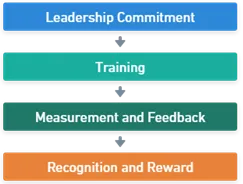
- Leadership Commitment: Top management’s commitment to TQM.
- Training: Equip employees with quality tools and concepts.
- Measurement and Feedback: Use key performance indicators (KPIs).
- Recognition and Reward: Incentivize quality improvements.
Benefits of Total Quality Management (TQM)
- Higher customer satisfaction, reduced waste, enhanced employee morale, improved regulatory compliance, and sustainable competitive advantage.
Key Principles of TQM
- Leadership: Top management must champion the TQM approach across the organization.
- Employee Empowerment: Enable employees to make quality-related decisions with training and resources.
- Use of Quality Tools: Utilize tools like Pareto charts, histograms, and process maps for problem analysis.
- Product Design: Integrate quality at the design stage.
- Supplier Quality: Select and assess suppliers based on their ability to deliver quality components.
Advertisements
Benefits of TQM
- Enhanced customer satisfaction and loyalty.
- Reduction in waste and inefficiencies.
- Improved employee morale and involvement.
- Better compliance with regulations and standards.
- Sustainable competitive advantage.