
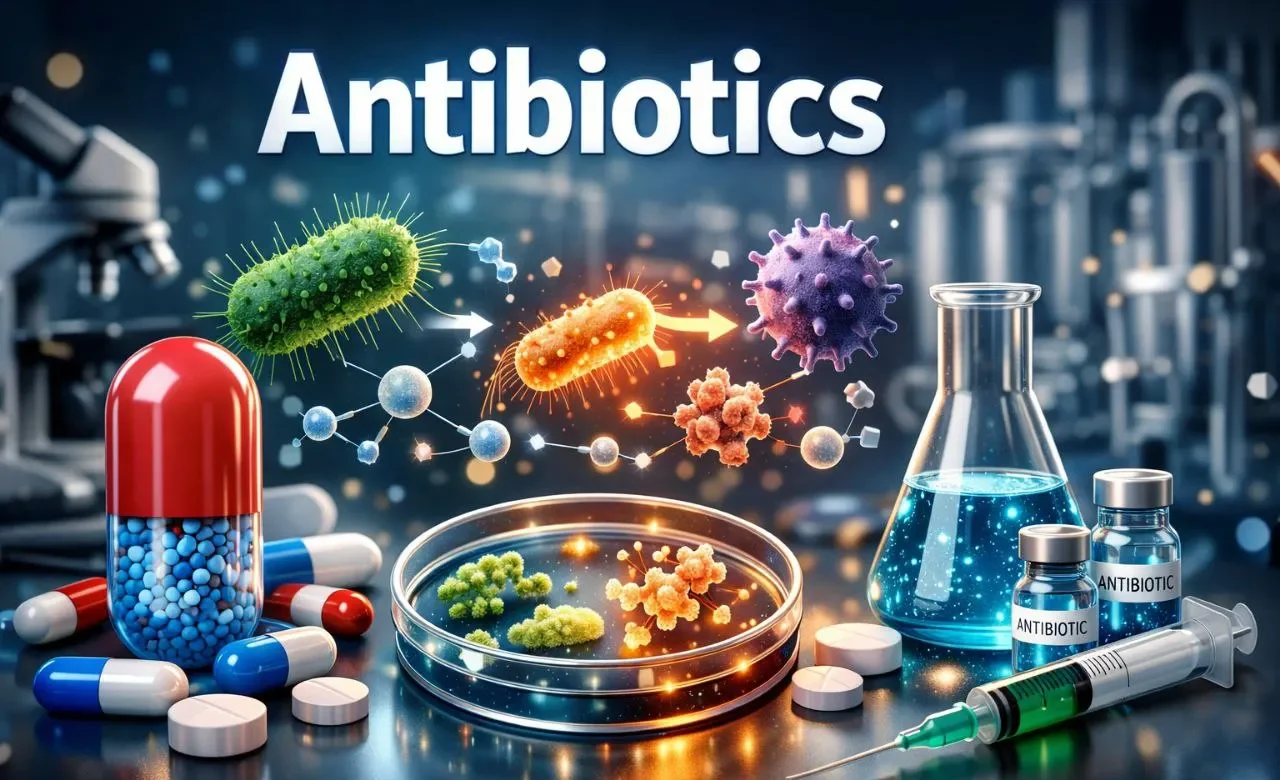
Introduction to Antibiotics
- These are medications used to treat bacterial infections.
- They work by killing or inhibiting the growth of bacteria, which helps alleviate symptoms and prevent the spread of infection.
- It can treat a wide range of bacterial infections, including respiratory infections, urinary tract infections, and skin infections.
- Important Note: These are not effective against viral infections, such as the common cold or flu.
- Overuse and misuse of antibiotics can lead to the development of antibiotic-resistant bacteria, which are difficult to treat and pose a significant public health threat.
- It is essential to use antibiotics only when necessary and as prescribed by a healthcare professional.
Historical Background
- These are chemical substances produced by microorganisms or synthesized artificially to inhibit or kill other microorganisms.
- Their history can be divided into several key milestones:
-
Pre-Antibiotic Era:
- Before the discovery of antibiotics, infections were treated with herbal remedies and antiseptics.
- In 1909, Paul Ehrlich developed the first synthetic antimicrobial drug, Salvarsan, to treat syphilis.
-
Discovery of Penicillin (1928):
- Alexander Fleming discovered penicillin from Penicillium notatum in 1928.
- It was later purified by Howard Florey and Ernst Chain, leading to large-scale production in the 1940s.
-
Golden Age of Antibiotics (1940-1960):
- Discovery of sulfonamides, streptomycin, tetracycline, and chloramphenicol.
- It became widely available, significantly reducing mortality from bacterial infections.
-
Modern Era:
- Resistance emerged due to overuse and misuse.
- New classes like β-lactamase inhibitors and last-resort antibiotics (e.g., carbapenems) were developed.
- Research focuses on novel antibiotics and antimicrobial stewardship.
Advertisements
Present Day:
- Antibiotic resistance is a major concern, leading to research into new antimicrobial agents.