
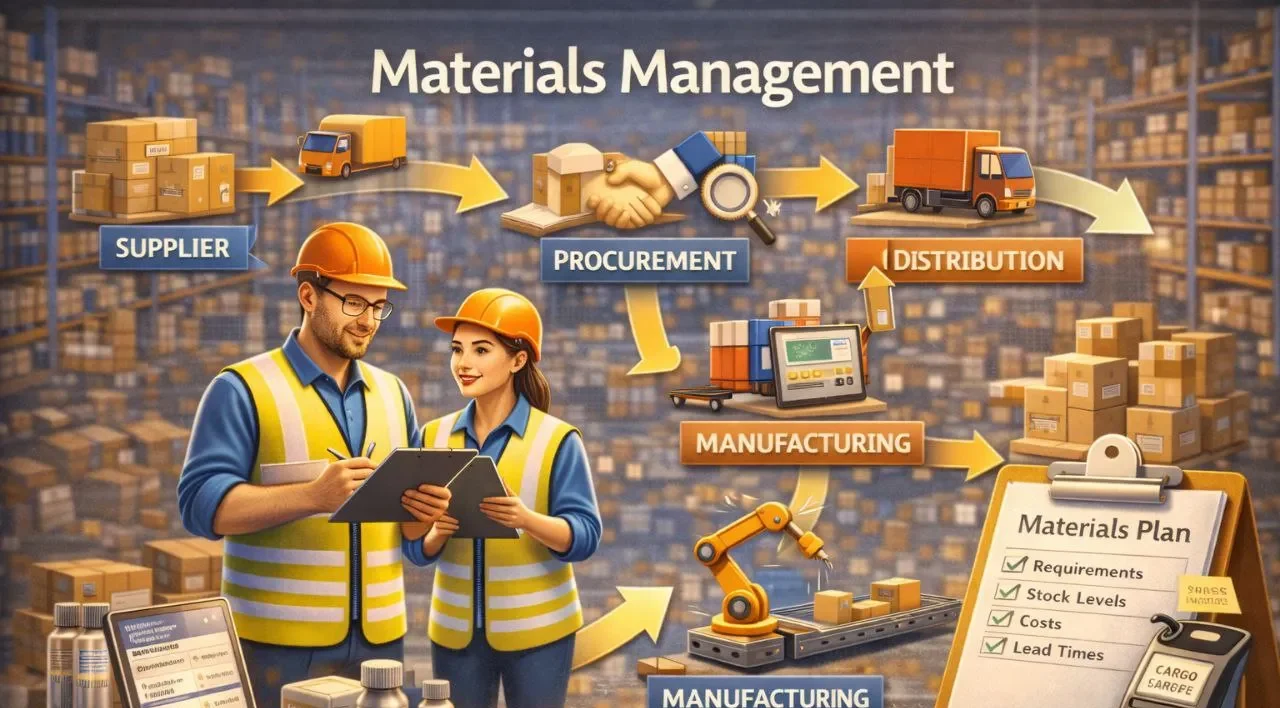
Definition of Materials management
- Materials management involves planning, organizing, and controlling the flow of materials from acquisition to final use or disposal, ensuring cost efficiency and operational effectiveness.
Principles
- Maintain adequate inventory while minimizing costs.
- Ensure safe and sustainable material management.
- Comply with industry regulations and quality standards.
Objectives
- Ensure the right materials are available at the right time.
- Minimize costs and resource waste.
- Quickly respond to demand changes and supply chain disruptions.
Advertisements
Materials Management Process
-
Planning
- Forecast material demand and determine inventory levels.
-
Procurement
- Select suppliers, negotiate contracts, and place orders.
-
Inventory Management
- Track stock levels and ensure optimal inventory control.
-
Logistics
- Manage transportation, shipping routes, and timely deliveries.
-
Distribution
- Oversee warehousing and movement of materials to end-users.
Functions of Materials Management
- Procurement, inventory control, logistics, and distribution.
- Ensures materials are available on time and at the right place.
Benefits
- Cost Savings – Reduces waste and optimizes procurement.
- Improved Efficiency – Streamlines material flow and reduces delays.
- Better Quality Control – Ensures proper handling and storage.
- Stronger Supplier Relationships – Helps negotiate better terms.
- Improved Customer Service – Ensures timely product availability.
Advertisements
Main Departments
- Procurement – Handles supplier selection and purchasing.
- Inventory Management – Tracks and optimizes stock levels.
- Logistics – Manages transportation and timely deliveries.
- Distribution – Oversees warehousing and product movement.
- Quality Control – Ensures materials meet required standards.