

Chlortetracycline

Chlortetracycline

Chemical Structure / Formula of Chlortetracycline Formula: C22H23ClN2O8 Contains a chlorine substituent, enhancing its stability. Mechanism of Action Same as tetracycline: binds to 30S ribosome, inhibiting bacterial protein synthesis. Uses of Chlortetracycline Used in veterinary medicine. Used in topical preparations for skin infections. Side Effects Similar to tetracycline (GI distress, photosensitivity, tooth discoloration).

Oxytetracycline

Oxytetracycline

Chemical Structure / Formula of Oxytetracycline Formula: C22H24N2O9 A hydroxylated derivative of tetracycline. Mechanism of Action Same as tetracycline: inhibits protein synthesis by binding to 30S ribosome. Uses of Oxytetracycline Similar to tetracycline but commonly used in veterinary medicine and ophthalmic infections. Used for respiratory and skin infections in humans. Side Effects Similar to tetracycline, … Read more

Tetracycline

Tetracycline

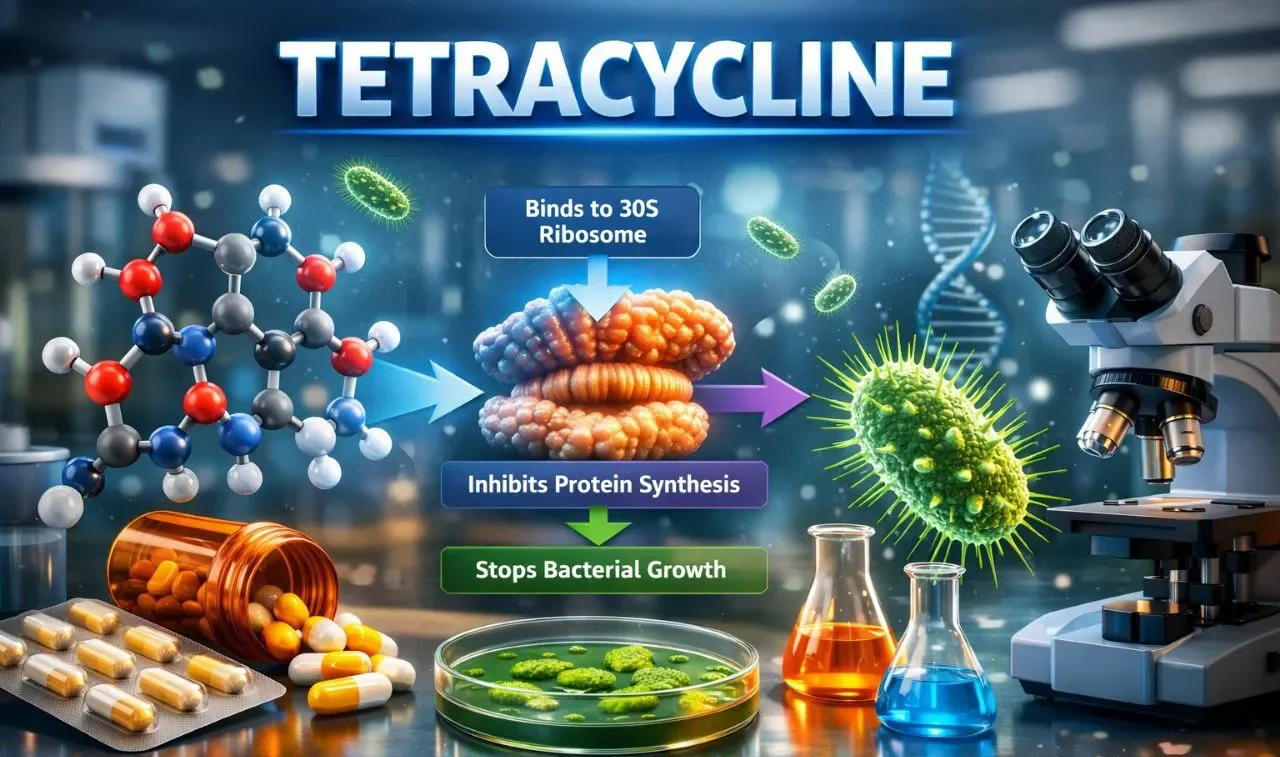
Chemical Structure / Formula of Tetracycline Formula: C22H24N2O8 Core Structure: Four fused hydronaphthacene rings with various functional groups. Mechanism of Action Binds to the 30S ribosomal subunit, preventing the attachment of aminoacyl-tRNA to the ribosome. This inhibits protein synthesis and halts bacterial growth (bacteriostatic). Uses of Tetracycline Broad-spectrum antibiotic effective against Gram-positive and Gram-negative bacteria, … Read more

Tetracyclines

Tetracyclines

Historical Background of Tetracyclines Discovered in 1948 from Streptomyces aureofaciens. Broad-spectrum antibiotic class. Nomenclature of Tetracyclines Named after their four-fused cyclic structure. Examples: Tetracycline Doxycycline Minocycline Oxytetracycline Chlortetracycline Stereochemistry Four fused rings (hydronaphthacene nucleus). α-stereochemistry at C-4 is crucial for activity. Structure-Activity Relationship (SAR) Hydroxyl and amine groups: Affect bacterial ribosome binding. Modifications at C-5, … Read more

Kanamycin

Kanamycin

Chemical Structure / Formula of Kanamycin Formula: C18H36N4O11 Similar to neomycin but slightly less toxic. Mechanism of Action Inhibits 30S ribosomal subunit, leading to bacterial cell death. Uses of Kanamycin Used in tuberculosis (as a second-line drug). Treats severe Gram-negative infections when other antibiotics fail. Topical use for eye and ear infections. Side Effects Ototoxicity … Read more

Aminoglycosides

Aminoglycosides

Historical Background of Aminoglycosides First discovered in 1944 (Streptomycin by Selman Waksman). Used mainly for Gram-negative infections and tuberculosis. Nomenclature of Aminoglycosides Contain amino sugars linked by glycosidic bonds. Common names: Streptomycin Neomycin Kanamycin Stereochemistry Multiple chiral centers in aminosugar moieties. The specific orientation of hydroxyl and amino groups affects activity and bacterial binding. Structure-Activity … Read more

Streptomycin

Streptomycin

Chemical Structure / Formula of Streptomycin Formula: C₂₁H₃₉N₇O₁₂ Contains an aminocyclitol ring linked to aminosugars. Mechanism of Action Binds to the 30S ribosomal subunit, preventing proper mRNA translation. Causes misreading of mRNA, leading to defective protein synthesis and bacterial death (bactericidal). Uses of Streptomycin First-line drug for tuberculosis (TB) in combination therapy. Used for plague … Read more

Neomycin

Neomycin

Chemical Structure / Formula of Neomycin Formula: C23H46N6O13 Structurally similar to streptomycin but more nephrotoxic. Mechanism of Action Binds to 30S ribosomal subunit, inhibiting protein synthesis. Bactericidal effect similar to other aminoglycosides. Uses of Neomycin Topical and oral use only (too toxic for systemic use). Used for skin infections, bowel sterilization before surgery, hepatic encephalopathy … Read more

Monobactams (Aztreonam)

Monobactams (Aztreonam)

Chemical Structure / Formula of Monobactams (Aztreonam) Formula: C13H17N5O8S2 (Aztreonam) Unique feature: Single β-lactam ring (monocyclic), unlike penicillins and cephalosporins. Mechanism of Action Binds to PBP-3, inhibiting bacterial cell wall synthesis. Selective for aerobic Gram-negative bacteria, including Pseudomonas aeruginosa. Uses of Monobactams (Aztreonam) Treats serious Gram-negative infections, including pneumonia, sepsis, and UTIs. Safe for penicillin-allergic … Read more

β-Lactamase Inhibitors

β-Lactamase Inhibitors

Chemical Structure / Formula of β-Lactamase Inhibitors Examples: Clavulanic acid (C8H9NO5), Sulbactam (C8H11NO5S), Tazobactam (C10H12N4O5S). Contain a β-lactam ring but lack strong antibacterial activity themselves. Clavulanic acid Mechanism of Action Irreversibly bind to bacterial β-lactamases, preventing them from breaking down β-lactam antibiotics. Given in combination with penicillins or cephalosporins (e.g., Amoxicillin-Clavulanate). Uses Used with penicillins … Read more