Chemical Structure / Formula of Chloroquine
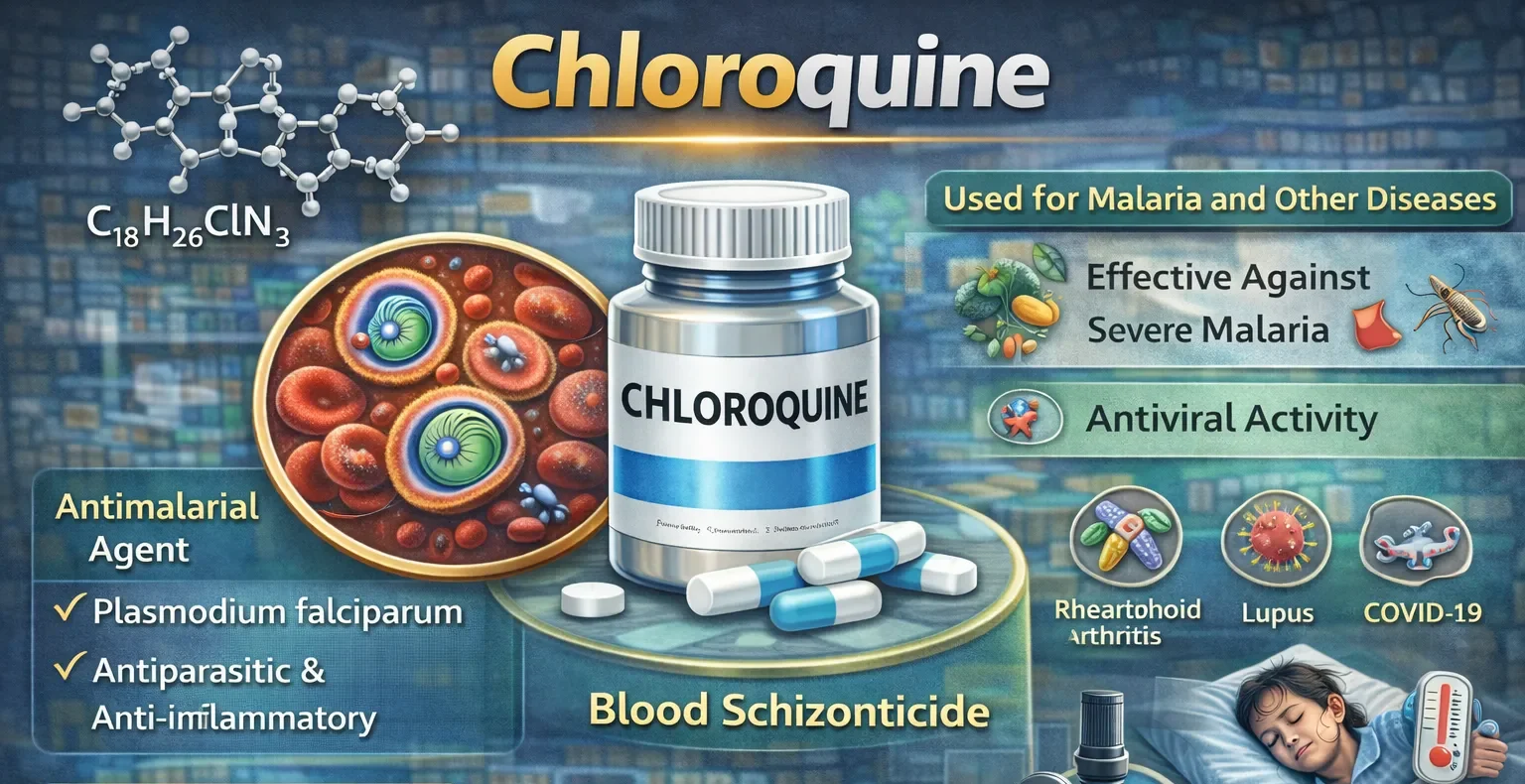
- Formula: C₁₈H₂₆ClN₃
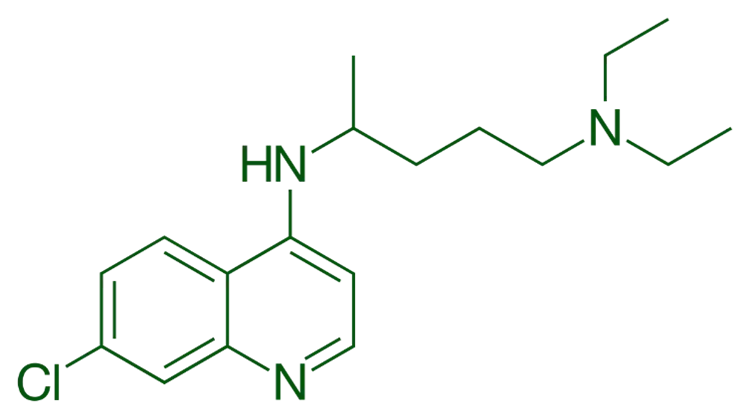
- Structure: 4-Aminoquinoline with an ethyl-diethylamine side chain.
Mechanism of Action
- Inhibits heme polymerase, preventing detoxification of toxic free heme, leading to Plasmodium death.
- Accumulates in the food vacuole of Plasmodium spp.
Uses of Chloroquine
- First-line for non-resistant Plasmodium spp. ( vivax, P. ovale, P. malariae).
- Autoimmune diseases (RA, lupus: due to immunomodulatory effects).
Advertisements
Side Effects
- Retinopathy (bull’s eye maculopathy): irreversible.
- Pruritus (especially in dark-skinned individuals).
- GI disturbances, QT prolongation, hemolysis in G6PD deficiency.
Structure-Activity Relationship (SAR) of Chloroquine
| Structural Feature | Role in Activity |
| 4-Aminoquinoline ring | Essential pharmacophore for antimalarial activity. |
| Basic side chain (diethylaminoalkyl) | Crucial for accumulation in acidic food vacuole of the parasite. Chain length affects potency (typically 3 carbon atoms in linker is optimal). |
| Electron-donating groups on aromatic ring | Can improve potency and reduce toxicity. |
| Halogen substitution (e.g., Cl at position 7) | Enhances lipophilicity and improves penetration into parasitic vacuole. |
| N-alkylation of side chain | Small alkyl groups tolerated; bulky substituents reduce activity. |
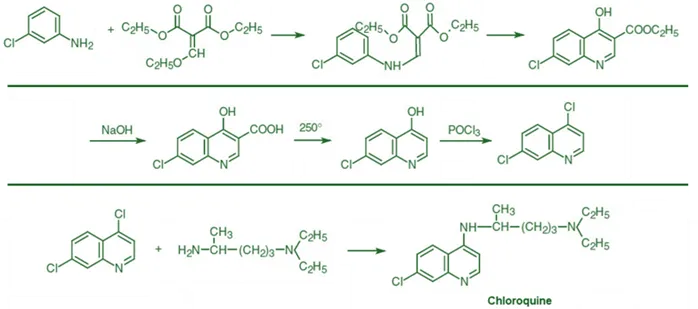
Synthesis of Chloroquine