
Chromophores and Auxochromes
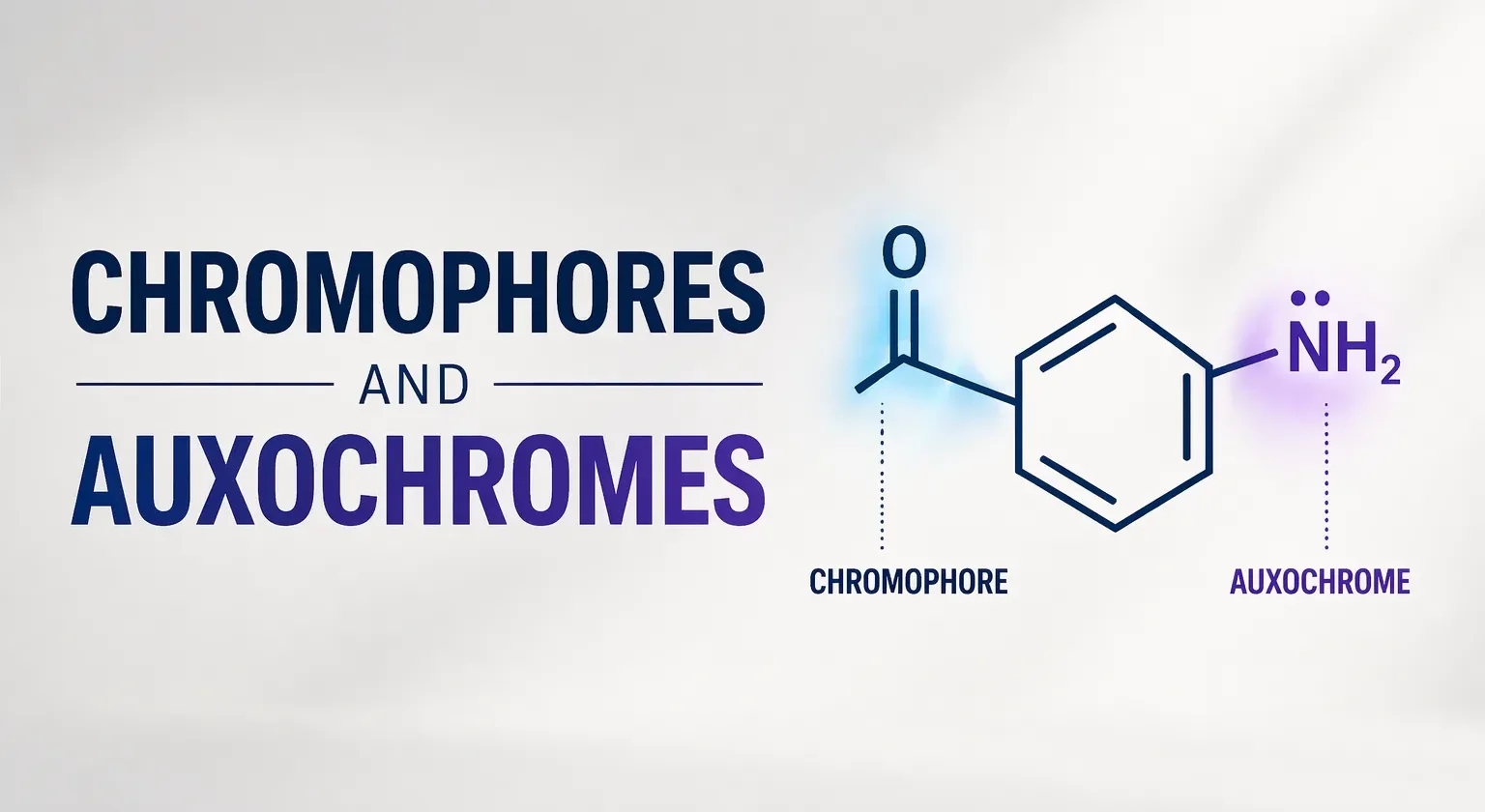
Chromophores and Auxochromes are chemical groups that absorb light and modify color, important in spectroscopy and drug analysis.
Chromophores
Definition:
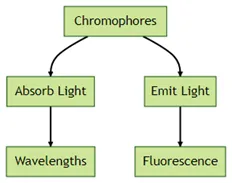
- Parts of a molecule responsible for its color.
- Chromophores contain conjugated systems (alternating single and double bonds) that allow delocalization of electrons, facilitating electronic transitions that absorb light.
Key Features:
- Conjugation: More conjugation lowers the energy required for transitions, often shifting absorption into the visible region.
- Functional Groups: Common chromophores include carbonyl (C=O), azo (-N=N-), nitro (-NO₂), and aromatic rings.
Advertisements
Examples:
- Beta-Carotene: A long conjugated system, giving it an orange color.
- Hemoglobin: Porphyrin rings act as chromophores, responsible for blood’s red color.
Advertisements
Auxochromes
Definition:
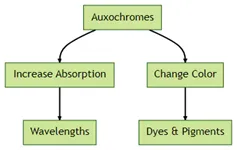
- Groups attached to chromophores that modify their absorption properties.
- While not absorbing visible light, auxochromes enhance or shift the absorption of chromophores.
Advertisements
Types:
- Electron Donating: Groups like -OH and -NH₂ push electron density into the chromophore, causing bathochromic (red) shifts.
- Electron Withdrawing: Groups like -NO₂ pull electron density, causing hypsochromic (blue) shifts.
Functions:
- Enhance Intensity: Increase molar absorptivity.
- Shift Wavelength: Alter absorption maxima (λₘₐₓ).
Examples:
- Hydroxyl Group (-OH): Enhances absorption, often causing a red shift.
- Amino Group (-NH₂): Modifies chromophore properties, leading to shifts.
Advertisements