Applications of Affinity Chromatography

Applications of Affinity Chromatography
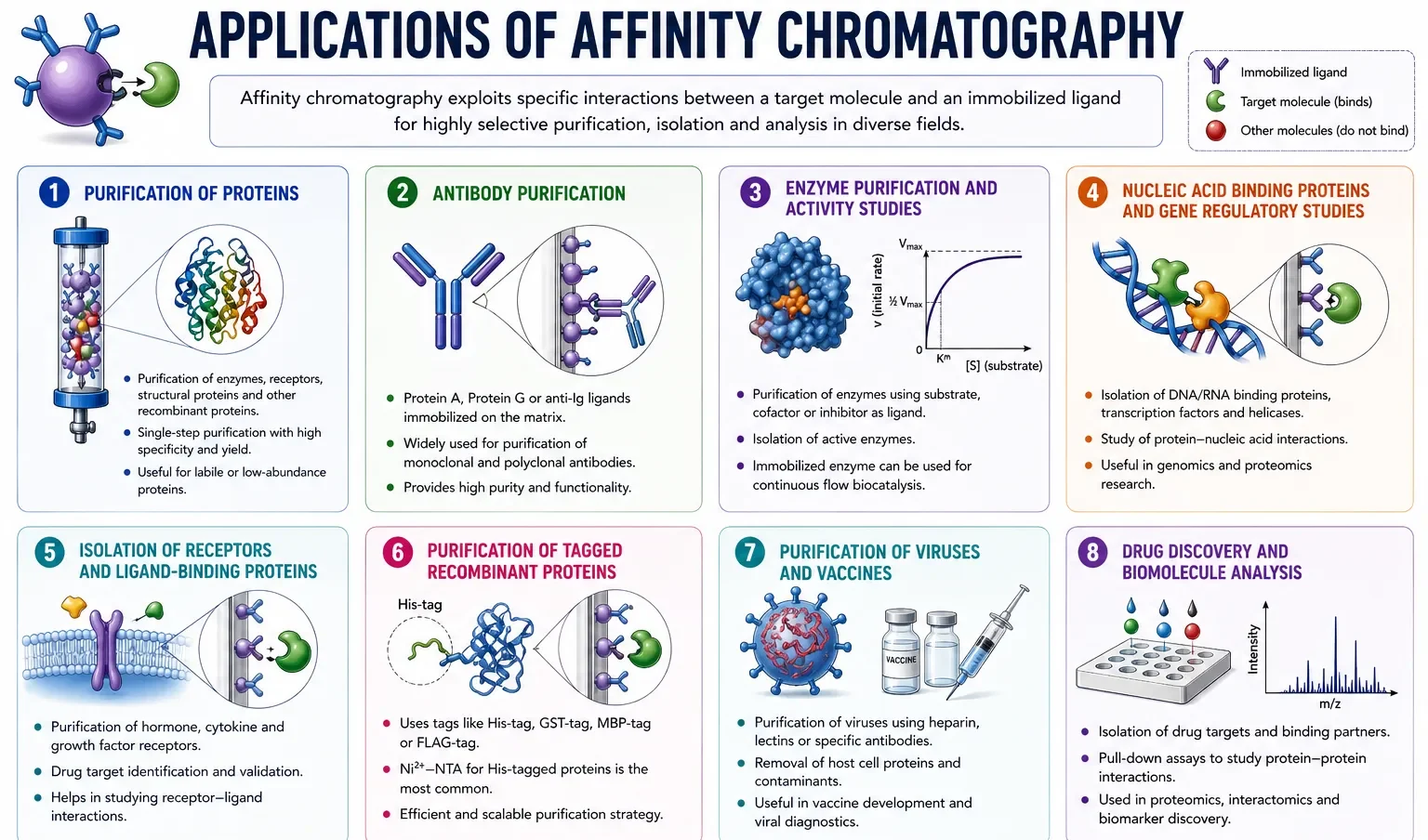
Applications of Affinity Chromatography include purification of proteins, enzymes, and antibodies in biotechnology. Applications of Affinity Chromatography Protein Purification: Purification of monoclonal and polyclonal antibodies using Protein A or G. Isolation of enzymes or recombinant proteins with affinity tags (e.g., His-tag, GST-tag). Isolation of Biomolecules: Separation of nucleic acids using immobilized complementary strands or aptamers. … Read more

Instrumentation of Affinity Chromatography

Instrumentation of Affinity Chromatography

Instrumentation of Affinity Chromatography includes column, ligand-bound matrix, and detector for selective separation. Instrumentation of Affinity Chromatography A typical affinity chromatography setup comprises the following components: Pump: Ensures a consistent and controlled flow of the mobile phase (sample solution and elution buffer) through the affinity column. High-pressure pumps are commonly used for faster runs. Sample … Read more

Theory of Affinity Chromatography

Theory of Affinity Chromatography

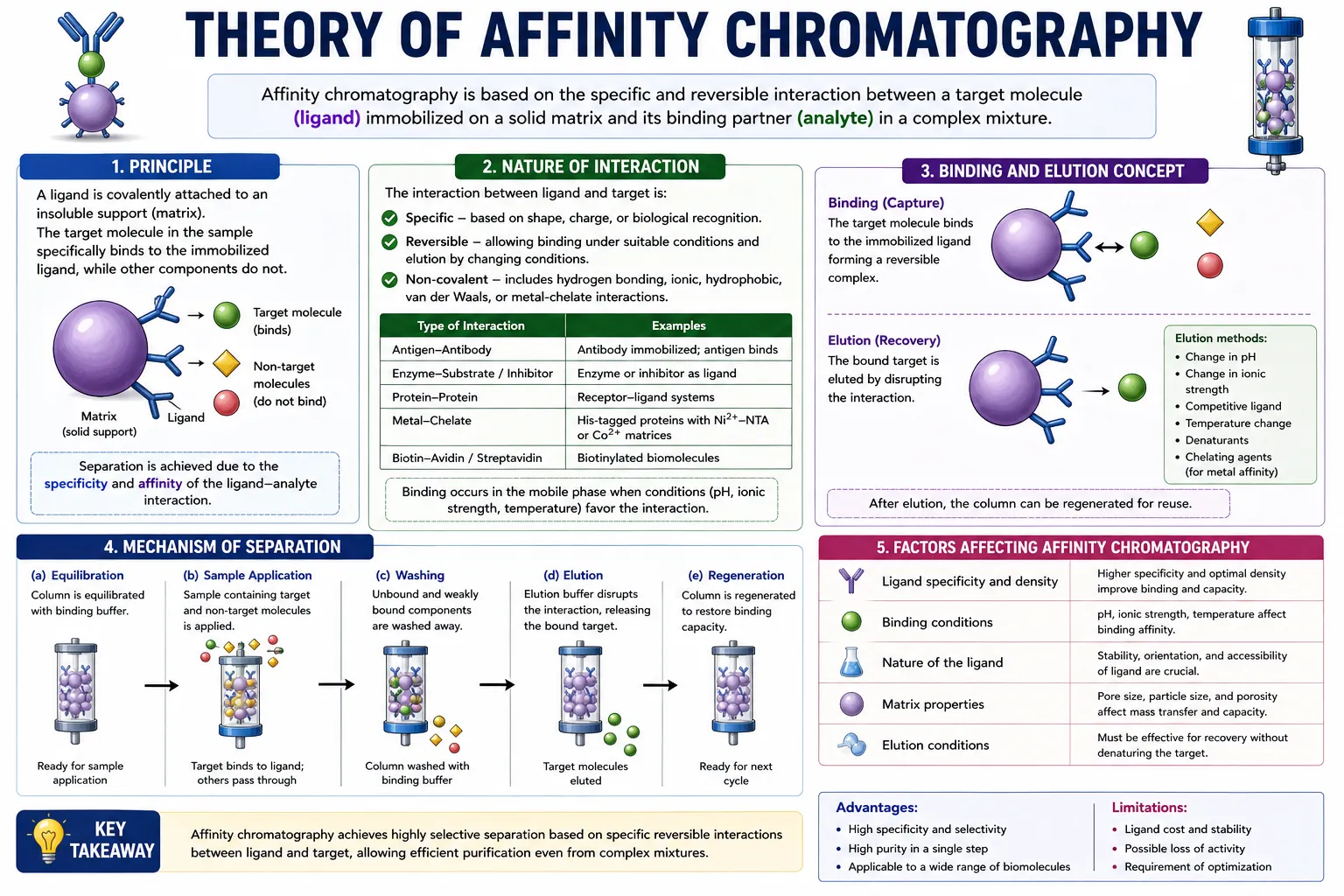
Theory of Affinity Chromatography describes selective binding of target molecules to ligands for precise separation. Loading/Binding Phase: The sample is introduced into a column with immobilized ligand. The target molecule binds specifically, while non-target molecules pass through. Washing Phase: Non-specifically bound molecules are removed using an appropriate buffer. Elution Phase: The target molecule is released … Read more

Introduction of Affinity Chromatography

Introduction of Affinity Chromatography

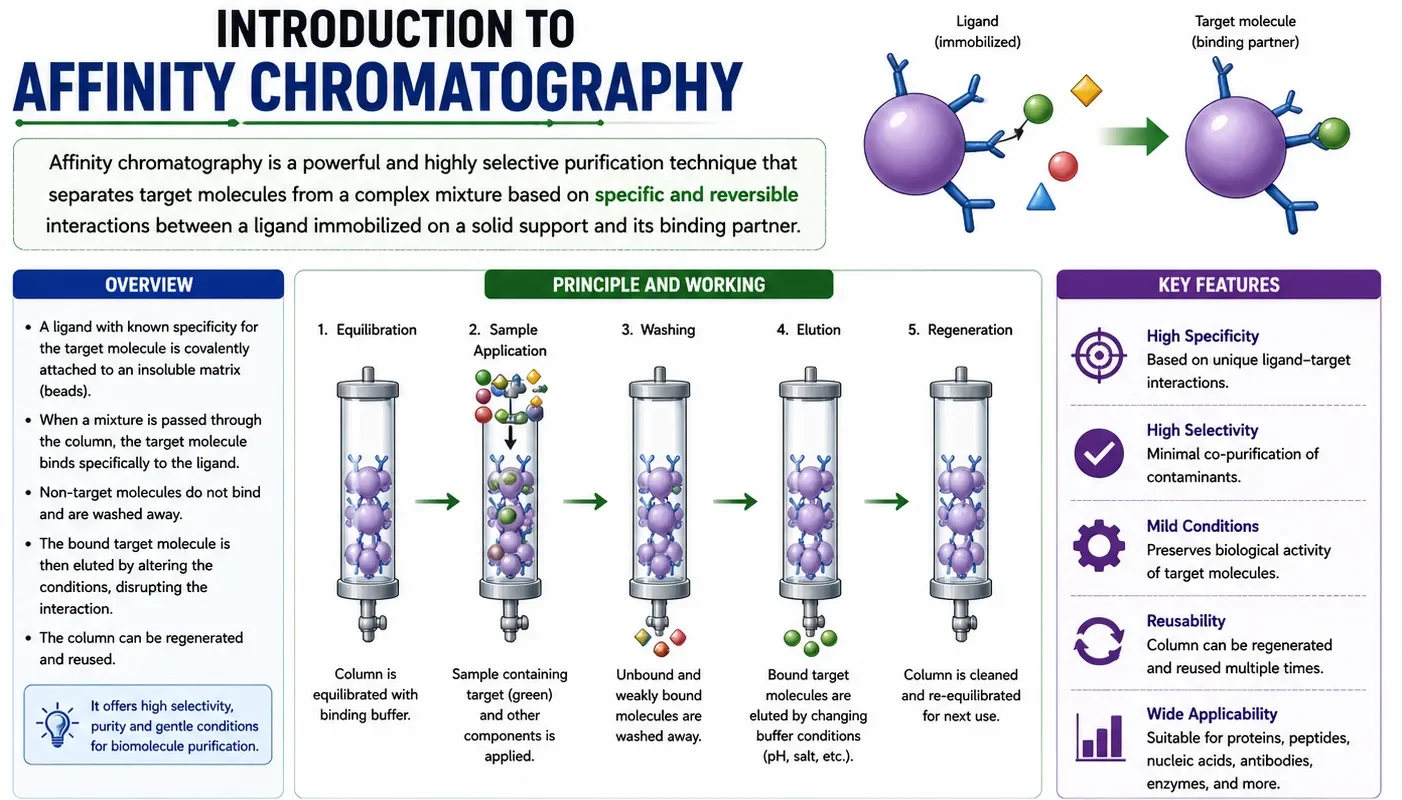
Introduction of Affinity Chromatography Introduction of Affinity Chromatography explains separation of biomolecules based on specific binding interactions. Introduction Affinity Chromatography is a liquid chromatography technique that separates molecules based on specific and reversible interactions between a molecule in a mixture and a counter-molecule bound to a stationary phase. It is extensively used in biochemistry and … Read more

Applications of Gel chromatography

Applications of Gel chromatography

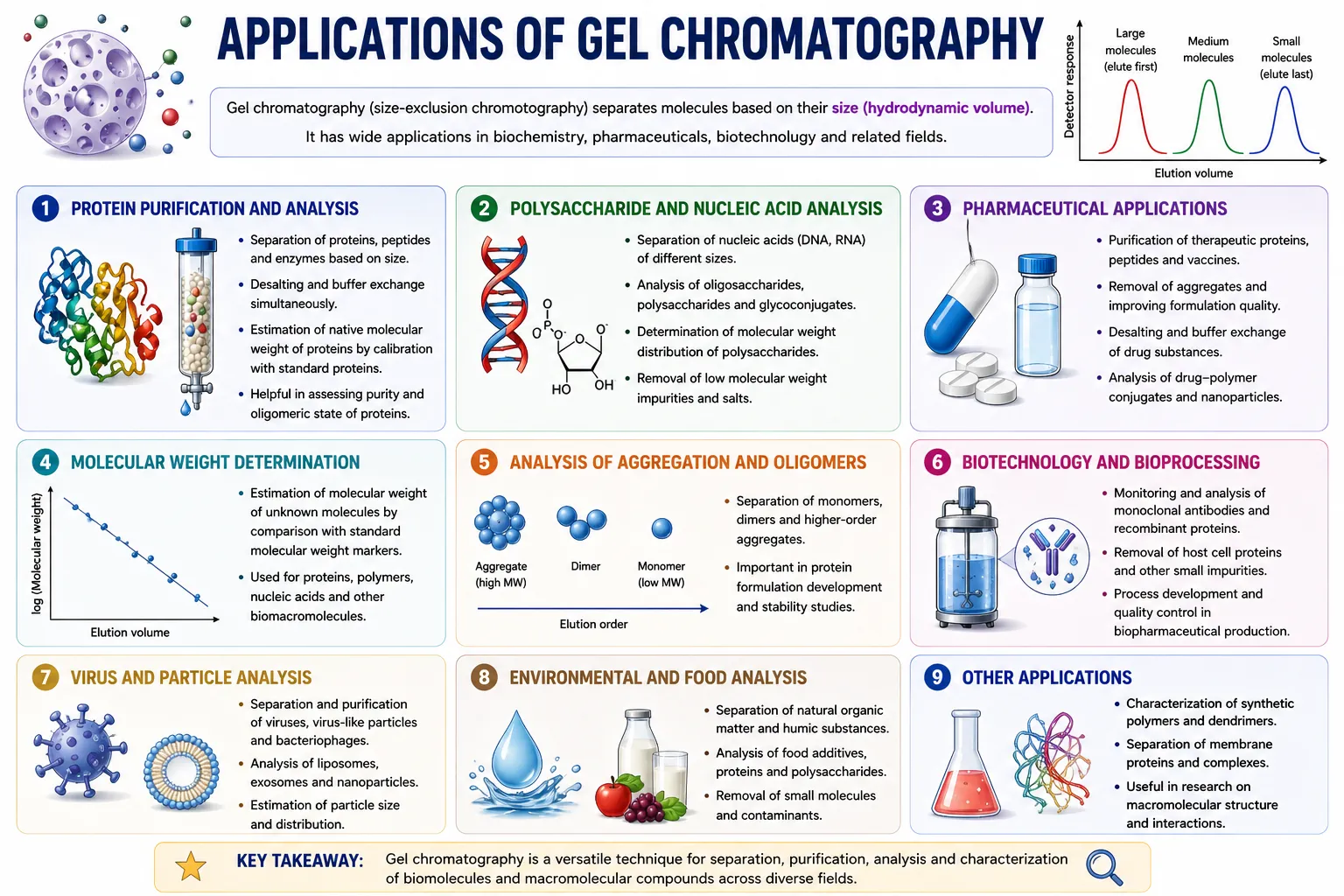
Applications of Gel chromatography include protein purification, molecular weight determination, and separation of biomolecules. Applications of Gel chromatography Gel chromatography is widely used in various fields, notably the pharmaceutical industry: Protein Purification: Separates proteins by size without denaturing them, crucial for therapeutic protein production. Molecular Weight Determination: Using calibration standards, it can estimate the molecular … Read more

Instrumentation in Gel Chromatography

Instrumentation in Gel Chromatography includes column, gel matrix, sample injector, and detector for size-based separation. Instrumentation in Gel Chromatography A standard gel chromatography system typically includes: Pump: Delivers a steady flow of the mobile phase (often a buffered aqueous solution). Sample Injector: Introduces the sample into the mobile phase. Automated injectors provide reproducibility and accuracy. … Read more

Theory of Gel Chromatography

Theory of Gel Chromatography

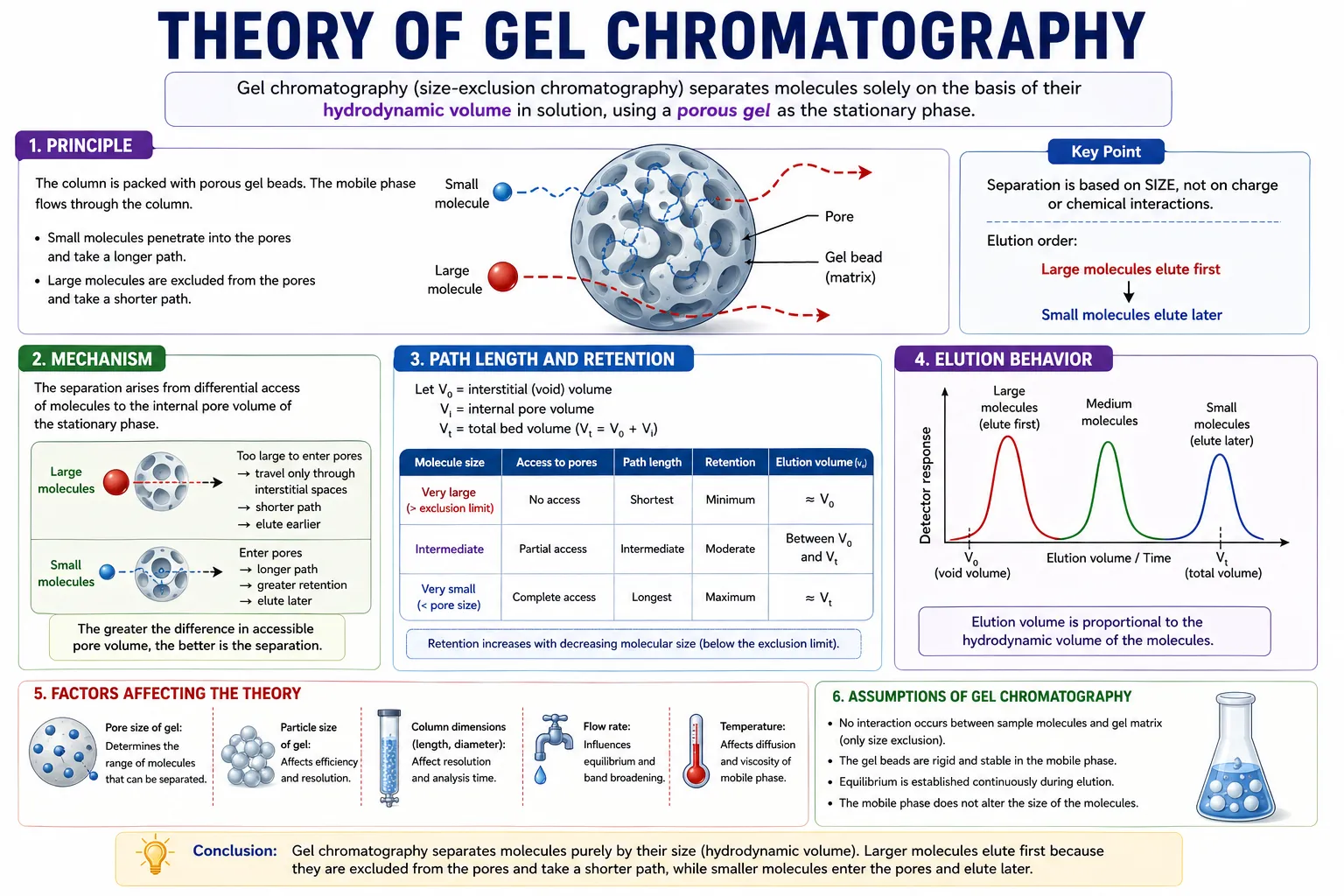
Theory of Gel Chromatography describes separation based on molecular size as smaller molecules enter gel pores. Mechanism of Separation The separation mechanism is based on the size (hydrodynamic volume) of molecules relative to the pore sizes of the gel beads in the stationary phase. Exclusion: Molecules: Larger than the largest pores. Behavior: Excluded from entering … Read more

Introduction: Gel Chromatography

Introduction: Gel Chromatography

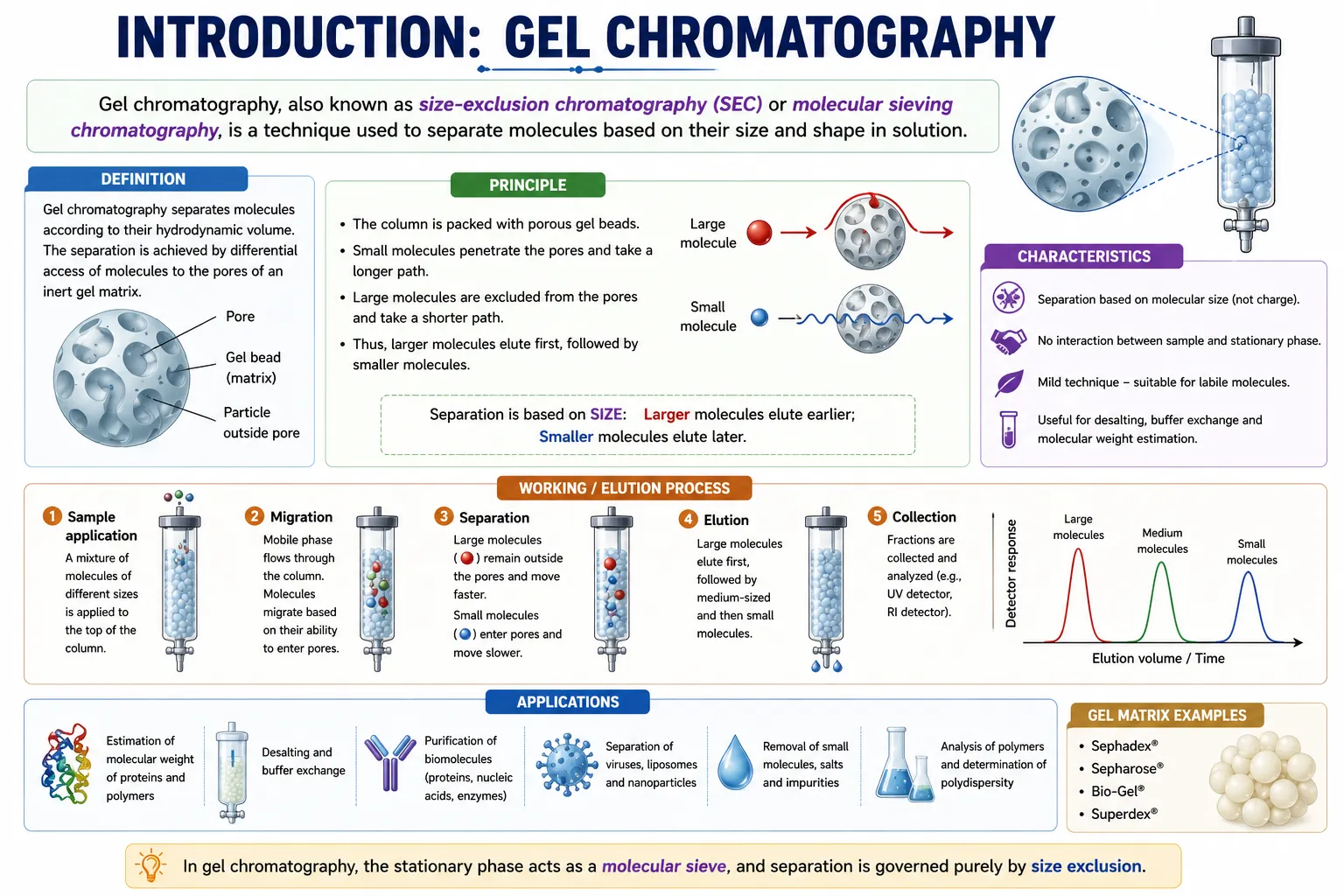
Introduction: Gel Chromatography explains separation of molecules based on size using a porous gel matrix. Introduction: Gel Chromatography Gel Chromatography, also known as Size Exclusion Chromatography (SEC), is a technique that separates molecules based on size. It is widely used in the pharmaceutical industry for analyzing and purifying biomolecules such as proteins, peptides, nucleic acids, … Read more

Applications of Ion Exchange Chromatography

Applications of Ion Exchange Chromatography

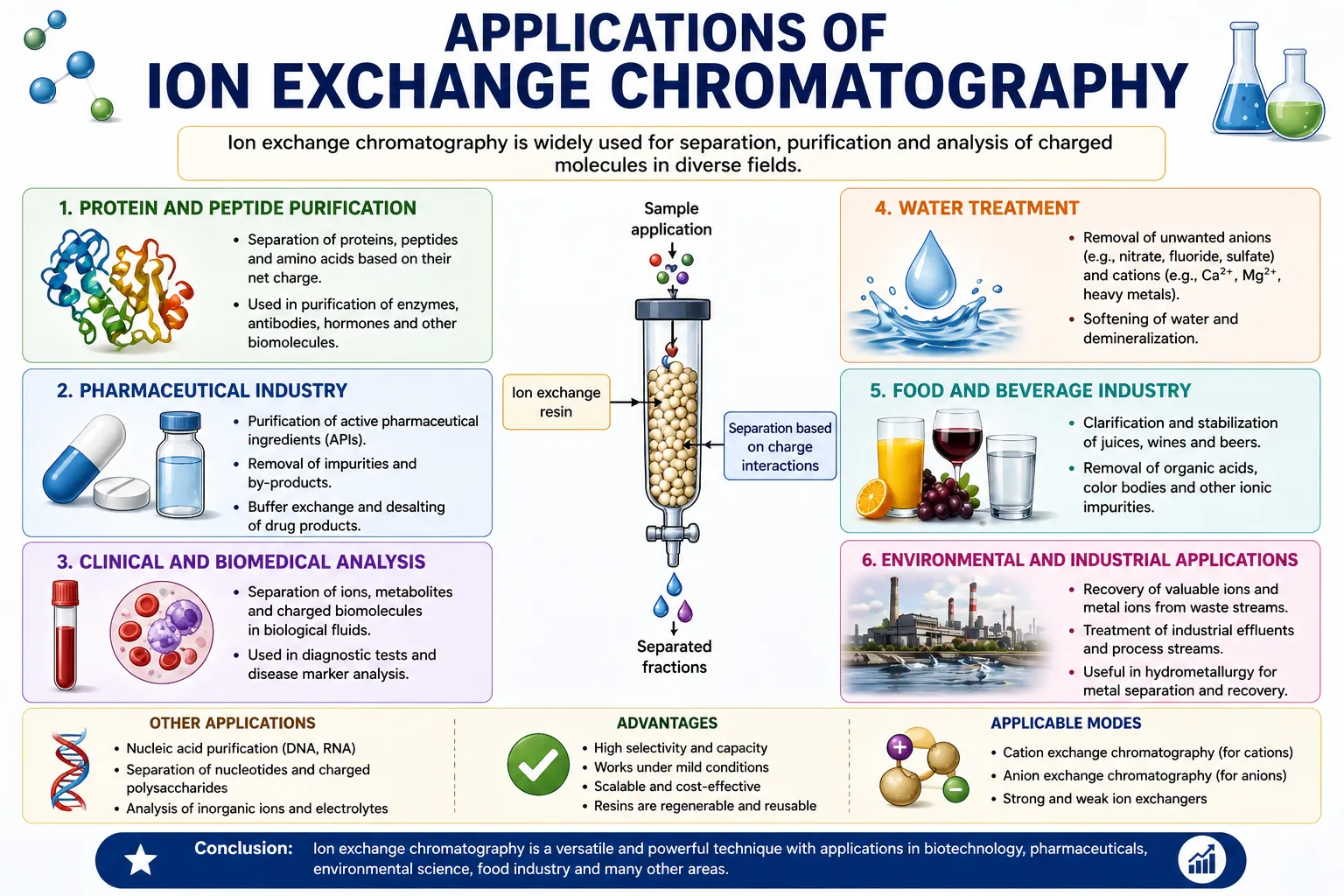
Applications of Ion Exchange Chromatography include purification of proteins, water treatment, and separation of ionic compounds. Applications of Ion Exchange Chromatography Protein Purification: Isolation and purification of proteins, enzymes, and antibodies. Separation based on the isoelectric point (pI) of proteins. Nucleic Acid Purification: Separation and purification of DNA, RNA, and oligonucleotides. Removal of nucleotides and … Read more

Methodology of Ion Exchange Chromatography

Methodology of Ion Exchange Chromatography

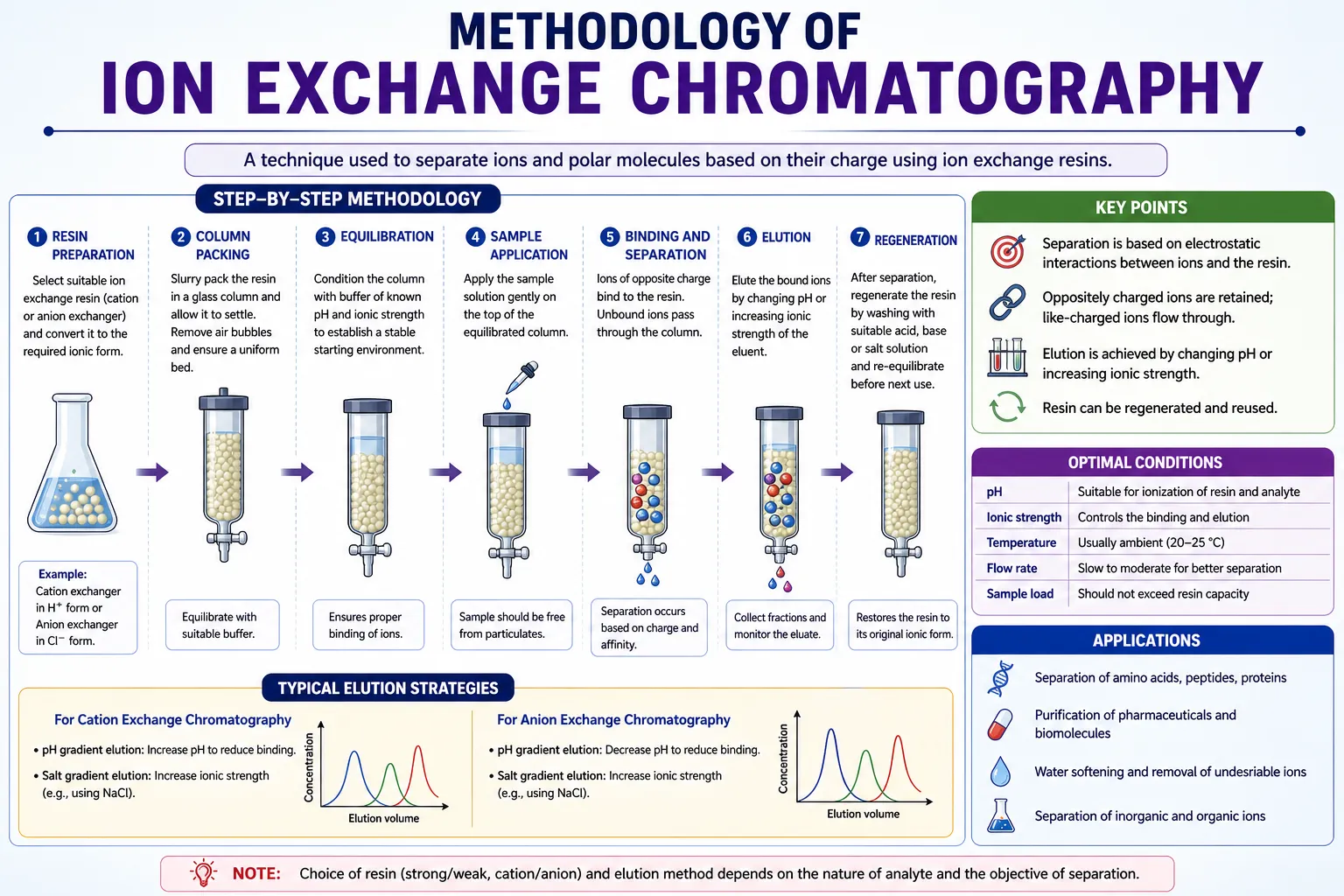
Methodology of Ion Exchange Chromatography involves sample loading, ion exchange, washing, and elution for separation. Methodology of Ion Exchange Chromatography Ion Exchange Chromatography (IEC) is a widely used separation technique that exploits the charge properties of molecules to separate and purify them based on their affinity to charged resin particles. Below is a breakdown of … Read more