
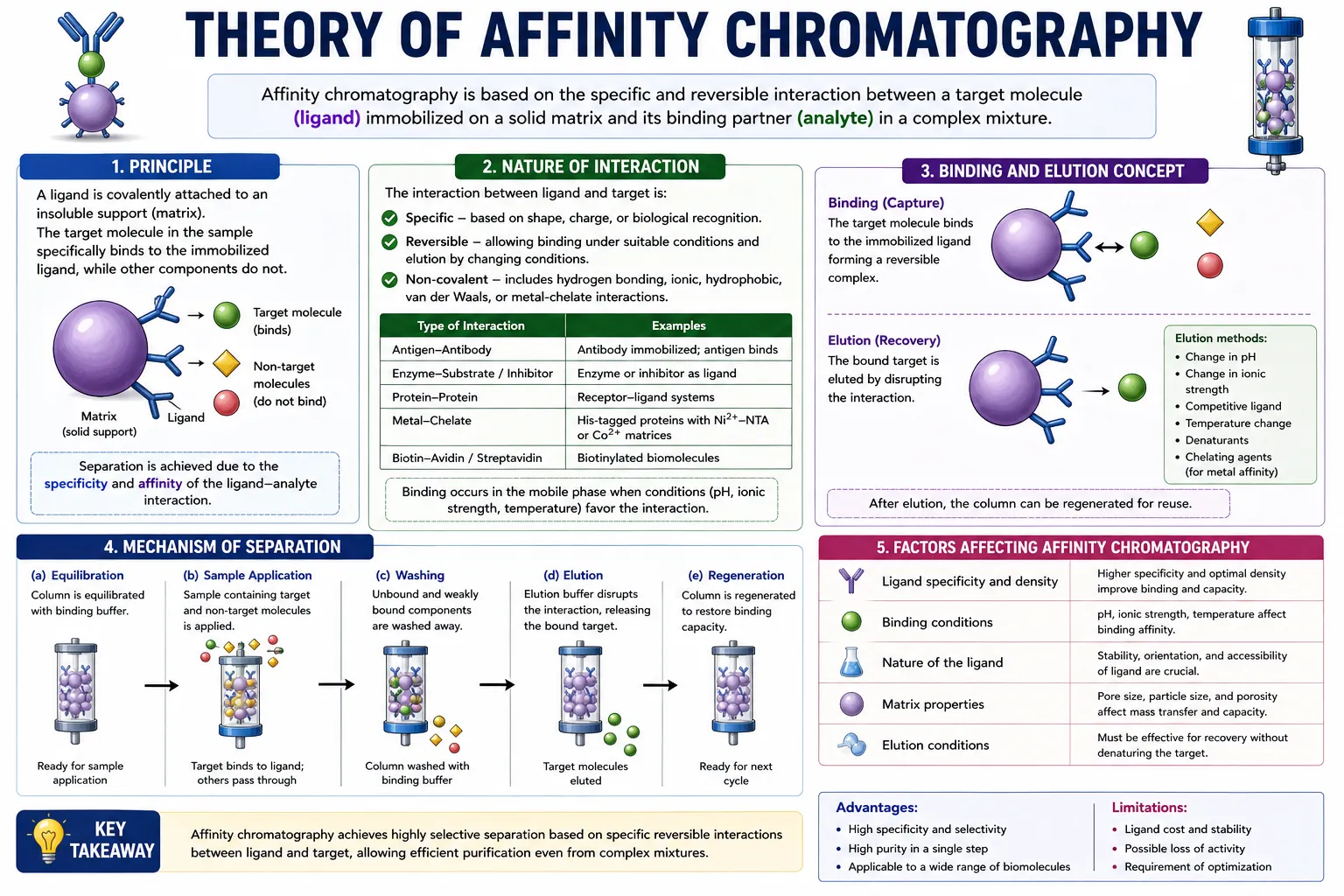
Theory of Affinity Chromatography describes selective binding of target molecules to ligands for precise separation.
- Loading/Binding Phase: The sample is introduced into a column with immobilized ligand. The target molecule binds specifically, while non-target molecules pass through.
- Washing Phase: Non-specifically bound molecules are removed using an appropriate buffer.
- Elution Phase: The target molecule is released by disrupting the interaction, often by changing pH, ionic strength, or adding a competing ligand.
- Regeneration Phase: The column is restored for reuse by washing away residual target molecules and elution agents.
Classification of Affinity Chromatography

Advertisements
-
Based on Type of Interaction:
- Enzyme-Substrate/Inhibitor Chromatography: Enzymes attached to the resin separate substrates or inhibitors.
- Antigen-Antibody Chromatography: Antibodies or antigens immobilized to capture their counterpart.
- Receptor-Ligand Chromatography: Receptors immobilized to capture specific ligands.
-
Based on Elution Method:
- Biospecific Elution: Uses agents that specifically interfere with target binding.
- Non-specific Elution: Alters pH or ionic strength to disrupt all bound molecules.
-
Specialized Types:
- Immunoaffinity Chromatography: Uses antibody-antigen interactions for high specificity.
- Metal Chelate Chromatography: Captures proteins with affinity for certain metals.
- Dye-Ligand Chromatography: Employs reactive dyes as ligands to bind specific proteins.
Advertisements