
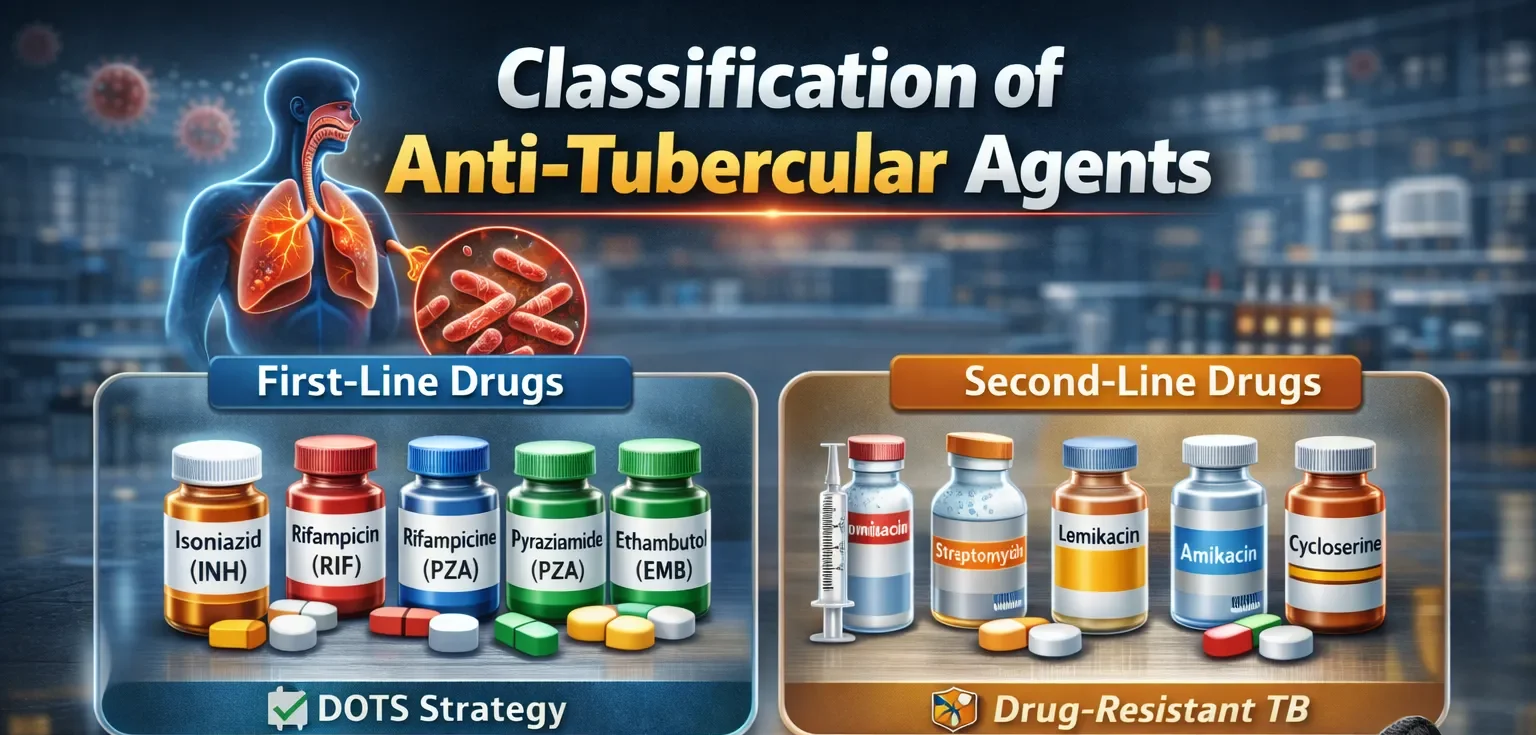
Classification of Anti-Tubercular Agents explains grouping of TB drugs into first-line and second-line agents based on efficacy and use.
Classification of Anti-Tubercular Agents
- Anti-tubercular agents are used to treat infections caused by Mycobacterium tuberculosis and can be classified based on their mechanism of action and chemical structure.
- They are often categorized into first-line and second-line drugs, and further grouped into two main types:
-
Synthetic Anti-Tubercular Agents
- These are chemically synthesized drugs that target various biochemical pathways in tuberculosis.
- Examples:
- Isoniazid
- Ethionamide
- Ethambutol
- Pyrazinamide
- Para-aminosalicylic acid
-
Anti-Tubercular Antibiotics
- These agents are naturally derived or semi-synthetic and work by inhibiting mycobacterial growth through mechanisms such as interfering with bacterial RNA synthesis, protein synthesis, or cell wall formation.
- Examples:
- Rifampicin
- Rifabutin
- Cycloserine
- Streptomycin
- Capreomycin sulphate